THE MUSSO & FRANK GRILL
6669 Hollywood Boulevard, Hollywood, California
“Oldest Restaurant In Hollywood”
With the amount of change that has occurred in Hollywood over 100 years, it is most ironic that the Musso & Frank Grill, the oldest restaurant in Hollywood, has not only survived, but thrived. All the while, keeping the original attributes intact that its loyal customer base returns to again and again.

Sardi’s was located at 6315 Hollywood Boulevard
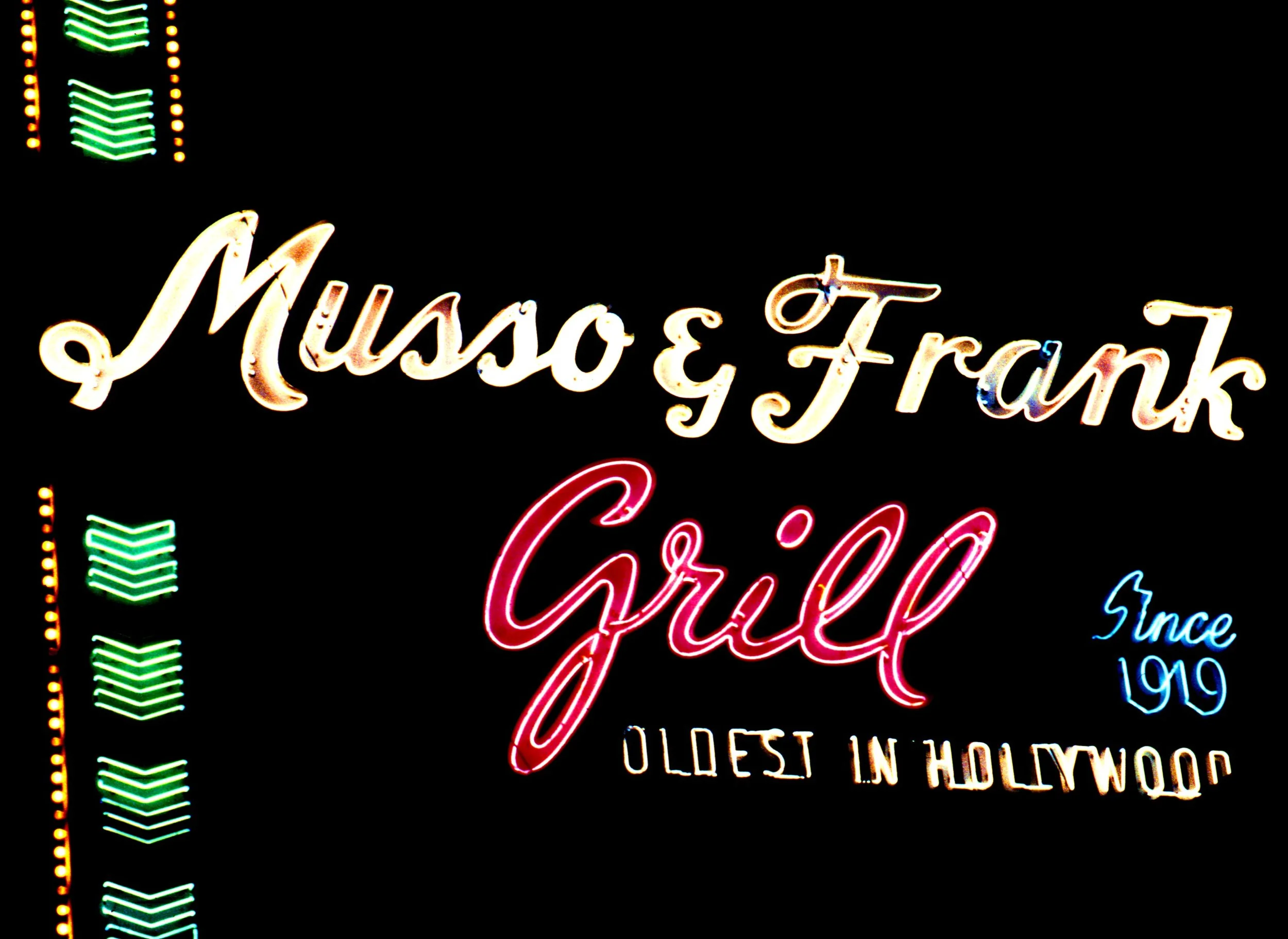
It has outlasted all their onetime contemporary competitors including the Hollywood Brown Derby, the Pig ‘N Whistle, Al Levy’s Tavern, Sardi’s and the Tick Tock Tea Room. Of all the drinking establishments in Hollywood, Musso & Frank Grill has managed to stay as original as possible with the same satisfying comfort food and classic cocktails that made it so popular. And as their massive, animated neon roof-top sign proudly proclaims, it all started back in 1919.
When Frank Toulet, restaurateur Joseph Musso and Chef Jean Rue first opened the doors the original name was "Francois” the French version of Francis or Frank.
It quickly became a favorite with the hungry movie folks, partially because of a basic lack of any real competition at the time. Their main business competitor, the much larger Hollywood Brown Derby, did not arrive on Vine Street until 1929.
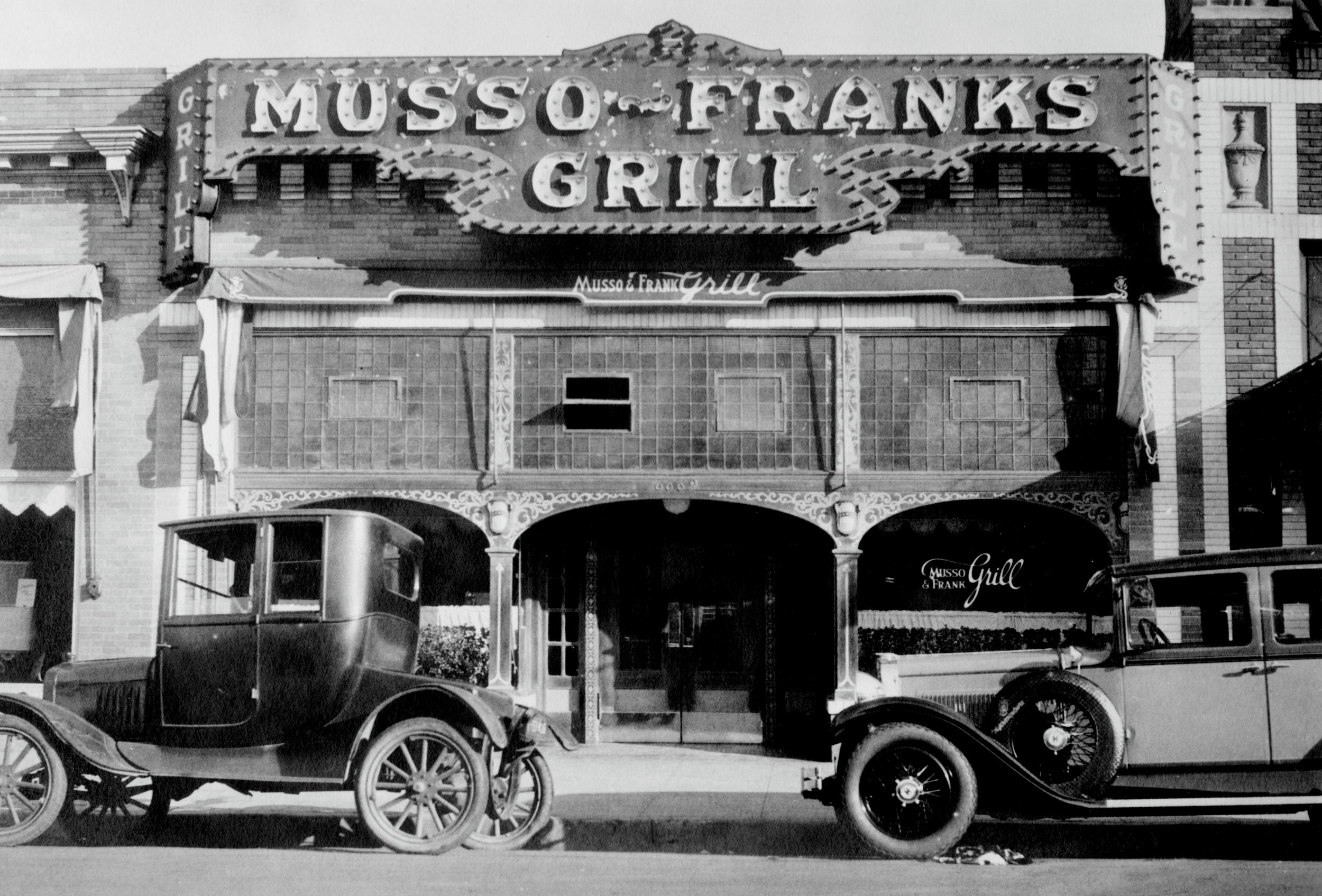
Musso & Frank Grill in 1930
The Musso & Frank Grill benefited by being first to offer good, hearty food to the quickly expanding movie industry, in an upscale, sophisticated setting. The food was the original draw back then, technically it could not serve alcohol until the end of Prohibition, which prohibited the sale of alcohol from1920 until 1933.
When the New York styled grill opened, it was not unusual to arrive here by horseback; portions of Hollywood Boulevard (originally called Prospect Boulevard) had yet to be paved and horses and buggies were still commonplace. And like other establishments of the era, a hitching post was prominent out front, which would remain well into the 1920s.
In fact, by horseback is often how early patrons like director Cecil B. DeMille, Charlie Chaplin and cowboy star Tom Mix would arrive to dine. Their journey, however, was not a long one.
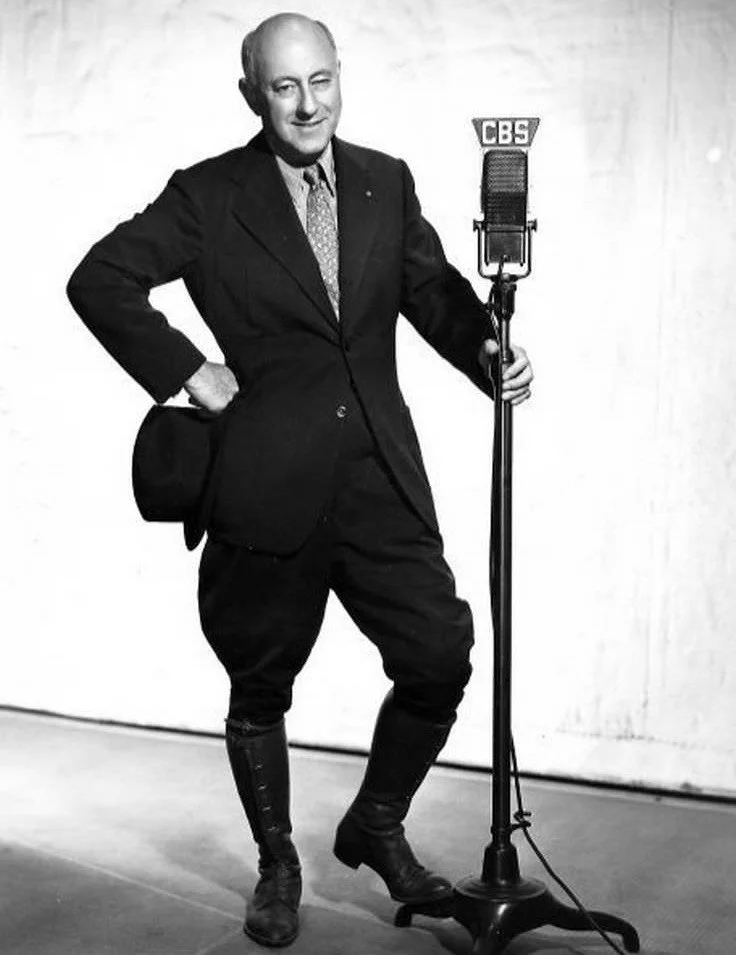
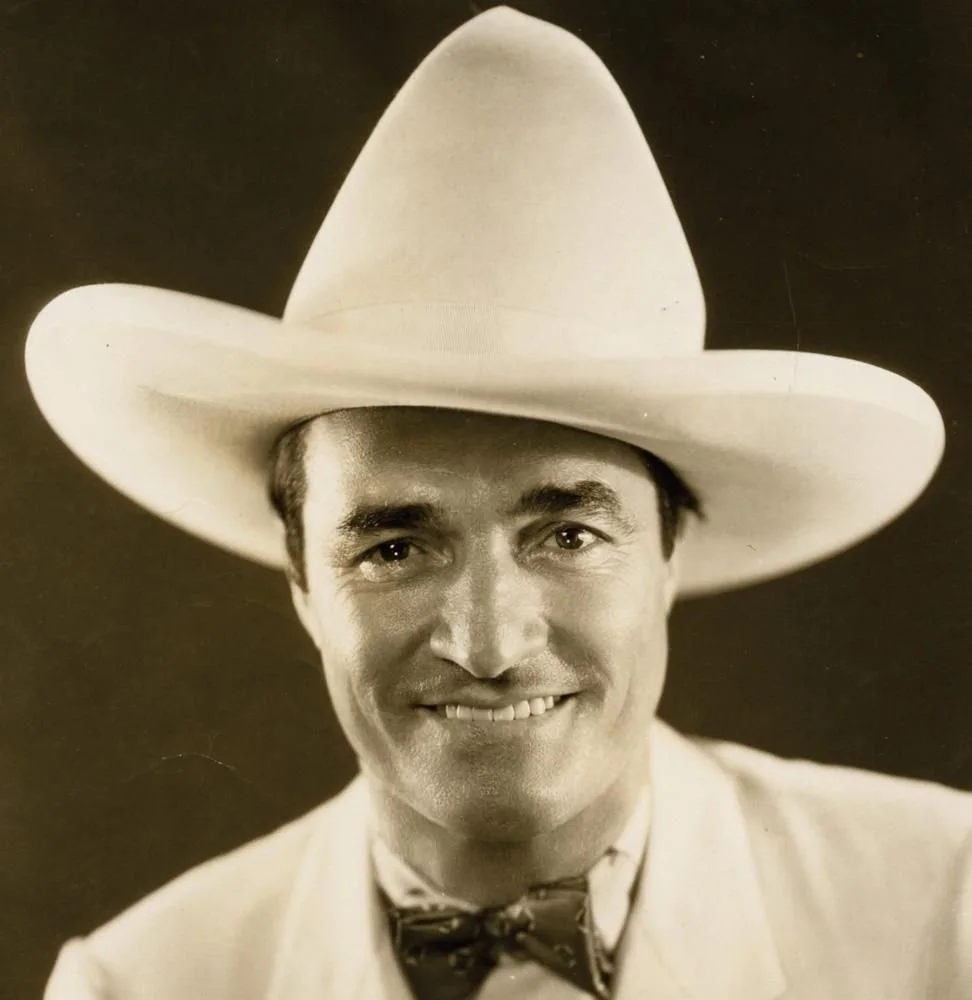
Cecil B. DeMille and Tom Mix
DeMille was working with Jesse Laskey at the Famous Players Laskey studios (1916) at 1520 Vine Street, which would become the precursor to Paramount Pictures.
Charlie Chaplin had his English Tudor-style studios (1918) at 1416 North La Brea Avenue. He preferred the front booth with a window so he could be seen and keep an eye on his tethered horse.
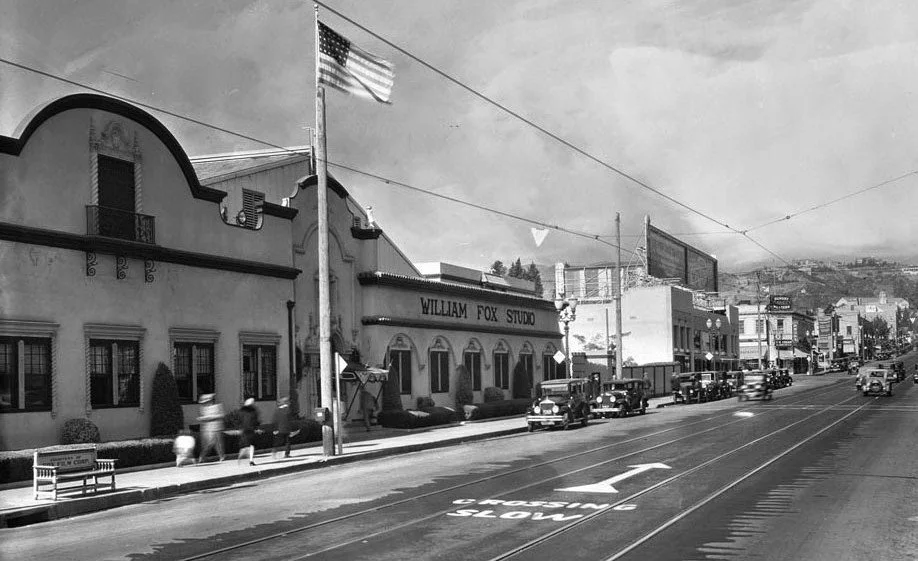
The William Fox Studio on Western Avenue
Tom Mix was a big western star on the William Fox lot (1916) at 1401 North Western Avenue. Fox would later merge with 20th Century Pictures to form 20th Century-Fox Studios in 1933.
At the time of its opening, film production had proliferated in Hollywood proper, having moved west from Edendale. The eatery was centrally located to take advantage of all the breaks in filming before, during and after production. And the pioneers of that fledgling industry, including Gloria Swanson, Mary Pickford, Douglas Fairbanks, and John Barrymore liked what the new Grill had to offer.
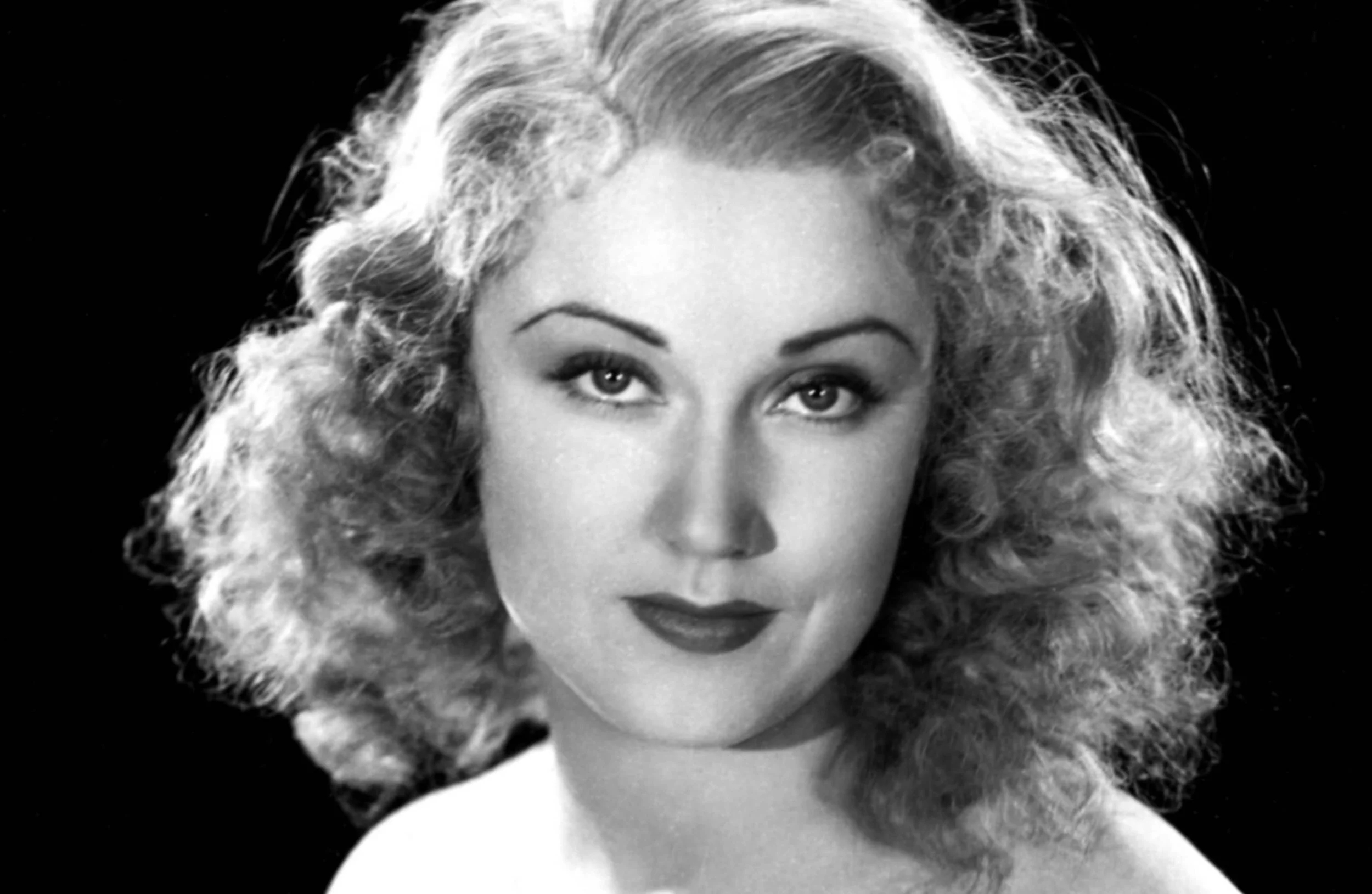
Fay Wray
Soon after arriving in Hollywood in 1920, Fay Wray was scheduled to meet the producer Ferdinand Pinney Earle and his wife here before attending a screening of the new movie. Miss Wray brought her appetite. “Mrs. Earl told me one afternoon that she and I were to join Mr. Earl and a friend at a place called Musso Frank and then go see the film The Cabinet of Doctor Caligari. We had a little snack just before we left, so she expressed surprise when I said I would have the same meal that the two gentlemen ordered. She ate nothing! Although I was embarrassed, I felt committed to the steak that was brought and I ate it all, which was probably a good way to fortify myself for the unforgettably scary experience of seeing Caligari.”
The restaurant changed its name from Francois to Musso & Frank Grill in 1923.
In 1926 Jack Benny went on a double date here with a fellow vaudevillian Al Bernovici, his wife Ethel and her younger sister, Sadie. Benny had crossed paths with Sadie before but this time was different.
“The four of us had dinner at Musso Frank’s in Hollywood. I don’t remember many of the details except that I kept staring at her and she kept smiling and I wanted desperately to say clever and provocative things, but I was tongue-tied and embarrassed. Later I learned that Sadie hadn’t wanted to go on this date because she was seriously seeing someone else and also because she distrusted actors. At that time Ethel was not having a happy time with Al, and Sadie blamed it on his being a performer. Like my parents, Sadie thought all actors were happy-go-lucky. Yet she liked me. Didn’t know why, but she liked me.”
She more than liked Jack Benny, Sadie Marks would marry Benny a year later and change her name to Mary Livingston.
In 1927, original owners Joseph Musso and Frank Toulet sold the restaurant to Joseph Carissimi and John Mosso who wisely kept the name intact.
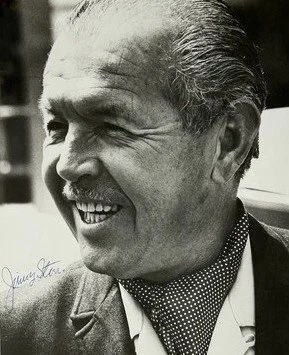
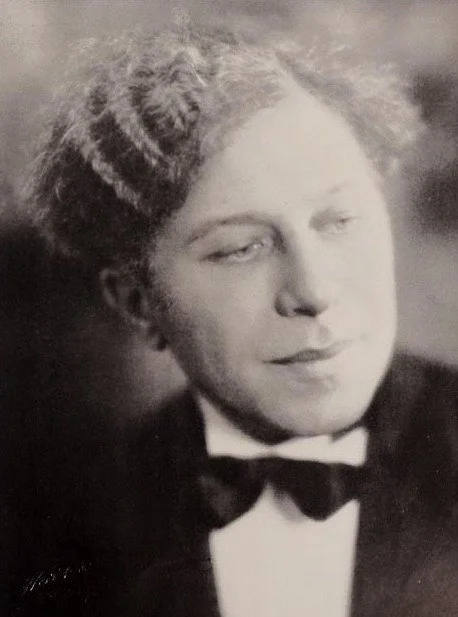
Columnist Jimmy Starr and Showman Sid Grauman
Jimmy Starr was a well known writer and Hollywood columnist who came here frequently. On one occasion he witnessed the beginning of an elaborate practical joke. The perpetrator was legendary showman, Sid Grauman. Grauman had a string of motion picture theatres, including the nearby Egyptian and the Chinese Theatres. He practically invented the glitzy Hollywood premiere, and as it turns out, he was also a notorious prankster and loved to pull a rib on an unsuspecting friend.
As Starr tells it, “Sid was having dinner at Musso and Frank’s, the popular boulevard dining place of the later twenties, with Jack Coogan, the vaudeville hoofing father of the kid wonder of the movies, Jackie Coogan.
“During the course of the meal, an attractive woman in a party several tables away kept giving Coogan a real “come on” look, got excited and asked Sid what he should do.”
‘Leave it to me, Jack,’ Sid advised. ‘I am so well-known, I can approach the party, talk to the beauty, and get her to meet you someplace.’
‘Will you, Sid? Hey, you’re quick on the uptake. That’s a great idea!’
“Sid stalled for a while. Jack was sweating with nervousness.
‘Come on. Get going, Sid.’ Coogan urged.
“Sid finally left the table and approached the group with the attractive girl. Keeping his back to Coogan, Sid introduced himself and chatted with the people at the table, gave them some passes to his Egyptian Theater and then casually strolled to the men’s room. Coogan was really in a sweat when Sid returned to the table.
‘Tell me, how did you make out? Coogan demanded in a hoarse whisper. The pretty woman and her party were leaving. As they passed the Coogan table, the woman boldly winked at Coogan. “Boy, am I home!’ he beamed.
“Sid laid the plot: “She wants to meet you in an hour on the corner of Whitley and Hollywood Boulevard. I told her you would be driving your yellow Rolls-Royce. She wants to go to the Plantation in Culver City.’
“Fifteen minutes before the appointed time, Coogan was circling the block at Whitley and Hollywood Boulevard. Five minutes after the hour, a panic-stricken Coogan saw his date. She was heavily veiled. He stopped the car at the corner, gallantly opened the door, and the woman hopped into the back seat. For the first time, Coogan suddenly realized the disadvantages of his Rolls-Royce town car.
‘I’d like it better if you would ride up front with me,’ he said.
‘I feel safer back here,’ she cooed.
‘But not for long, I hope,’ Coogan grinned.
‘You’re quite a comic, aren’t you?’
‘What’s your name?’
‘Well, let’s say it is Sally—just for tonight.’
“Coogan had been driving west on Hollywood Boulevard. As he neared Laurel Canyon, he turned right toward the hills and found an unlighted street. He stopped the car and climbed into the backseat.
‘You know what we both want,’ Coogan whispered. ‘We’re wasting time’
‘Please, Mr. Coogan. How uncouth! Do I look like that kind of a woman to you?’
“Coogan attempted to remove the veil. ‘To put it bluntly, yes.’
‘Well, I’m not! Take your hands off me—this instant. I’ll scream.’
‘I don’t think so,’ “Coogan again wrestled with Sally. In the skirmish the veil fell off—and there was Sid Grauman!
“Coogan climbed back to the front seat and roared off at breakneck speed. He skidded the tires to a stop at the Roosevelt Hotel, where Sid had an apartment. Coogan didn’t speak to Sid again until he was broke and needed a friend. But it was never the same. Their friendship had ended with a gag.”
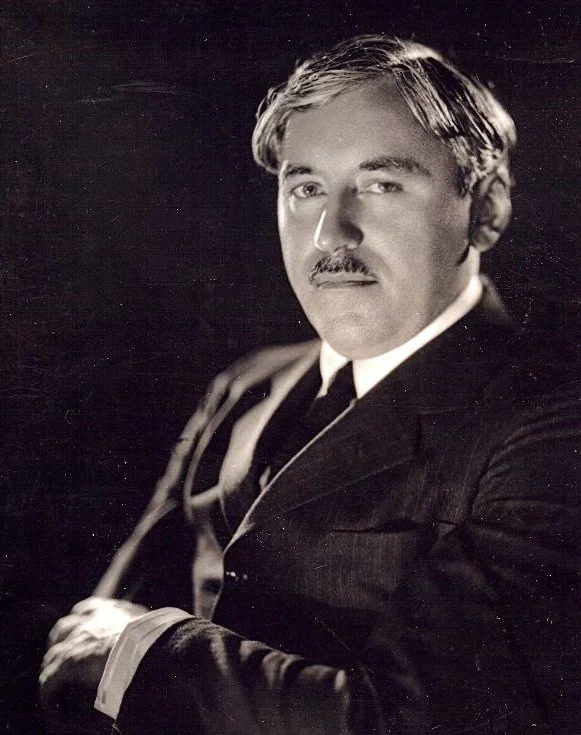
Mack Sennett
Charlie Chaplin would cross paths here with an earlier employer, Mack Sennett. Sennett, who was on his way inside, recalled, “One of the last conversations I had with him took place in 1931 on the sidewalk in front of Musso & Frank’s restaurant on Hollywood Boulevard. Chaplin pinned me and recited the entire plot and action of a picture he was planning to make. I was hungry and wanted to get away. I knew what Chaplain was up to. He was using me for an audience. He wanted to see if his story would set my rocking chair in motion. But I had no rocking chair on the curb and I wasn’t happy about being a sounding board. He made the picture he described to me and it was great--City Lights.”
The film would be a big hit for the Little Tramp, despite being a silent film during the “talkie” movie revolution.
Over time, the Back Room and bar at the Musso & Frank Grill became a gathering spot for famous writers, many lured to Hollywood by the hefty paychecks. Writers have been a notoriously underpaid and underappreciated group of creative professionals. Now, many made far more money working in Hollywood than they ever did barely squeaking by writing books in New York. And trading stifling humidity and snow for sunshine and orange trees had to be a no brainer. To some of the writers it must have seemed like legal stealing or winning a lottery. Ironically, this good fortune was sometimes looked upon with disdain. There was a feeling among some that their success meant they were “selling out” to the studios.
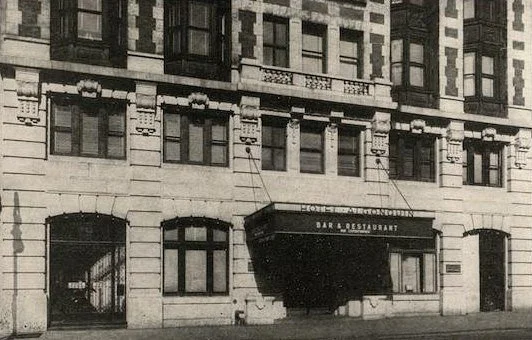
The Algonquin Hotel in New York City
This informal fraternity that gathered in the Back Room of Musso & Frank’s Grill was known as the “Algonquin Round Table West”, a Hollywood version of New York’s Algonquin Round Table, where literary and artist types would meet for lunch and camaraderie at the Algonquin Hotel. Harpo Marx, the silent, harp playing member of the comedic Marx brothers, was an honorary member and described the New York group as he saw it.
According to Marx, “The Algonquin was a refuge for the brightest authors, editors, critics, columnists, artists, financiers, composers, directors, producers and actors of the times. The dining-room corner was a hotbed of raconteurs and conversationalists. But until I came along, there wasn’t a full-time listener in the crowd. I couldn’t have been more welcome if I had had the power to repeal Prohibition.” Some of the other famous members included Dorothy Parker, Robert Benchley, Donald Ogden Smith and Charlie MacArthur.
When these artists came West, Musso & Frank’s would become their second gathering space.
They were drawn to Hollywood Boulevard for more than a paycheck and comradery however. Believe it or not, it wasn’t just the signature martinis that drew writers to Musso & Frank Grill, although they certainly played no small part. They would gather there in the Back Room bar of Musso & Frank Grill to drink, brag and commiserate on how shabbily the establishment, i.e. the studios, were treating them. Many a writer was conflicted while working in Hollywood, to some it meant constant compromises. However, they weren’t all bitching and moaning.
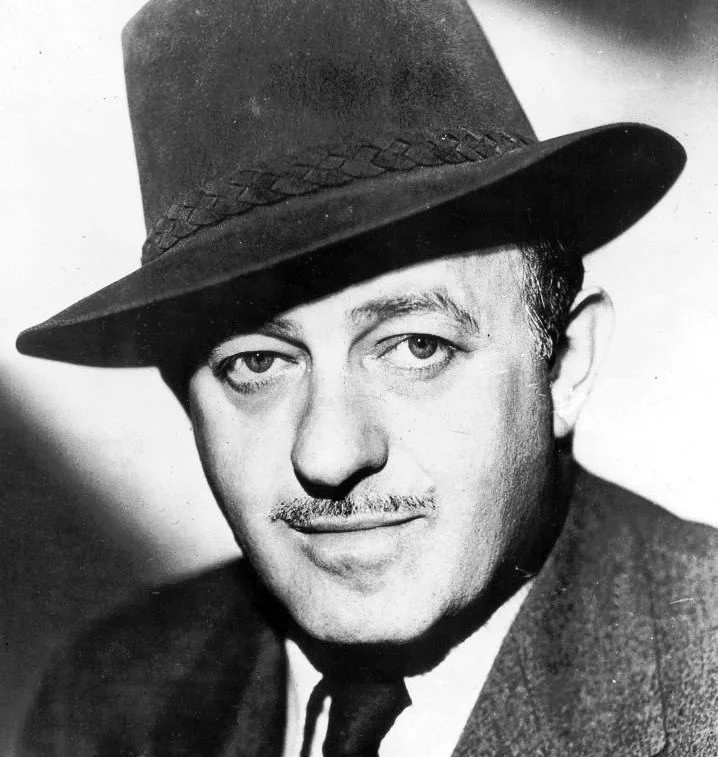
Playwright, novelist and screenwriter Ben Hecht
Ben Hecht, who would become one of Hollywood’s most successful screen writers, took it all in stride. He had no problems with taking the money and running and he admitted he loved the lucrative set-up.
One of the first to hear the siren’s call from Hollywood, Hecht was writer and playwright, who had found success on New York’s Broadway. Hecht had been tipped off by Western Union telegram proclaiming the embarrassment of riches Hollywood had to offer by another writer who had found success there. According to Hecht, “The telegram he delivered on this spring day in 1925 came from the unknown Scythian wastes of Hollywood, Calif. It read, “Will you accept three hundred per week to work for Paramount Pictures. All expenses paid. The three hundred is peanuts. Millions are to be grabbed out here and your only competition is idiots. Don’t let this get around. Herman Mankiewicz.”
Hecht arrived in 1926 and by 1927 he had worked on the script for Josef von Sternberg’s Underworld for which he received an Academy Award for Best Writing (Original Story). Things only got better for Hecht, who had no problems with taking the money and running to the bank. He freely admitted he loved the lucrative set-up.
“For many years Hollywood held that double lure for me, tremendous sums of money for work that required no more effort than a game of pinochle. Of the sixty movies I wrote, more than half were written in two weeks or less. I received for each script, whether written in two weeks or (never more than) eight weeks, from fifty thousand to a hundred and twenty-five thousand dollars. I worked also by the week. My salary ran from five thousand dollars a week up. Metro-Goldwyn-Mayer in 1949 paid me ten thousand a week. David O. Selznick once paid me thirty-five hundred a day.”
According to Hecht alcohol played a big role in the daily routine of the movie industry crowd, and not just writers, “Most of the important people got drunk after one o’clock, sobered up around three-thirty and got drunk again at nine.”

A 1930s Underwood typewriter
Obviously, not all screenwriters had the same phenomenal success as Ben Hecht. Hollywood’s love/hate relationship with writers is complicated, to say the least. Movie mogul Jack Warner referred to writers as “Schmucks with Underwoods.” Schmucks is defined as “an item or person that is considered useless.” And for those under a certain age, “Underwood” is defined as “a popular brand name for a vintage writing contraption with keys, once known as a typewriter.” Yet some moguls and producers with good taste, like Samuel Goldwyn, actively hired and supported famous writers as a way to elevate his own productions and reputation.
The movie studios often used the writer’s fame to pre-sell an audience on the filmed version of their bestselling novel. Despite the slim chance of success, the life of a writer can be one of frustration, isolation, insecurity and self-doubt with anonymity being a contributing factor to all of the above. Is it any wonder why some writers have a close personal relationship with the bottle?
Case in point is the story of William Faulkner and Clark Gable. Faulkner had been invited to duck hunt with Gable and Faulkner’s director friend, Howard Hawks. While preparing for the hunt, Gable asked Faulkner who he thought were the greatest living writers of the time. Faulkner replied, “Ernest Hemingway, Willa Cather, John Dos Passos, Thomas Mann, and William Faulkner.” Unaware of Faulkner’s work, Gable then asked the novelist if he too was a writer. Unfazed, Faulkner got the last laugh when he tersely replied, “Yes, Mr. Gable. And what is it that you do?”
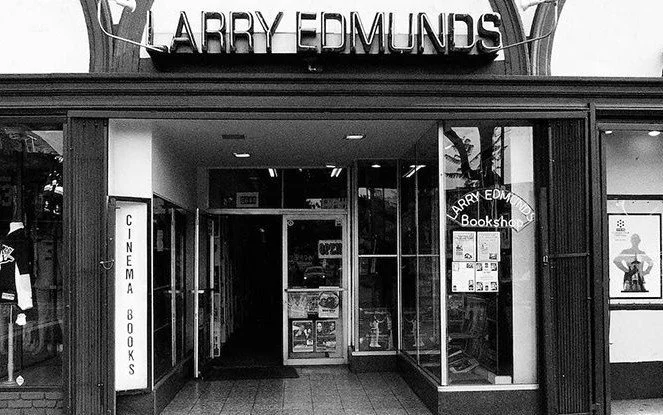
Larry Edmonds Bookshop at 6644 Hollywood Boulevard is still the place for serious cinephiles
Location, location, location played a large part in making Musso’s an outpost for writers. Many of the writers lived in near-by hotels and apartments. Also nearby were a group of very popular and reputable book stores. The family-owned Pickwick Books located at 6473 Hollywood Boulevard, Larry Edmonds Bookshop at 1603 North Cahuenga Boulevard, their original location, and the Stanley Rose Bookstore at 6661 ½ Hollywood Boulevard, were very popular with the literary set. These stores would not only cater to their personal reading tastes and desires but would also often serve as de facto research centers for various writing assignments.
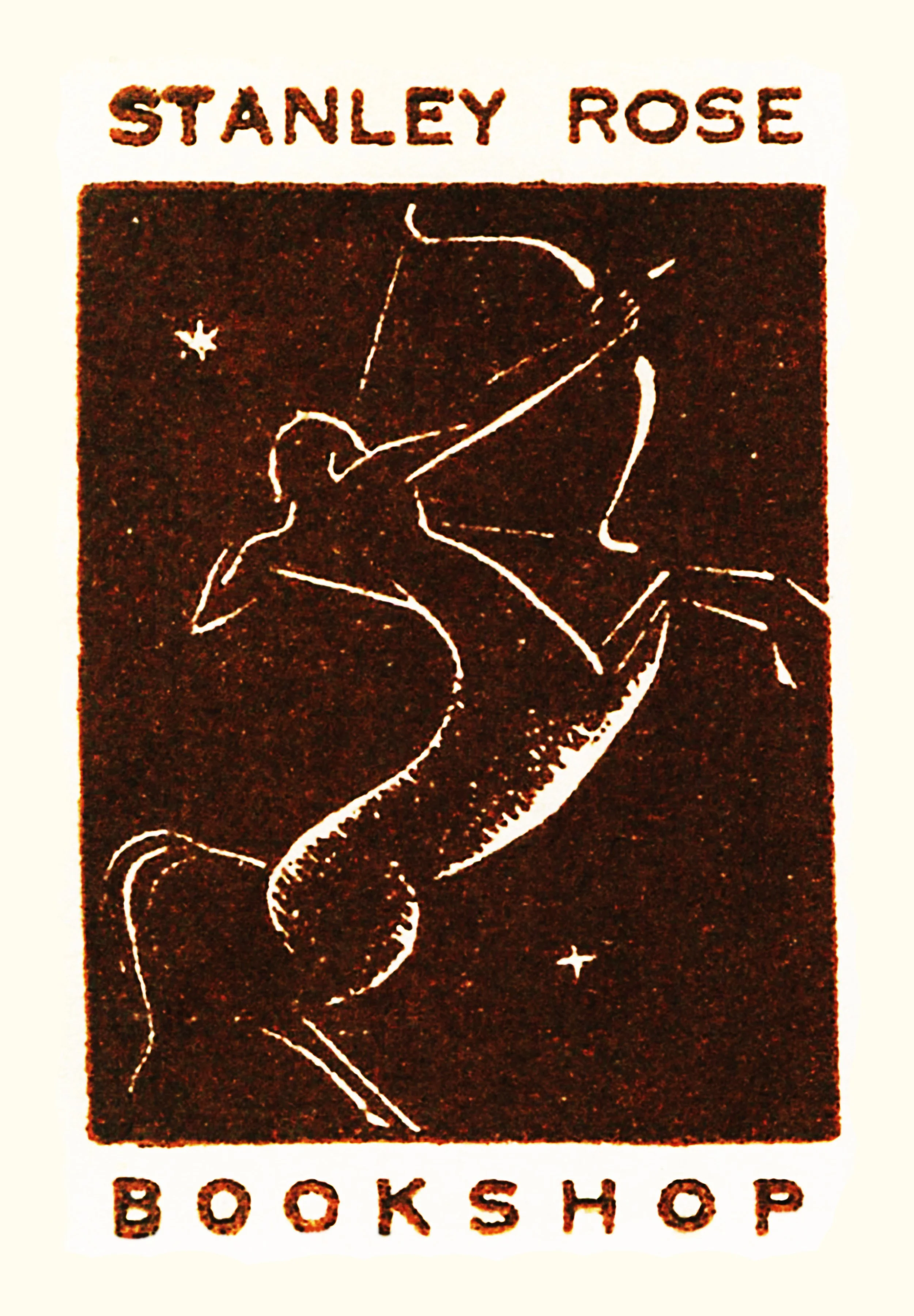
The Stanley Rose Bookshop bookplate
The literary elite which hung out in Stanley Rose’s bookstore, located next door to Musso & Frank’s on Hollywood Boulevard, rivaled the sophisticated clan that gathered for lunch at New York’s Algonquin.
Stanley Rose spent so much time at the Musso & Frank Back Room bar that many speculated he actually ran his bookstore from there. The written word was not the only draw there. The room in back was often used as a local art gallery.
And the owner, Stanley Rose, was considered by many, a unique Hollywood character.
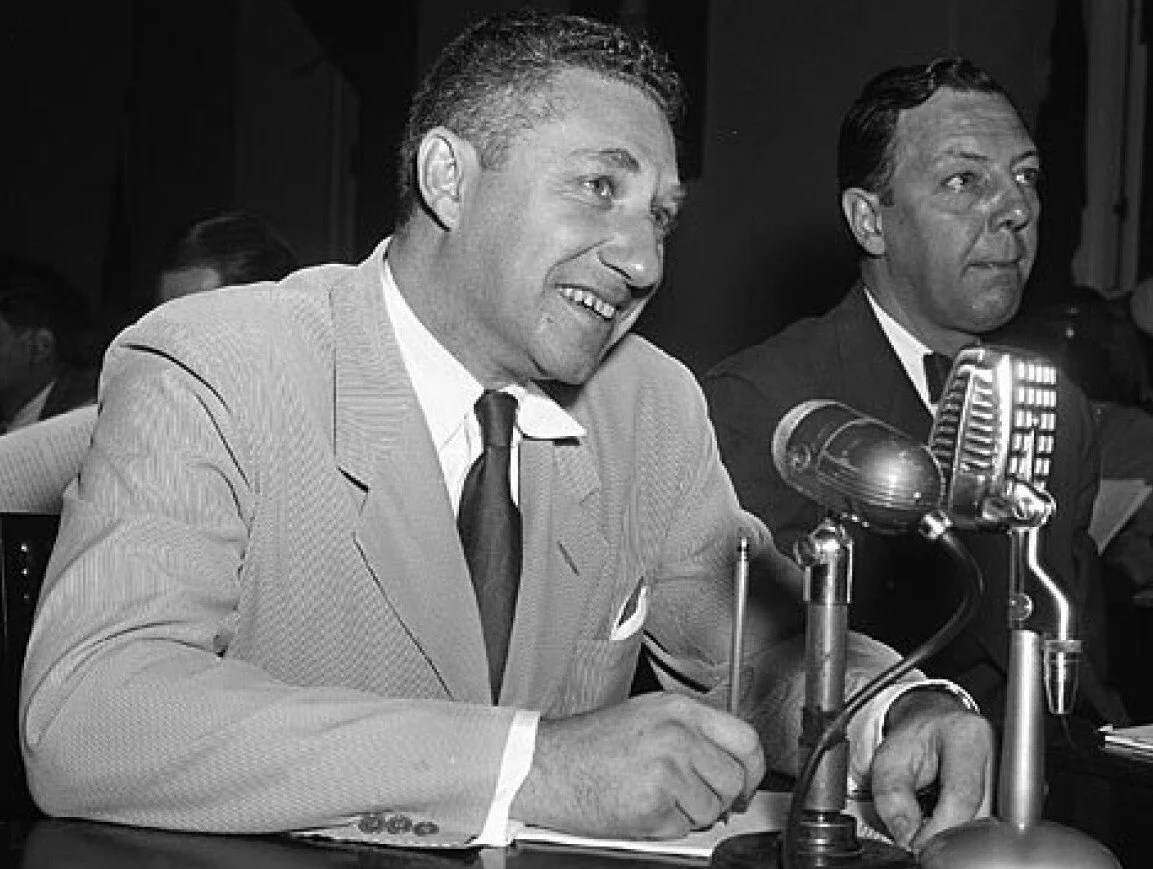
Author and screenwriter Budd Schulberg
According to Budd Schulberg, who wrote What Makes Sammy Run? (1941), On the Waterfront (1954), and A Face in the Crowd (1957), Rose was a real piece of work.
“Stanley Rose wasn’t one of the characters in West’s little time-bomb of a Hollywood novel, The Day of the Locust, but he might have been. For Stanley Rose, as a free-booting Texan whose light of intelligence and sensitivity was hidden in a bushel of amorality, had access both to the offices of the stars and producers of the big studios, where he would peddle his best sellers and his non-sellers out of a carpet bag, and to the back street and after-hour joints of Hollywood vice.”
“Stanley Rose was as much at home with prostitutes and would-be gangsters as he was with the littérateurs. ‘Read anything good lately?’ a writer just in from New York had innocently asked Stanley Rose. ‘Me? I hate books!’ ‘Then how come you run a bookstore?’ ‘Cause I like to keep a joint where my pals c’n hang out,’ Stanley had explained.”
“Although Stanley obviously enjoyed his insistence that he never bothered to read the books he sold, he cast a benevolent eye on the literary types who ran up large charge accounts at the “club” and at Musso & Frank’s, the friendly restaurant where needy writers could always eat for free simply by signing Stanley’s name. Some very good writers took advantage of this permissiveness when they were “between assignments,” which was the accepted euphemism for studio unemployment.”
“Stanley had his favorites among the writers who made his bookstore on Hollywood Boulevard their home away from home (Bill Saroyan was one, Bill Faulkner another, this habitué a third). And what a collection they were. Wander in from Hollywood Boulevard—that Middle Western Main Street with its sad, exotic embellishments—and you would find yourself browsing and brooding with John O’Hare, Guy Endore, Scott Fitzgerald, Erskine Caldwell, Gene Fowler, John Fante, Jo Pagano, Aben Kandel, Dalton Trumbo, Dashiell Hammett, Jim Tully, Tess Slesinger, Sid Perelman, and Dorothy Parker.”
“Strolling into the back room you found congeniality in the art gallery where original Picassos, Klees, Brancusis, and the best of our local artists—Fletcher Martin and Hillaire Hilter—were being seen for the first time in Hollywood’s brief and spastic history, your appreciation basted with orange wine, a beverage that Stanley Rose dispensed by the gallon.”
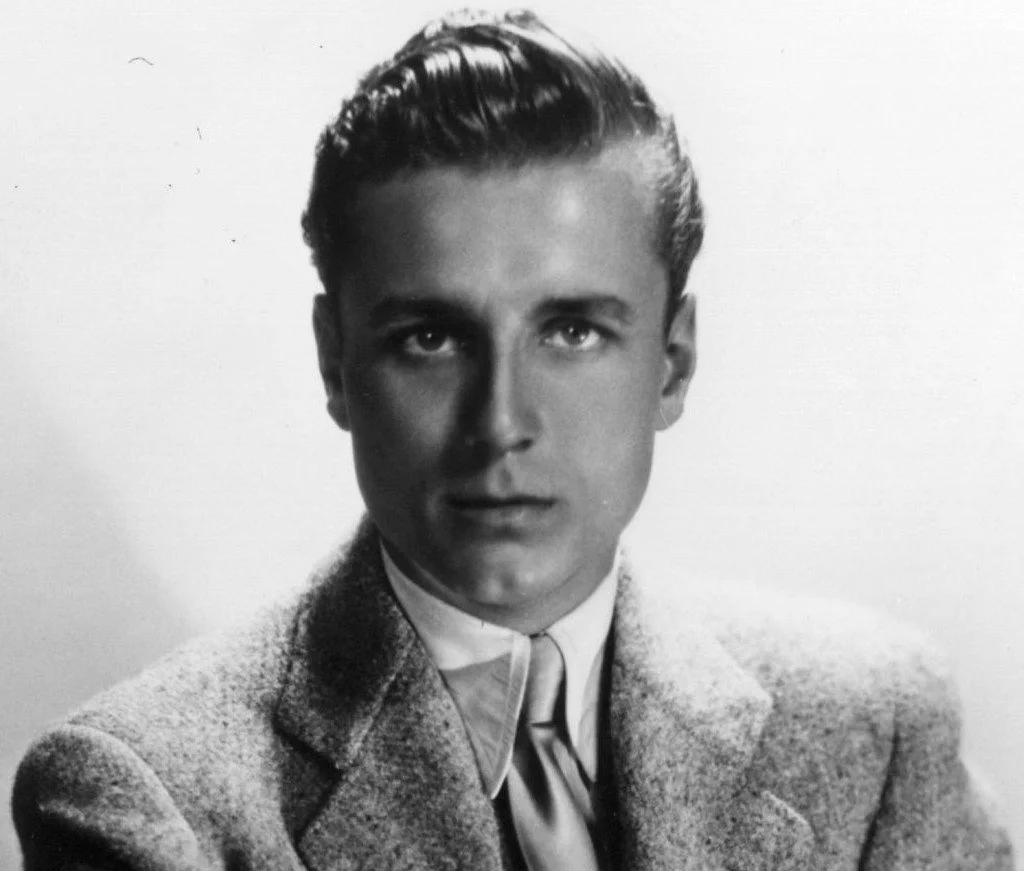
Actor William Bakewell
Actor William Bakewell spent his share of time roaming the isles of books and had fond memories of the store and owner.
“Stanley Rose’s Book Shop was a familiar haunt for Hollywood literary browsers during the 1930s, made especially inviting by its convenient location. It was situated next door to, in fact, almost adjoining, the popular Musso and Frank Grill on Hollywood Boulevard, resulting in a steady flow of customers, stopping off en route to luncheon or dinner—a charming aperitif of books.
“Stanley Rose, the proprietor, was a sandy-haired, rumpled, old-shoe fellow with an occasional weakness for the bottle, but he had a relaxed, soft sell manner which seemed to have a special appeal for many of the leading authors of the day—when they were in Hollywood, that is. Screen writers in particular were habitués of the store, such as Robert Riskin, who wrote the scripts for most of Frank Capra’s biggest hits, and Jo Swerling, who conceived the idea of turning Damon Runyon’s stories into a musical known as Guys and Dolls. And it was not uncommon to spot such literary figures as Ben Hecht, Louis Bromfield or John O’Hara, off in a corner chatting with Stanley.
“But Rose’s most consistent crony was the colorful novelist Gene Fowler, an impressive imbiber. The two of them went on many a bender together, sometimes in the company of the picaresque Hollywood portrait painter, John Decker, much to the dismay of Rose’s devoted assistants, little Yetive Moss and Larry Edmonds, (whom the popular film bookstore on Hollywood Boulevard is named), who minded the store during those liquid excursions.
‘Hey, Billy, there’s a new book by Steinbeck you should read,’ Stanley would say as I strolled into the shop. ‘Take it home and read it,’ he would suggest. ‘If you don’t like it, bring it back. It’s O.K.’ His generosity and easygoing approach to merchandising stimulated a kind of mañana attitude on the part of many of his customers resulting in a host of long overdue accounts which finally put him out of business.
“Stanley Rose has long since left the scene, but his book store remains in my memory as an appealing segment of life in the Hollywood of the thirties, when the Boulevard was safe and sane and populated by pedestrians who were reasonably respectable.”
The Stanley Rose Bookstore earned a well-known reputation as a place to hunt for famous writers as well as those wishing to become one. A drifter, new to Hollywood, hung out there, hoping some of the famous writing talent might rub off on him. He would have some success as a writer, but he became famous as an actor. His name was Robert Mitchum.
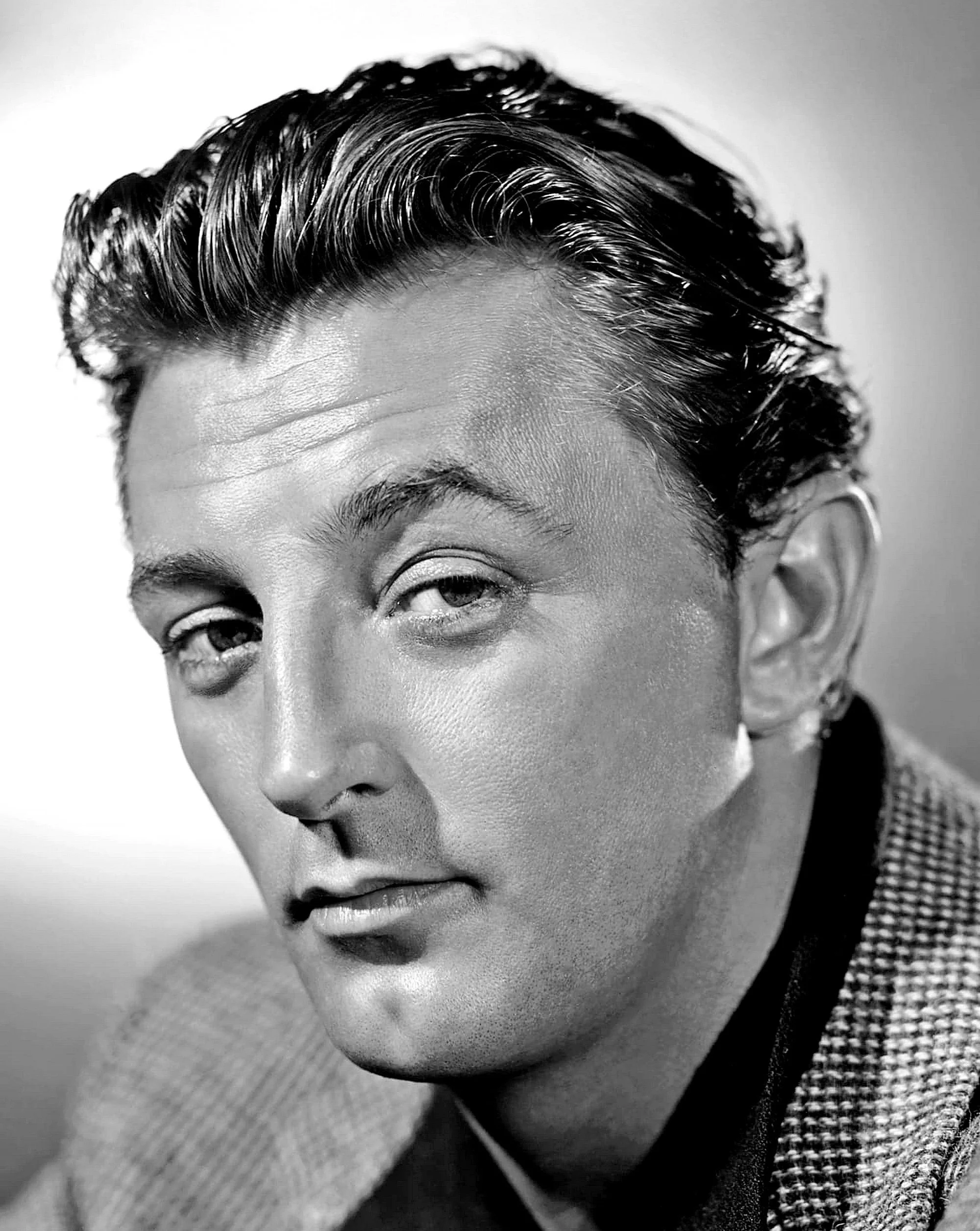
Robert Mitchum
It was a revolving cast of characters but the core group was an impressive one. And all that intellectual stimulation required fuel to keep it going and they would spill over to Musso & Frank Grill.
Yet, there was another piece of the puzzle that made the Musso & Frank Grill a beacon for so many writers. The Screen Writers Guild was conveniently located across the street at 1655 North Cherokee. Before and after meetings, the bar at Musso’s was the destination.
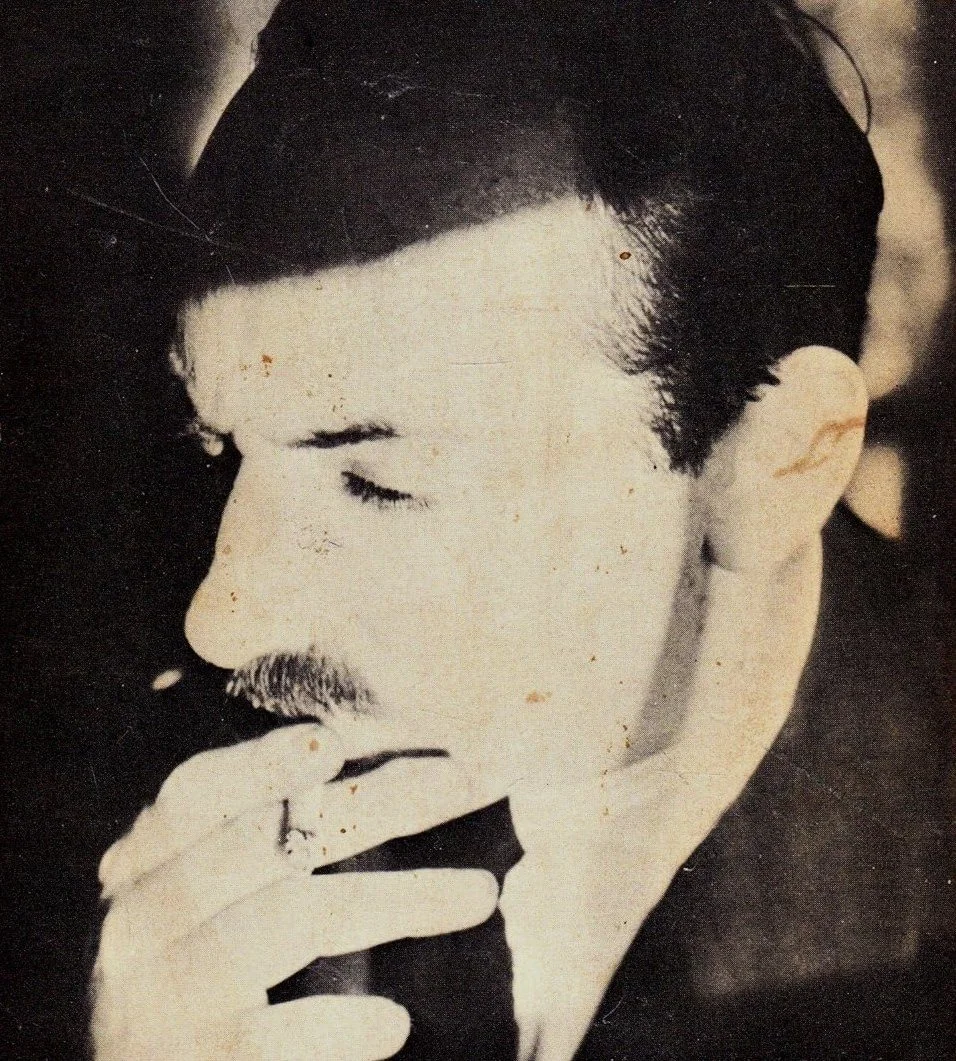
Nathanael West
Nathanael West was a strong supporter of the Guild and a meeting attendee. However, when the meeting started to bog down with procedural details; a bored West would head a block north to the Musso & Frank bar until his vote was needed. He also lived in Hollywood, for a time in the Parva-Sed-Apta apartments at 1817 North Ivar Avenue. It was here he wrote his novel that focused on the rarely told tragic underbelly of Hollywood, The Day of the Locust (1939). It is said that many of the book’s characterizations were inspired from fellow tenants and residents of his North Ivar Avenue neighborhood.
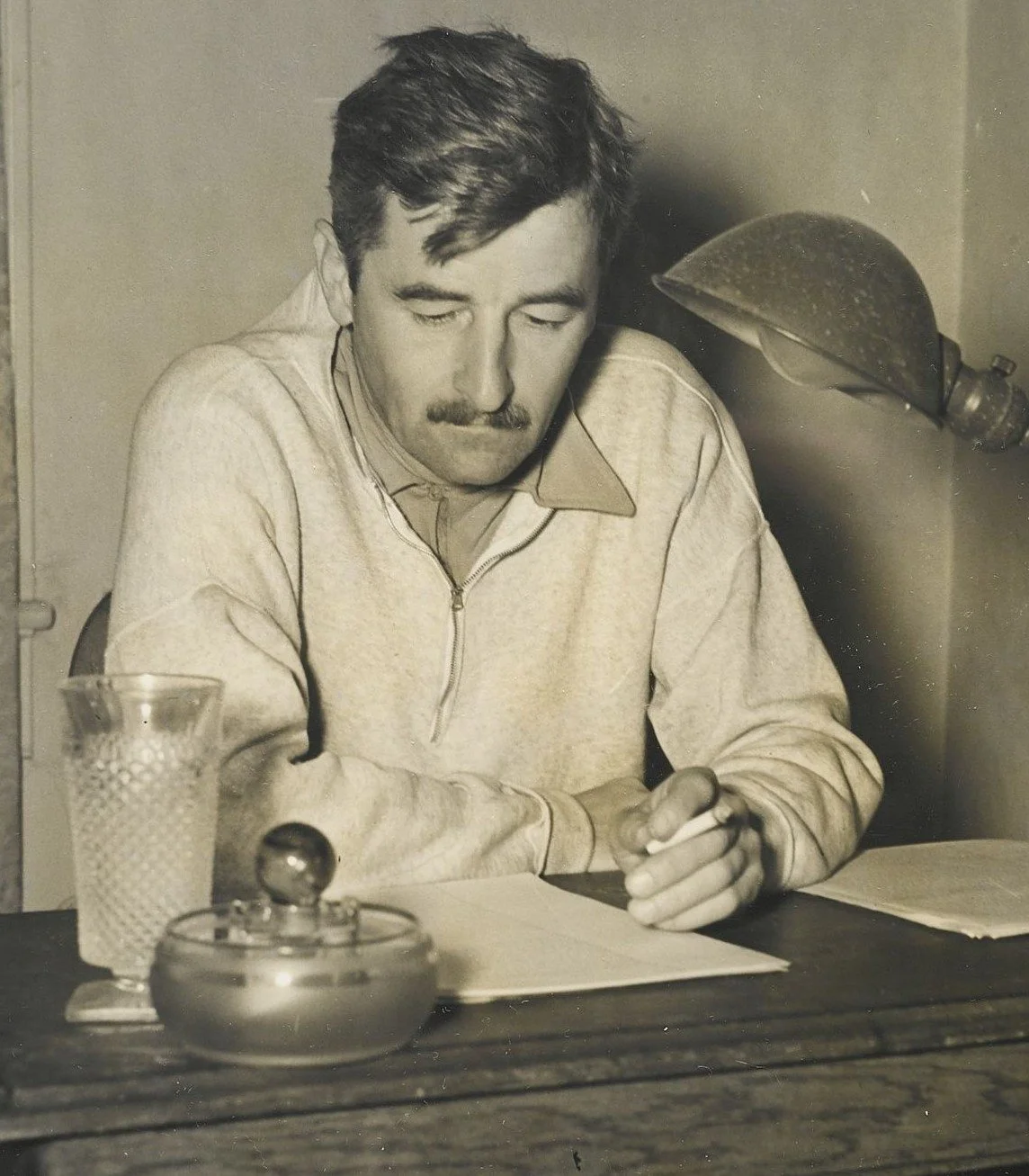
William Faulkner
Perhaps no writer had as strong of a connection to Musso & Frank’s than William Faulkner. When he was flush, he was a regular here, often in the company of his lover, Meta Wilde. The couple met in 1936 and carried on a long love affair, even though Faulkner was married at the time. Considered scandalous at the time, Faulkner kept their relationship secret except to close friends. And many of them were regulars here too. At the time of their affair, Faulkner was living and working out of the near-by Knickerbocker Hotel on Ivar while under contract to Warner Bros.
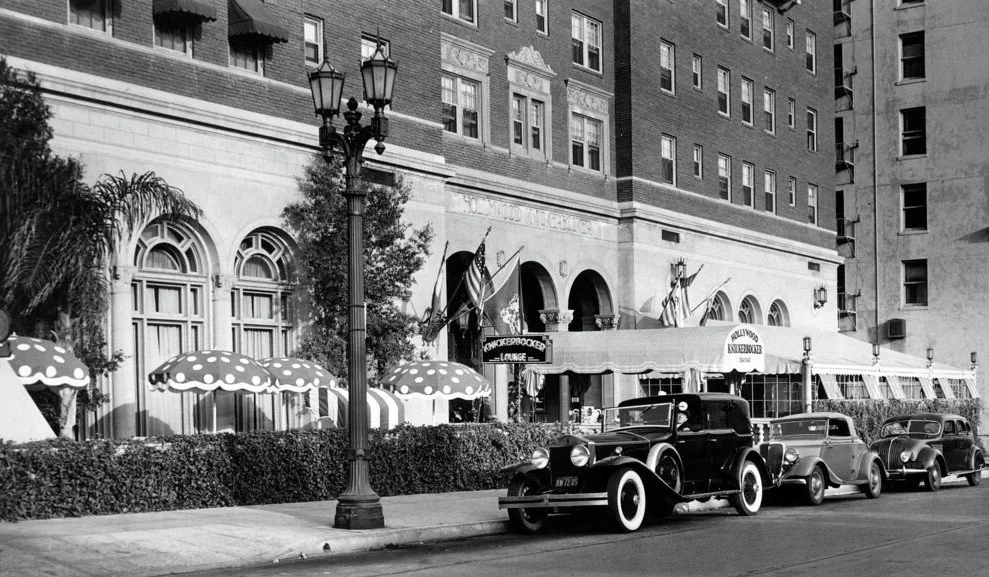
The Knickerbocker Hotel in Hollywood
Since she owned a car, it was Meta Wilde that picked up William Faulkner for their first formal date. Faulkner instinctively took the driver’s seat of Wilde’s car but admitted to a chronic hatred for driving. “We changed seats and I drove to Musso & Frank’s restaurant on Hollywood boulevard, where Bill had made reservations. Most of the money he earned for his work on The Road to Glory was deposited every week in a bank in Oxford, but tonight, he told me the sky was the limit. Knowledgeable about wines, he ordered a white wine of good vintage and recommended that I try a glass. We looked around the restaurant with its parquetry and murals, we smiled at each other shyly in the way a man and a woman who know too little of each other, and clinked our glasses together.”
Because of Faulkner’s base at the Knickerbocker Hotel, they would often arrive and depart Musso’s on foot. Back then, Hollywood was quite a different place.
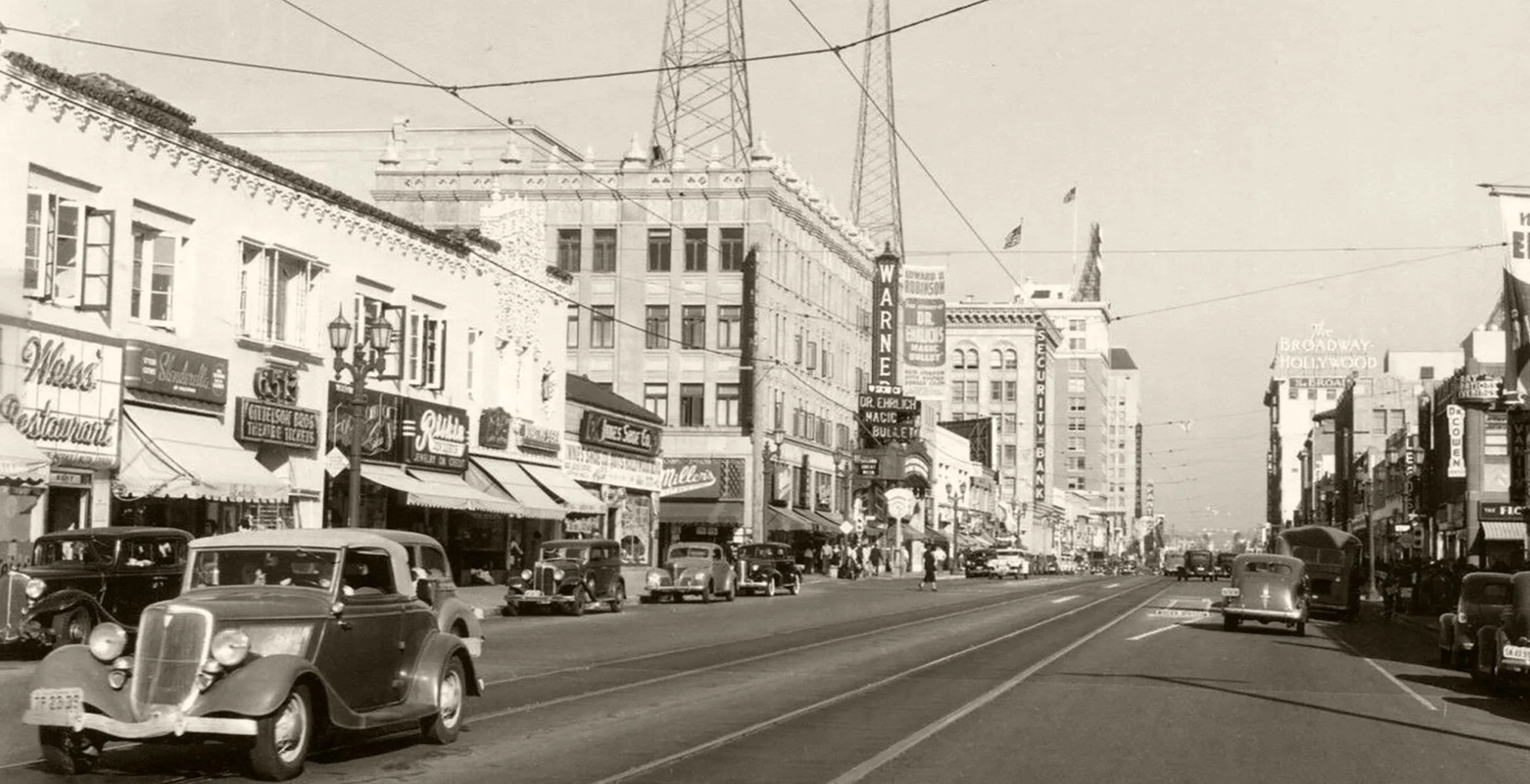
Hollywood Boulevard in 1940
“We walked along Hollywood Boulevard, peering into store windows, listening to newspaper hawkers in full cry on street corners, Grauman’s Chinese and Egyptian theaters were disgorging patrons, and other moviegoers were queued up waiting to replace them. Everywhere people hurried or milled about. The Hollywood and Roosevelt hotels were the great islands of light. Streetcars that would take passengers to downtown Los Angeles clanged by. In that day, when the boulevard was Main Street for members of the motion-picture and radio industries, one could occasionally glimpse a Barrymore, Joan Crawford, Constance Bennett, Carol Lombard, Ruth Chatterton, Robert Montgomery or almost any star out for an evening.
“While it would never be anything more that an overgrown small-town thoroughfare, tacky, dinky, funky, bland, it became on premiere nights a grandiose street of sweeping searchlights, chauffeured limousines, men in tuxedos and women in gowns by Adrian and Irene emerging from cars, and fans screaming hysterically in the bleachers as they recognized stars. The next morning, it would be its characterless, unprepossessing self, a commonplace broad slash through a commonplace area known as Hollywood.”
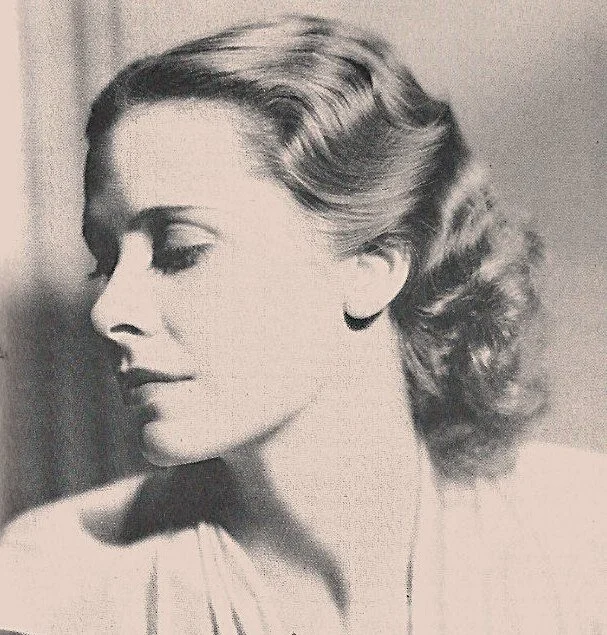
Meta Wilde
Despite both earning incomes, a night out was somewhat rare. “We broke our pattern of isolation and frugality only on Saturday afternoons when, at Bill’s wish, we would stop by at the back bar at Musso & Frank’s. The small room was always filled with writers then, some just in from New York, to begin screenwriting assignments, some taking time off from books in progress, some only minutes before release from the cubicles they occupied at major studios. At times, so many writers were crowded into that small space that it was impossible to pass between the crowded bar and the tables. It was, nevertheless, the one place where he could meet writers he liked or, if he chose, turn a chilly back on others. The bar was always strident with the nervous conversations of men and women freed for a few hours from the drudgery and loneliness of their craft, and there was hearty laughter and difference of opinion, strongly expressed, sometimes with table pounding and invective.”
“Bill sat drinking with me, smoking his pipe, laughing freely. He did not mingle much with his colleagues, yet he was happy to be among writing men. While he talked more at Musso & Frank’s bar than at any other time, he was by all odds the least communicative person in the room. When we sat longer than was our want, usually because of a colloquy that Bill found himself listening to or the late arrival of a writer he had not seen in years, we ordered dinner at our table.”
“Over the years, Bill was one of the habitués along with Nathanael West, F. Scott Fitzgerald, Budd Schulberg, S.N. Behrman, Dashiell Hammett, Max Brand, Jo Pango, Joel Sayre, A.I. Bezzerides, Lillian Hellman, Horace McCoy, John Fante, and other writers, many of whose books were popular in their time but whose names, unlike Bill’s, are all but forgotten.”
“He was polite to waiters, bartenders, and clerks. Inevitably, we ran into people I knew, but never his own acquaintances except at Musso & Frank’s.”
Even though Faulkner made sojourns to his wife, daughter and home, in Oxford, Mississippi, a historic stately 33-acre estate he bought in 1930 named Rowan Oak, he was forever faithful to Meta Wilde and Musso & Frank’s when he returned to Hollywood.
“One Saturday afternoon of Bill’s work week, we appeared at Musso & Frank’s back room—Bill had missed it—and found ourselves surrounded within minutes by writers, some from our earlier visits, others newly arrived from the East. The conversations in the bar were rarely weighty in content and never, as I recall, concerned with the state of the nation or the world beyond, where Hitler was beginning to throw an outsized shadow. Saturday afternoons were primarily for laughs, for exchanges of the latest Hollywood anecdotes. Had we heard the one about the movie executive’s relative who was kept on salary because he owed thousands of dollars in poker loses to studio moguls?
Pressed for an explanation of his brother-in-law’s duties, the movie satrap answered, ‘He is paid to keep a steady lookout from his office windows and notify us if he sees a glacier coming.’ Had Bill heard what Dorthy Parker or Robert Benchley had retorted to their respective producers? What Carol Lombard told her director he could do? Occasionally, there would be references to new movies or new books written by back-room habitués.That summer, Gone With the Wind was the subject of endless discussion. No, Bill said, he had not read it and therefore could not comment on the picture it presented of the South during the Civil War. More than one scribe referred to me as “Miss Scarlet” to Bill’s amusement.
“Hollywood writers were savagely critical of colleagues’ books, plays, and screenplays. Bill had his own opinions of the literary worth of other American writers whose works were being published, but he was careful not to express them in the context of table gossip and exercises in literary denigration.”
The plight of the Hollywood screenwriters and the compromises that comes with it was always weighing on the mind. It was often a question of selling your soul or not, or at least feeling like you did or didn’t. Like so many, William Faulkner faced that professional dilemma.
But according to Meta Wilde that was not an option for William Faulkner.
“To pay that price was unthinkable. He would have become a movie studio hack, grinding out treatments and screenplays, rewriting the work of his colleagues, hardening himself to the trivialization of his scripts by producers and directors and other writers, and in the end, lose the sacred power that was his gift. Even in his relatively short time as a wage earner in Hollywood, he had seen the system so corrupt novelists of great promise that their new books, if they wrote them at all, were little better than potboilers, scarcely recognizable as the work of the same authors. There were even writers who became so habituated to turning out pages only when the first check was in their hot, greedy hands that they could never again write on speculation. “Whores,” Bill said of them.”
The treatment of writers by the studios is well illustrated by this exchange between William Faulkner and his lover Meta Wilde that took place at their favorite hangout.
“Five years had passed since we last walked along Hollywood Boulevard to Musso’s. The major-domo ushered us to our favorite booth against the wall. Bill leaned back and rolled his head against the leather upholstery. ‘I thought, he said, ‘that I’d never make it back here with you to this good ol’ place.’
“We drank to lines that converge because they must and to all that Hollywood money.
‘It’s not that much, honey love. Not this time.’
‘Less than your established salary?’
‘A heap less.’
‘You were making about twelve hundred and fifty a week, weren’t you?’
“Bill nodded glumly. ‘They’re paying me three hundred dollars now.’
‘That’s awful.’
‘It’s all they’d go for. But after so many months, I get raises. Increments of fifty dollars, I think it is.’
‘I just can’t believe any studio would do this to you.’
‘I took it. I had to.’
‘Oh, Bill.’
“And glad to get it.’
‘You signed a contract?’
‘In Oxford.’
“Maybe you can get out of it.’
‘I won’t try, honey, because I’ve been told that if I behave myself, stay sober, turn out the work, cause’em not one scintilla of trouble, they’ll tear up the contract and give me a new one.’
‘They didn’t put it in writing?’
‘No’m. But I expect they’re honest people.’
Meta Wilde knew better. “The meager weekly check that he would be getting infuriated me. Beginning screenwriters received much more. This was William Faulkner, America’s greatest novelist, not a cinema student just out of UCLA or USC. The contract was demeaning and the studio knew it.”
Sometimes in life we have no choice but to take the offer and move on with life and that is what Faulkner did. Through it all, they remained faithful patrons.
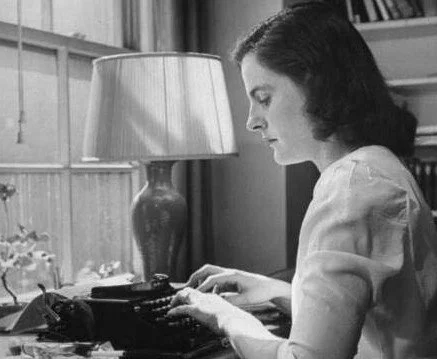
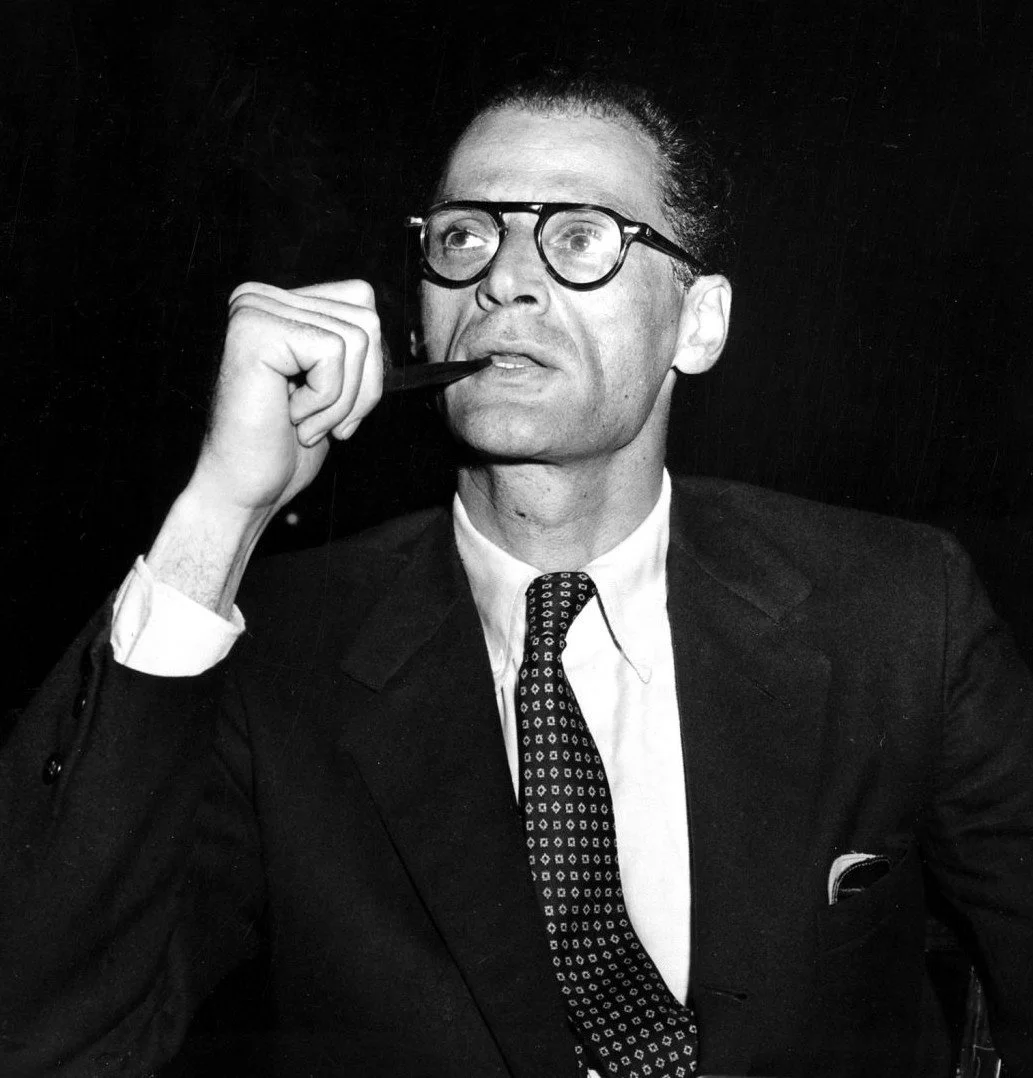
Mary McCarthy and Arthur Miller
As Wilde recalled, “There were new faces at Musso’s—Clifford Odets, Arthur Miller, Tess Slesinger, Raymond Chandler, Mary McCarthy. When I heard that Carl Sandburg and Sinclair Lewis were coming out to work on screenplays, I rushed to tell Bill in the belief that it would make him feel better about Hollywood. It didn’t. He snorted contemptuously when the newspapers announced that John Steinbeck was working with Alfred Hitchcock on the screenplay of Lifeboat.”
William Faulkner would abstain from biting the hand that feeds him and called out the writers for blaming Hollywood for their troubles and contradictions. “I get sick of those people who say if they were free of Hollywood what they’d do. They wouldn’t do anything. It’s not the pictures that are at fault. The writer is not accustomed to money. It goes to his head and destroys him—not pictures. Pictures are trying to pay for what they get. Frequently they overpay, but does that debase the writer? Nothing can injure a man’s writing if he’s a first-class writer. If he’s not a first-class writer, there’s not anything can help it much.”
Despite having industry friends like Humphrey Bogart and writer A.I. Bezzerides, Faulkner was not naive about the movie business, according to him, “Hollywood is a place where a man can get stabbed in the back while climbing a ladder.”
The aforementioned William Faulkner was the winner of the Nobel Peace Prize for Literature and the Pulitzer Prize for Fiction twice. Some of his novels included The Sound and the Fury (1929), As I Lay Dying (1930), Light in August (1932), and Absalom, Absalom! (1936). Faulkner was here so often the management allowed him to make his own Mint Julips, a favorite cocktail of his that reflected his Southern roots.
The list of famous writers that made the Musso & Frank Grill a de facto club house is impressive, to say the least.
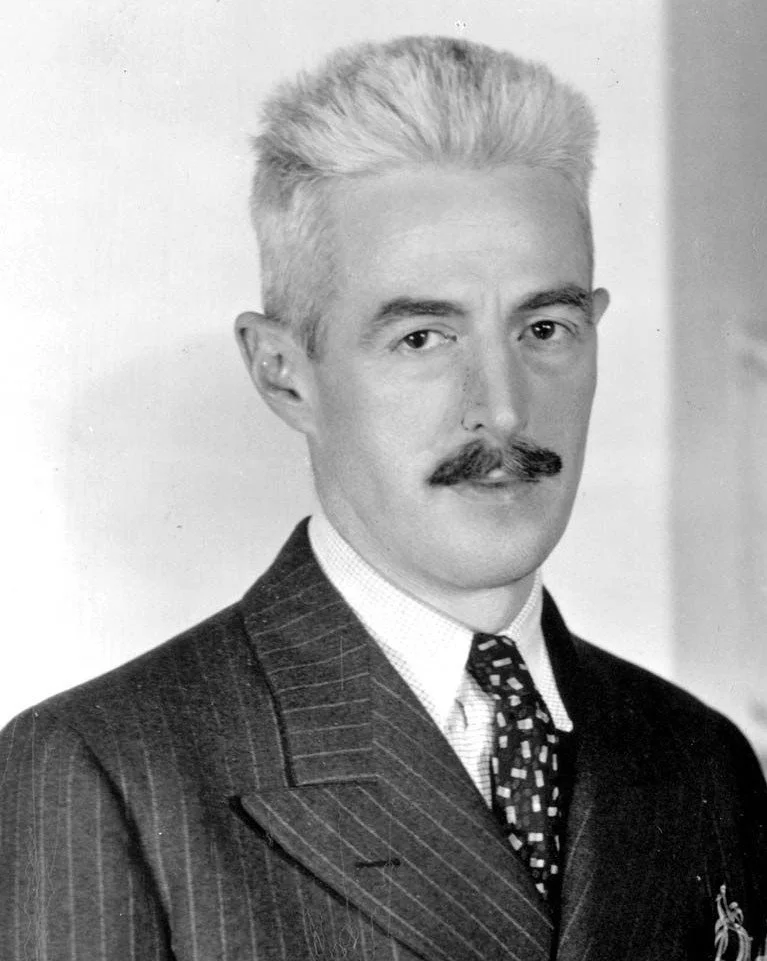
Dashiell Hammett
Dashiel Hammett, was a former Pinkerton Detective and writer of popular detective mysteries and brought to the silver screen enduring characters like Sam Spade and Nick and Nora Charles. Hammett also lived in Hollywood, first at the Knickerbocker Hotel and later at the Hollywood Roosevelt Hotel.
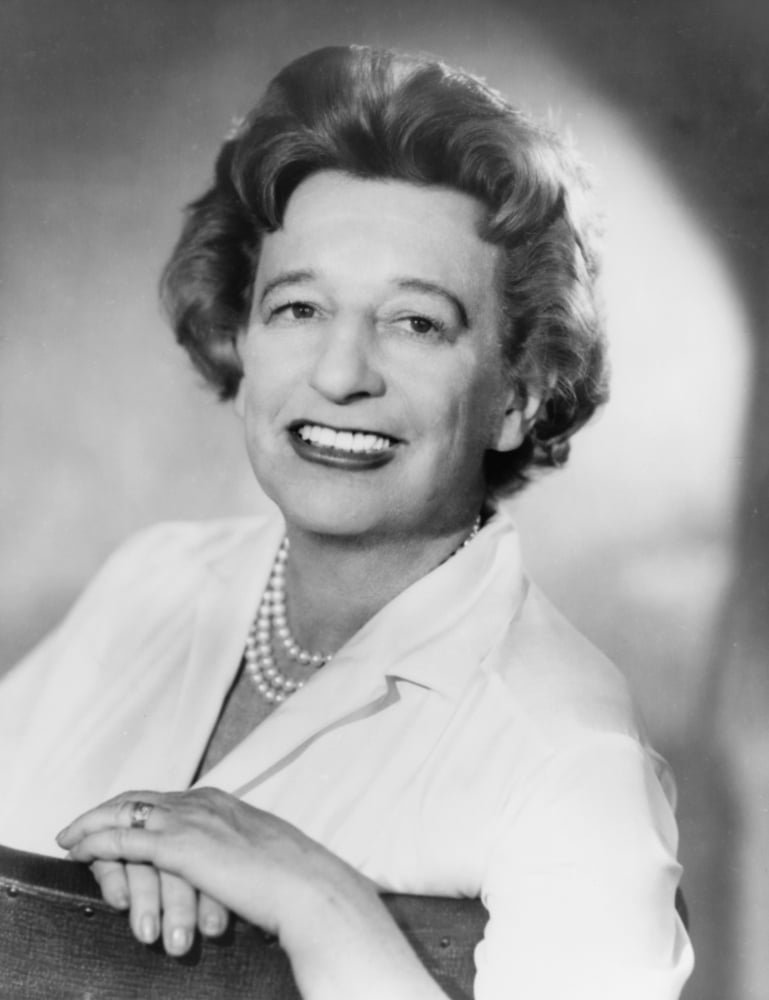
Writer Lillian Hellman had a long affair with Dashiel Hammett
After recovering from an alcohol-fueled bender, Hammett met a young M-G-M script reader at Musso & Frank Grill by the name of Lillian Kober in 1931. For Kober, the encounter was a life changer.
“We met when I was twenty-four years old and he was thirty- in a restaurant in Hollywood. The five-day drunk had left the wonderful face looking rumpled, and the very tall thin figure was tired and sagged. We talked of T.S. Eliot, although I no longer remember what we said, and then went and sat in his car and talked at each other and over each other until it was daylight. We were to meet again a few weeks later and, after that, on and sometimes off again for the rest of his life and thirty years of mine.”
The couple would begin a romantic relationship that lasted until Hammett’s death in 1961. Lillian Kober would become Lillian Hellman and she went on to a successful career as a script writer, playwright and novelist. She gained fame with the play The Children's Hour (1934) and The Little Foxes (1939) and would become a staunch supporter and promoter of the Screen Writers Guild.
A partial list of other prominent Musso and Frank Grill writers is an impressive one.
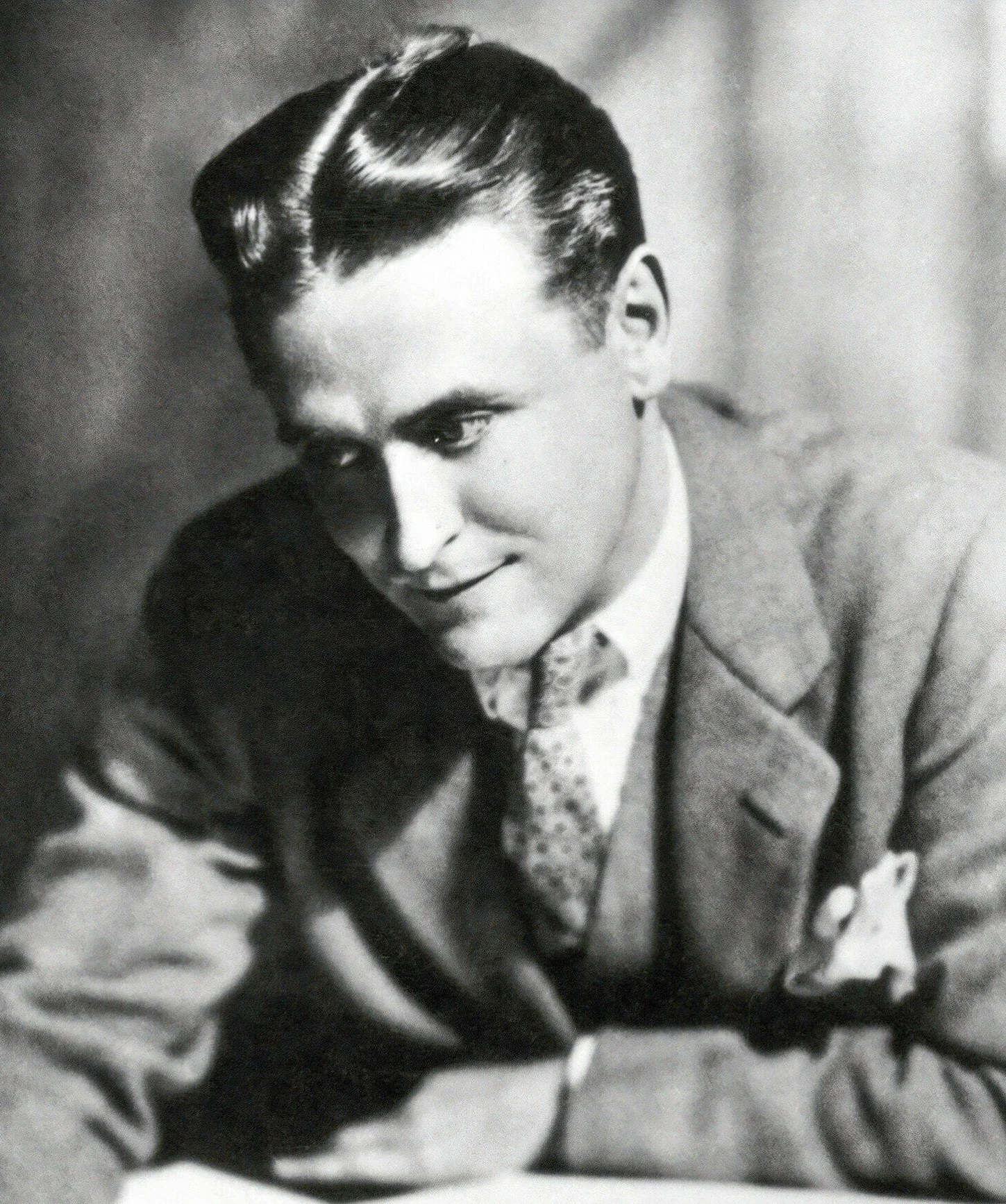
F. Scott Fitzgerald
F. Scott Fitzgerald was known for his novels, The Beautiful and Damned (1922), The Great Gatsby (1925), and the unfinished, The Last Tycoon (1941). He had a long affair with gossip columnist and author Sheila Graham. Complications of chronic alcoholism would end his life at the age of 44.
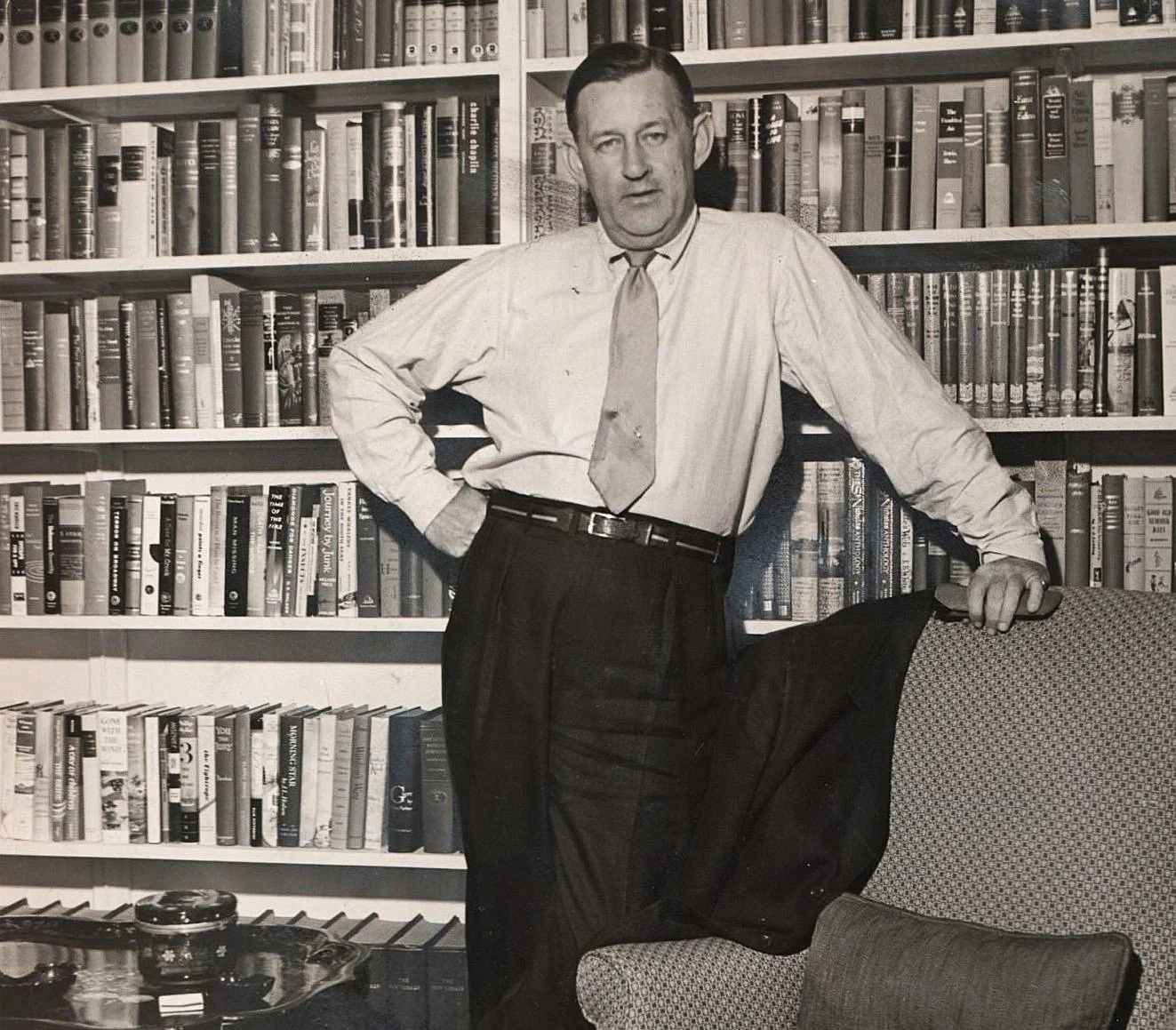
John O’Hara
John O’Hara, writer of Appointment in Samarra (1934) and Butterfield 8 (1935) could become a two-fisted brawler after a round or two of drinks.
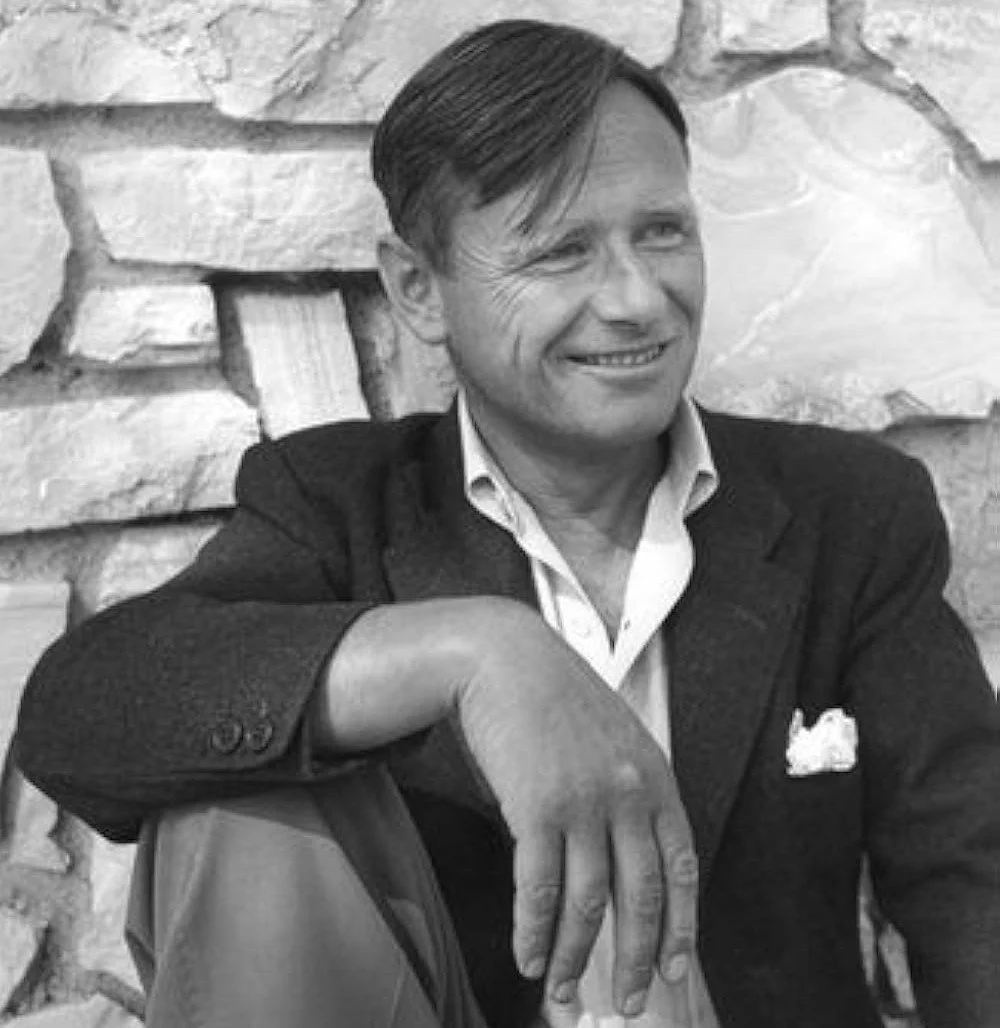
Christopher Isherwood
Christopher Isherwood, an English novelist and playwright whose work often carried gay themes, was known for All the Conspirators (1928) and The Memorial (1932) Mr. Norris Changes Trains (1935) and Goodbye to Berlin (1939). Erskine Caldwell, whose works included Tobacco Road (1932) and God's Little Acre (1933), and often reflected life in the Depression Era South. William Saroyan, was a Pulitzer Prize winner in 1940 and would receive an Oscar for Best Story with his adaptation of his novel The Human Comedy (1943).
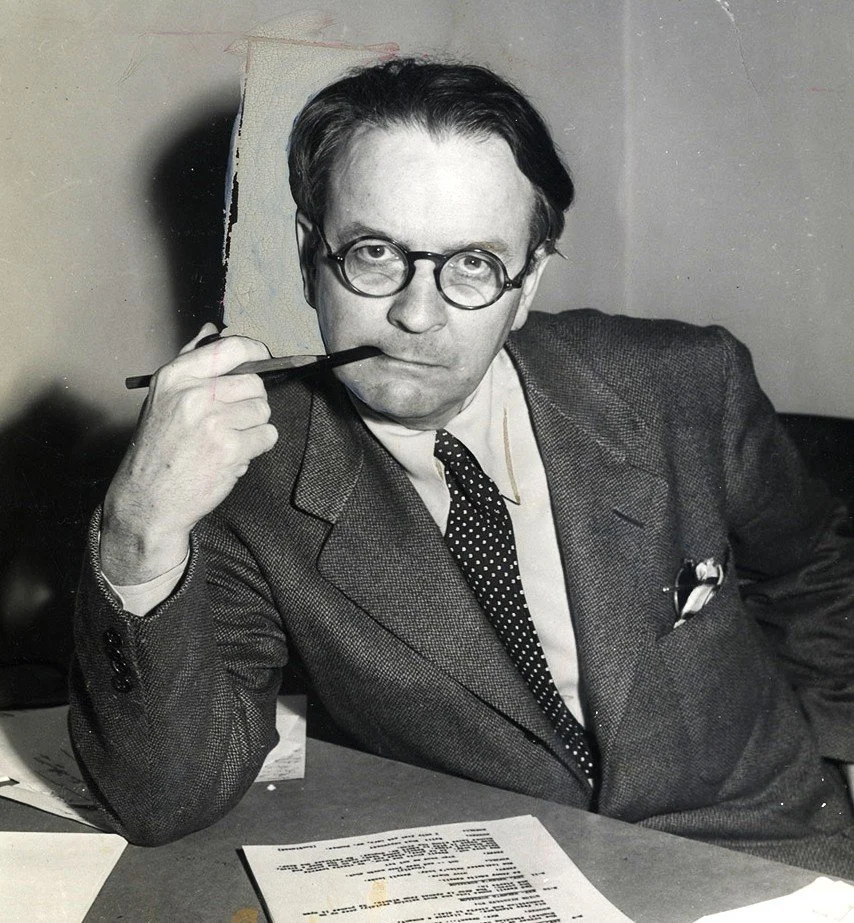
Raymond Chandler
Raymond Chandler had a successful Hollywood career having created an iconic detective by the name of Philip Marlowe in The Big Sleep 1939. Farewell, My Lovely 1940, The High Window 1942, Murder My Sweet, Lady in the Lake 1943. Yet despite his success, Chandler had an insight into the industry that gave him a comfortable lifestyle.
According to the best-selling author, “Hollywood is easy to hate, easy to sneer at, easy to lampoon. Some of the lampooning has been done by people who have never walked through a studio gate, some of the best sneering by egocentric geniuses who depart huffily—not forgetting to collect their last pay check—leaving nothing behind them but the exquisite aroma of their personalities and a botched job for the tired hacks to clear up…Writers as a class I have found to be over-sensitive and spiritually undernourished. They have the egotism of actors and rarely the good looks or charm…That’s one thing I like about Hollywood. The writer is there revealed in his ultimate corruption. He asks no praise, because the praise comes to him in the form of a salary check. In Hollywood, the average writer is not young, not brave, and a bit over-dressed… If my books had been any worse, I should not have been invited to Hollywood, and if they had been any better, I should not have come.”
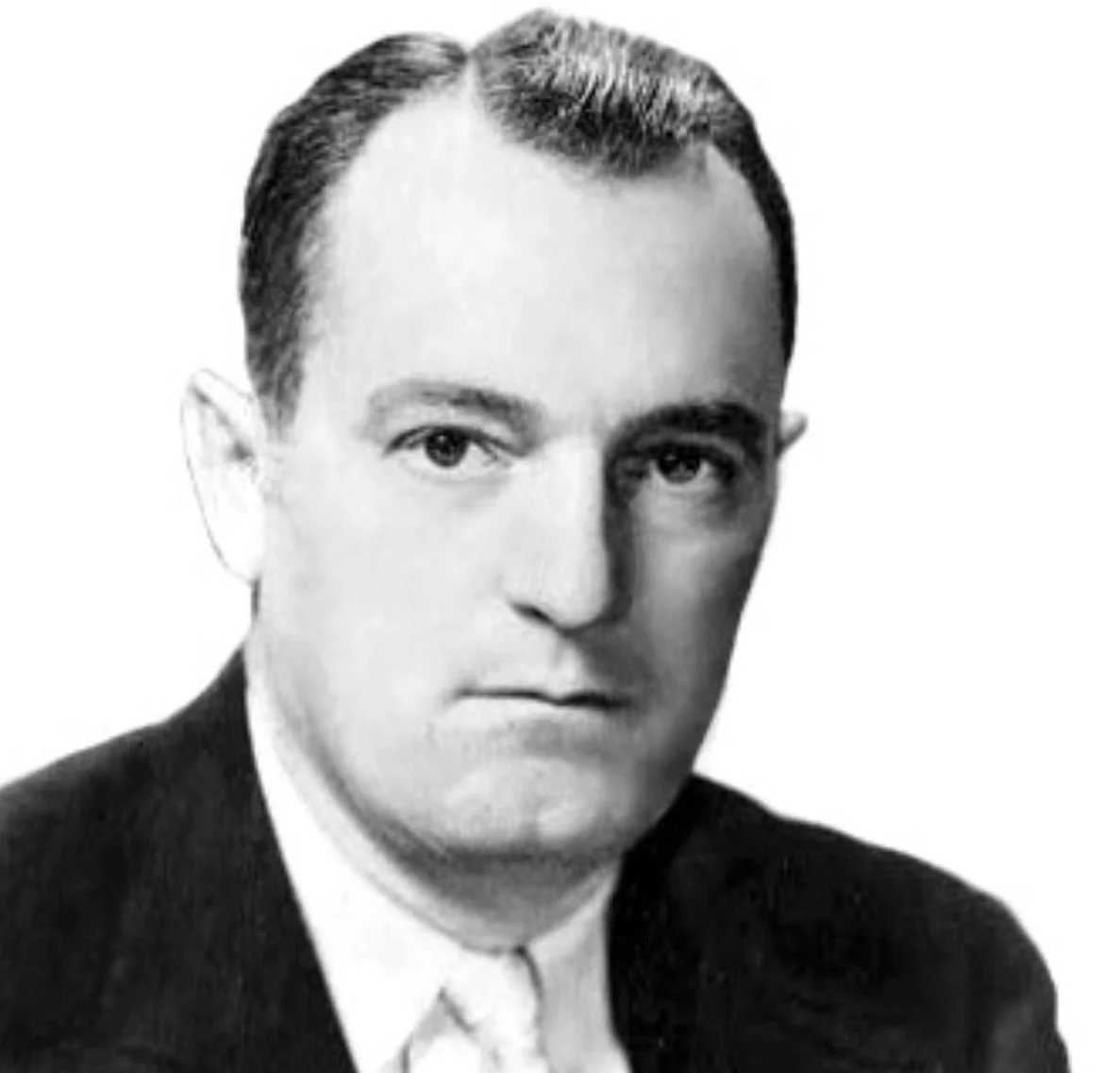
Horace McCoy
Horace McCoy originally came to Hollywood to be an actor but he found success sitting behind a typewriter. As a novelist his works included, They Shoot Horses, Don’t They (1935), No Pockets in a Shroud (1937), I Should Have Stayed Home (1938), Kiss Tomorrow Goodbye (1948). Among his screenwriting credits were Soldiers of the Storm (1933), Parole! (1936), Island of Lost Men (1939), Gentleman Jim (1942), and a script for Kiss Tomorrow Goodbye (1950). He once lived large in the high-toned El Royale apartments at 450 North Rossmore Avenue. After declaring bankruptcy, the heavy drinker moved into the Montecito residential hotel at 6650 Franklin Avenue, a short two blocks north of Musso and Frank’s Grill.
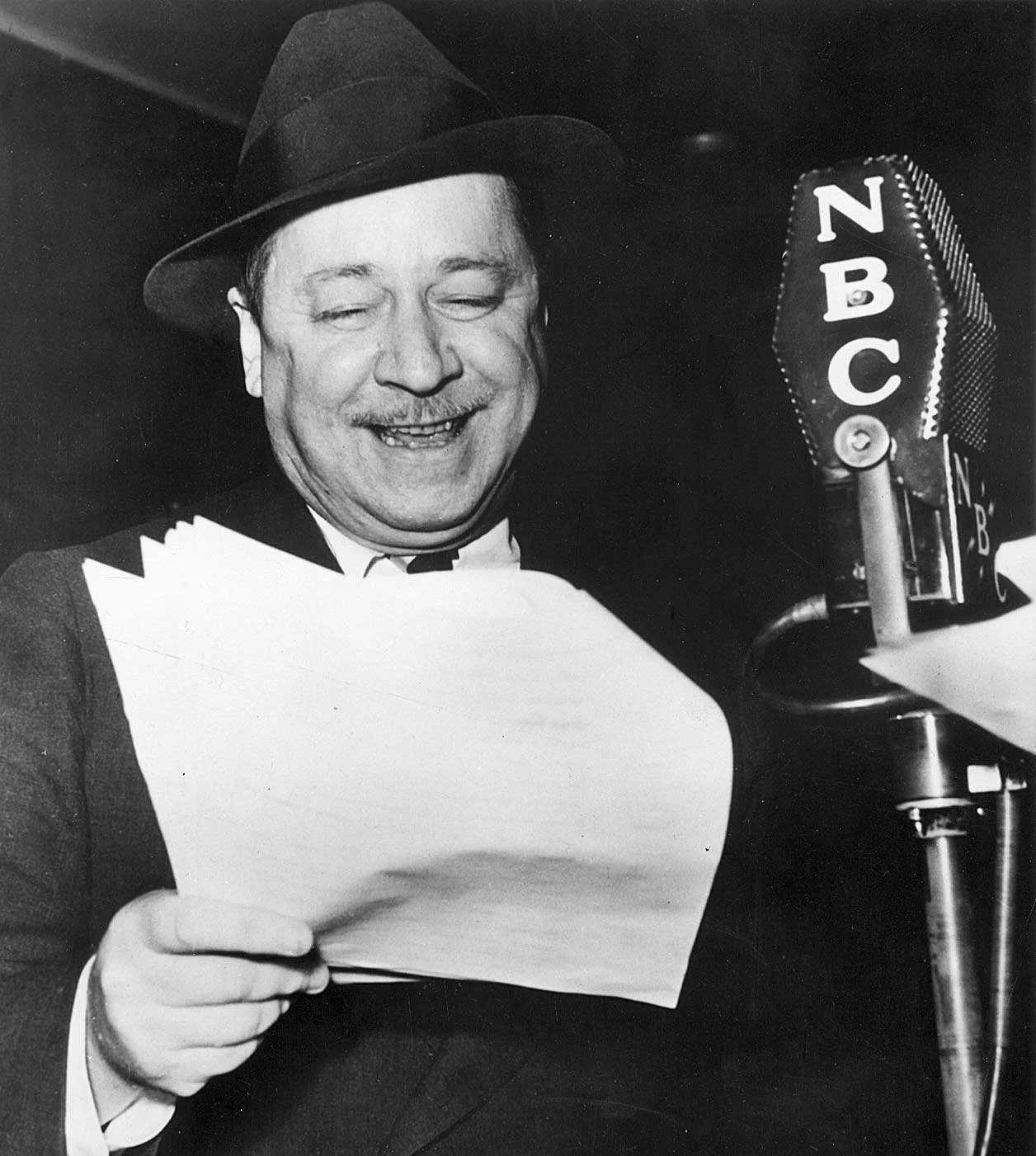
Robert Benchley
The Harvard educated Robert Benchley was a popular writer, actor, humorous and newspaper columnist. He appeared in a series of M-G-M short subjects and earned the title of “the humorist’s humorist.” Part of Benchley’s charm was his refusal to take himself too seriously, he once remarked, “It took me fifteen years to discover I had no talent for writing, but I couldn’t give it up because by that time I was too famous.” Benchley was a frequent resident of the infamous near-by Garden of Allah Hotel and Villas on Sunset Boulevard.
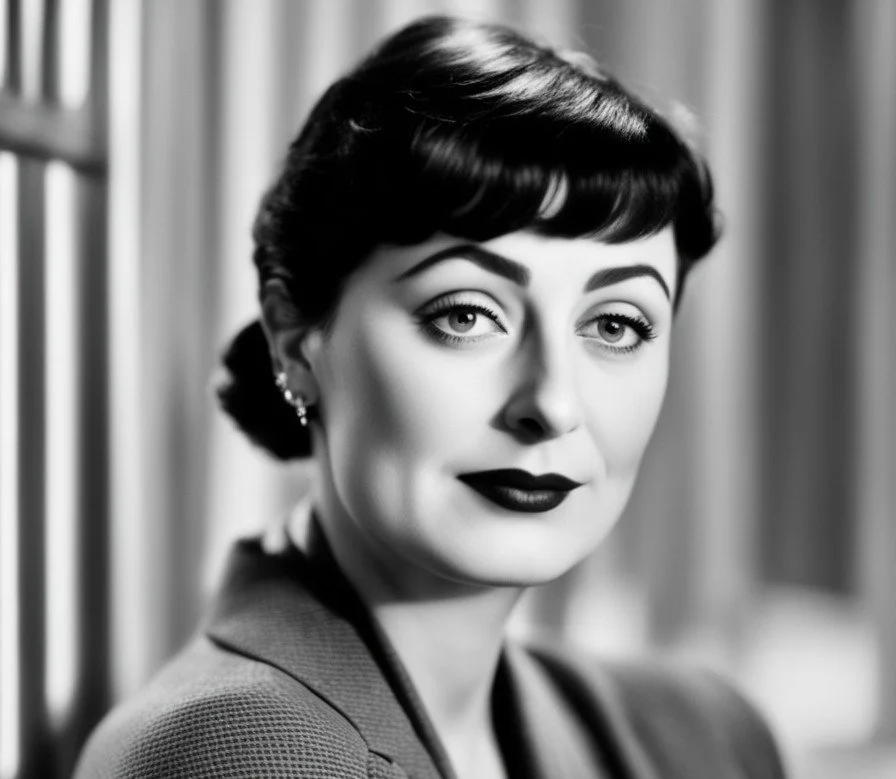
Writer, poet, screenwriter, critic and humorist Dorothy Parker
Dorothy Parker was a poet, screen writer and an original founder of New York’s Algonquin Round Table. She was known for her caustic wit “The first thing I do in the morning is brush my teeth and sharpen my tongue” and her ability to match or even best most men with her keen intellect. She could also hold her own, drink for drink. On the subject of drinking she once said, “I like to have a martini. Two at the very most. After three I’m under the table. After four I’m under my host.”
The Musso & Frank Grill would gain literary immortality from references found in their patron’s writings. Paul Cain’s novel Fast One (1932) made mention of the classy eatery as did Raymond Chandler’s book, The Big Sleep (1939), portions of which were written in the Back Room. The Musso & Frank Grill can also be found in Nathanael West’s Day of the Locust (1939) and Budd Schulberg’s What Makes Sammy Run (1941).
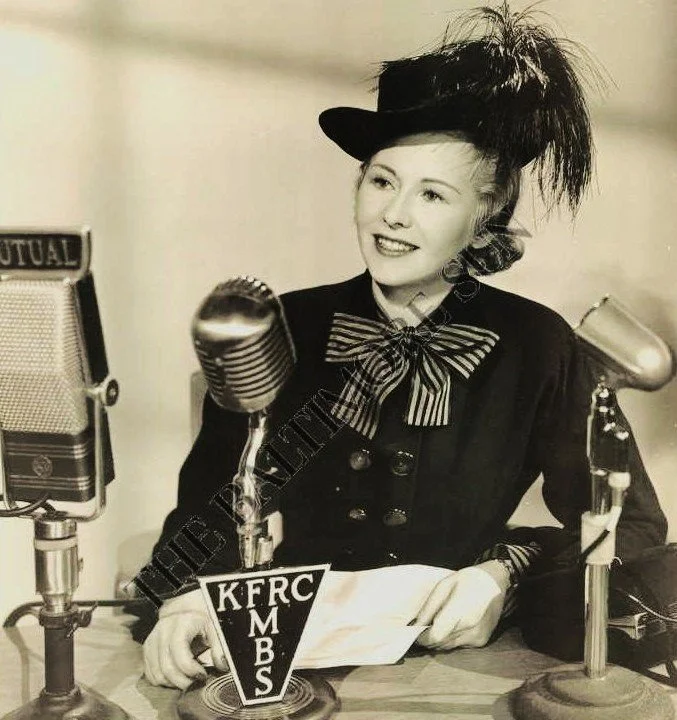
Sheila Graham
In 1936, Charlie Chaplin invited columnist Harry Crocker, an aide to William Randolph Hearst, to join him here for cocktails. According to Graham, “After a couple of drinks Harry mentioned that I was a reporter, but it didn’t seem to matter. Like most egotists, Charlie was oblivious to any conversation but his own. I wish I could remember what he said---but they didn’t have tape recorders in those days and I didn’t dare take notes. It was almost nine o’clock when he looked at his watch and said, ‘My God, Paulette has some people coming for dinner. She’ll be furious with me for being late.’ I also had a dinner date…but I wasn’t too disturbed because I knew I had a scoop that Louella would have given a great deal to get.” At the time Chaplain’s marriage to Paulette Goddard was an unconfirmed secret until that alcohol fueled slip of the tongue.

Paulette Goddard and Charlie Chaplin, a Musso’s regular, in 1938
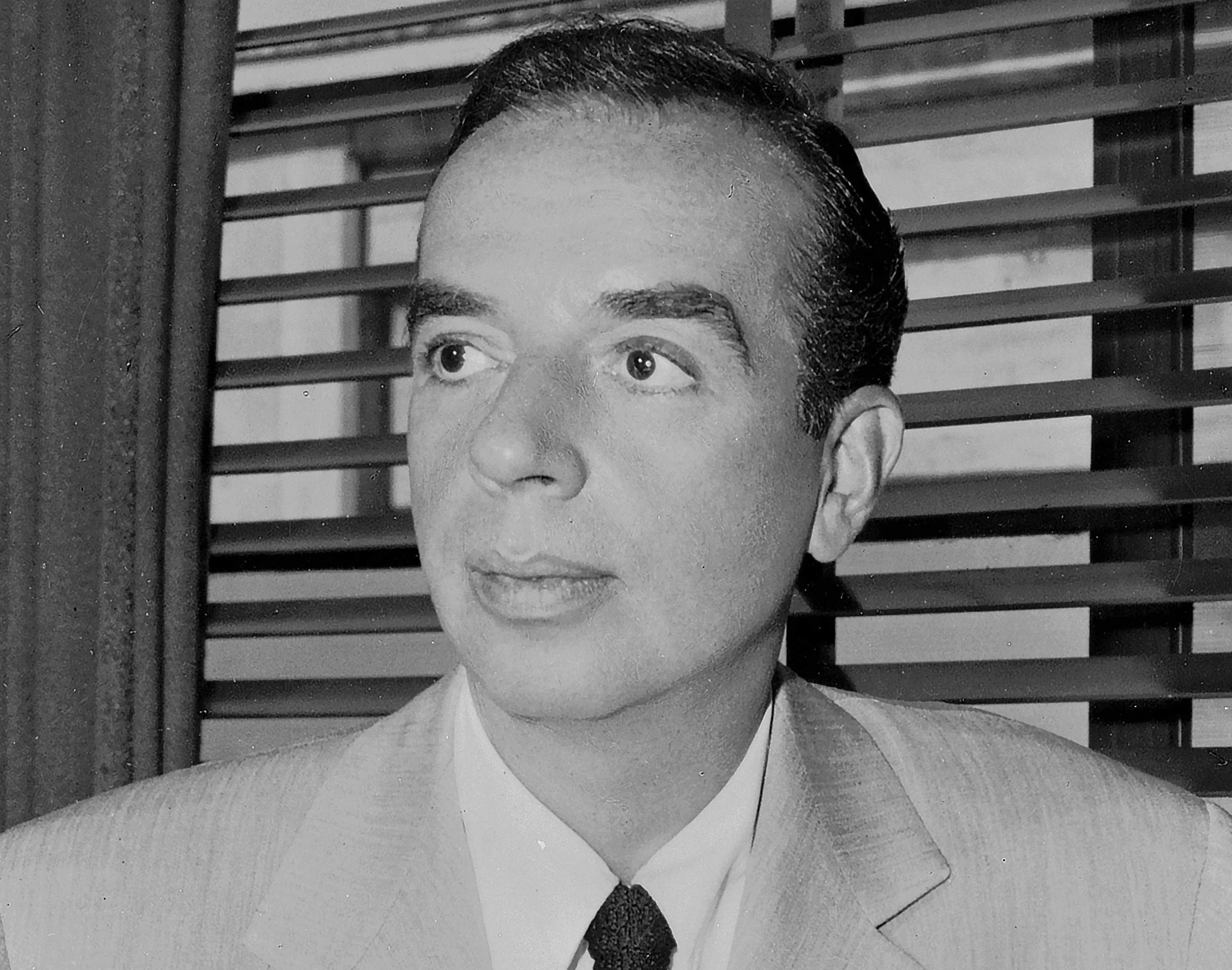
Vincente Minnelli
As the movie industry matured, the relationship between the studios and writers didn’t change much. In 1940, when a young Vincent Minnelli was just starting his career at Metro-Goldwyn-Mayer, he witnessed the nearly schizophrenic relationship Hollywood had with writers first-hand.
“I’d drive my jalopy to Culver City and park off the lot, since my apprentice status didn’t allow me special studio privileges. I’d walk through the lobby of the administration building to my office in the writers’ wing. Walking along with me, among others, would be such talents as Dorothy Parker, Lillian Hellman, and Sid Perelman. We’d often lunch together, either at the big round writer’s table in the commissary or off the lot. I’d hear them grouse about the way they were being exploited. Some of them actually believed it, though I never heard them complain about the size of their paychecks.”
It was at Musso & Frank Grill in the mid-1940s that writer Adela Rogers St. John would witness the cold, cruel side of Hollywood, especially when you were considered a has-been relic. Such was the case with D.W. Griffith, the silent film director that many considered the man who invented movies.
St. John recalled, “Many years later I ran into the great D.W. in a popular grill on Hollywood Boulevard called Musso Franks. It was late, we’d been to a picture up the way at the Egyptian Theater. We were all a little embarrassed to see that the lonely, gaunt figure at the table near the back was indeed Mr. Griffith. How are the mighty fallen is always a sad refrain and to any of us in the picture business D.W. would always be the Mighty. He had very obviously had more than one too many for the road, he didn’t seem to notice us but I – I remembered him so vividly the opening night of Birth of a Nation at Clune’s (now Philharmonic) Auditorium, I remembered the wildly cheering throngs, the elite and powerful of The Industry shoving each other every which way to be allowed to shake his hand, to touch his shoulder. I remember so well I had to rush to get a story done about it, but first I managed to get near enough to pour out a word of congratulations—of excitement—oh it was such excitement.”
When Griffith died in 1948, the legendary director and producer Cecil B. DeMille shared his thoughts on the forgotten director, “David Wark Griffith was a great genius…He was the teacher of us all…Not a picture has been made since his time that does not bear some trace of his influence…He did much to teach the motion picture camera its own special language; and for that I, like every other worker in motion pictures, am his debtor.” Griffith himself summed up the business in a single sentence, “Movies are written in sand: applauded today, forgotten tomorrow.” He would die in the lobby of the Knickerbocker Hotel a few short blocks away, a mostly forgotten man by the industry he was so instrumental in creating.
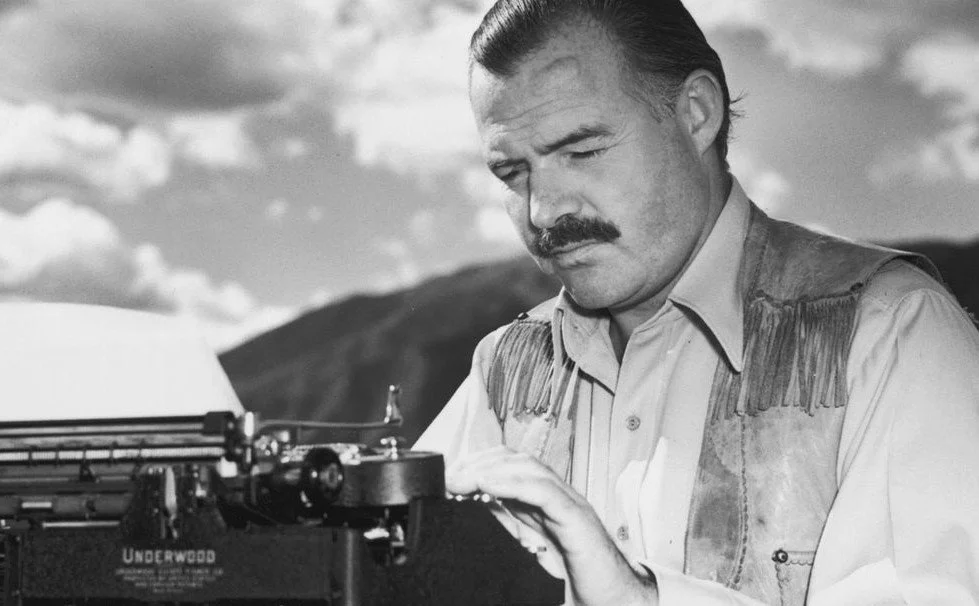
Ernest Hemingway
Not all famous writers chose to head out west, keeping a comfortable distance. Ernest Hemingway managed to stay clear of Hollywood despite finding financial success from the motion picture industry with adaptations of his popular novels including. A Farewell to Arms 1932, To Have and Have Not 1944, The Sun Also Rises 1957, among others. His advice for survival in Filmland was, “Drive to the border of California, throw your book over the fence. After they throw their money back over the fence, collect the money and drive back home.”

A framed vintage Musso & Frank cocktail menu in the back hall.
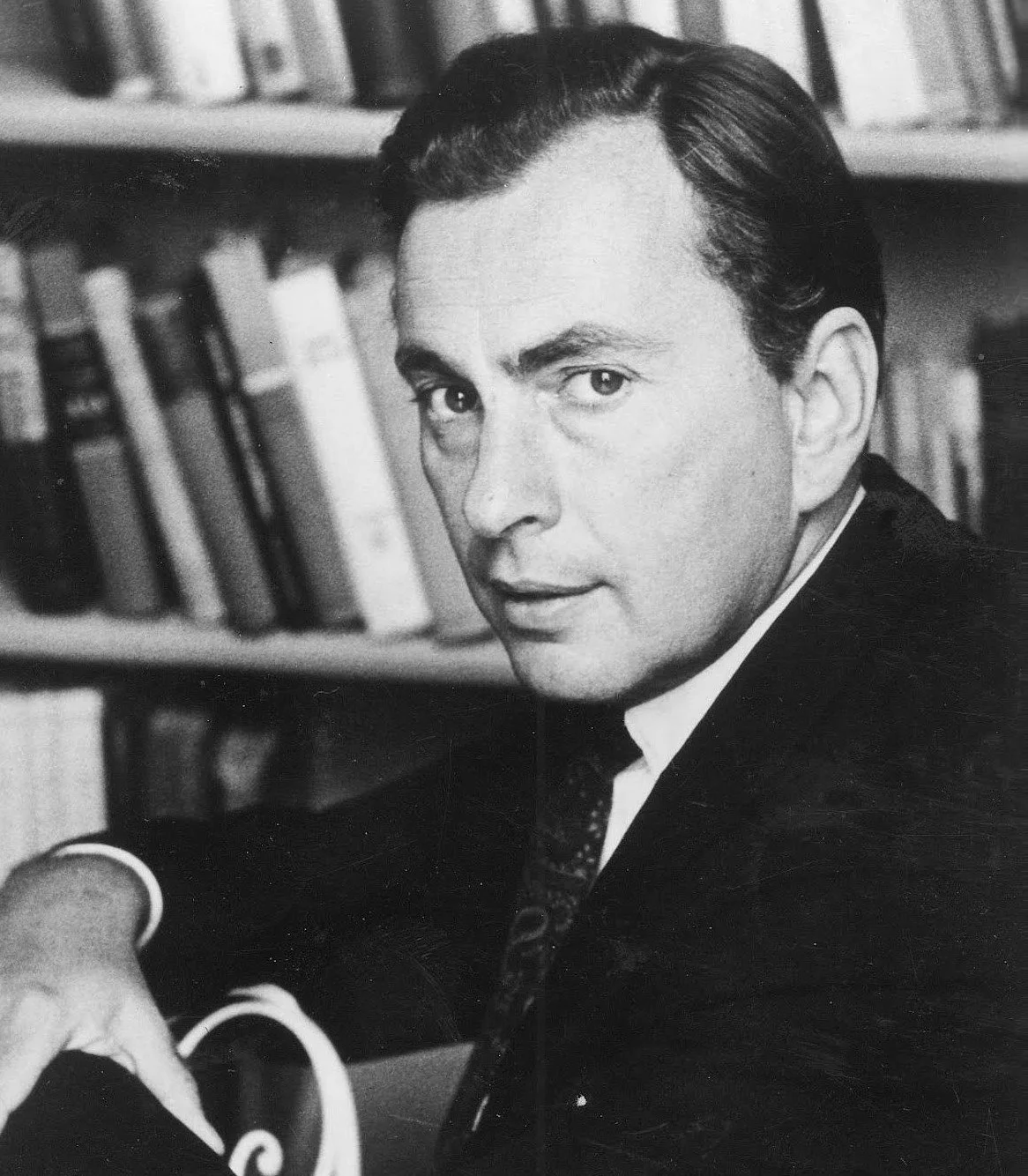
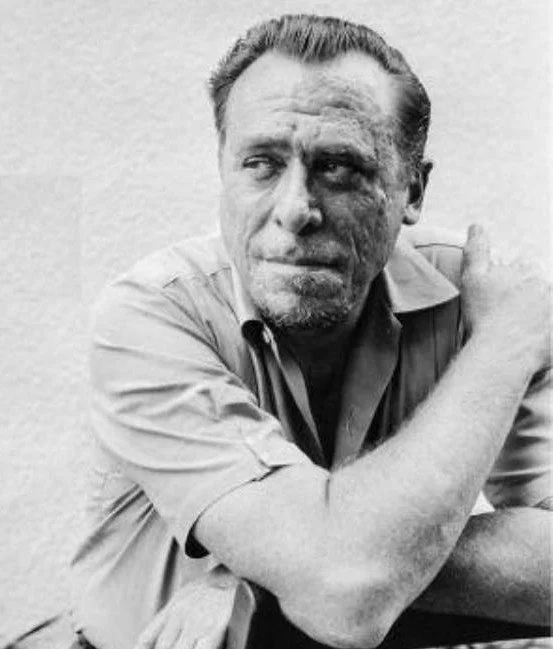
Gore Vidal and Charles Bukowski
By the 1950s, Hollywood, like most places, was changing. As the years passed, many of these famous writers retired or moved away, with a new generation of writers like Charles Bukowski, John Rechy and Gore Vidal taking their places. In fact, this was Vidal’s favorite restaurant. He took special delight in Musso & Frank’s eggplant, spinach dip and their Dungeness crab. So, it wasn’t just the vodka martinis that beckoned him although he was a serious drinker, creating a series of mixed consequences.
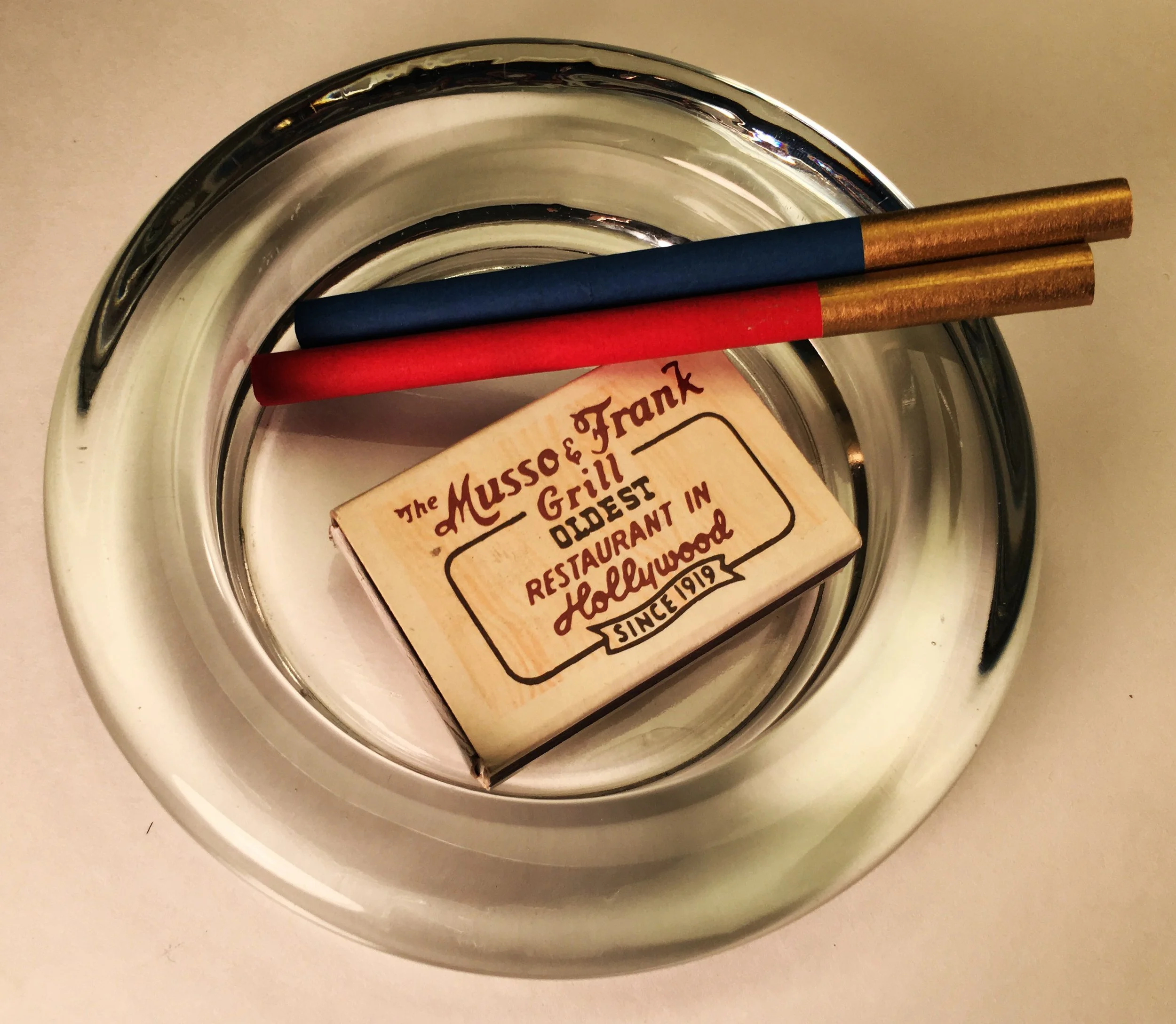
Of course, it wasn’t only writers that made regular pilgrimages to the Musso & Frank Grill.
Howard Strickling, famous director of publicity for M-G-M where he earned the nickname, “the Fixer” was regular. He loved their famous flannel cakes smothered in maple syrup. And when he wasn’t eating, he was drinking martinis in a corner booth, sometimes with life-long friend Clark Gable.
Walt Disney fancied the bar here after a long day at his studio.
Frank Sinatra held court at his preferred booth in the New Room, when he wasn’t hanging out at the near-by Villa Capri or the Frolic Room.
Musso's Old Room, featuring the counter and grill, is where Marilyn Monroe and Joe DiMaggio would canoodle in the third booth along the wall.
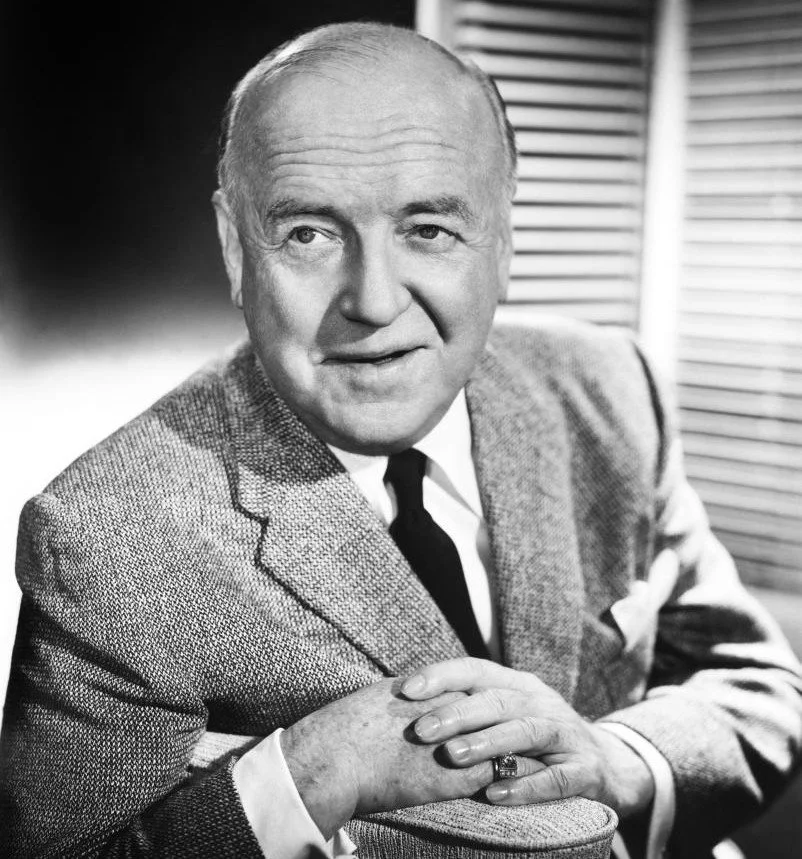
William Frawley
When Desi Arnaz signed William Frawley, a legendary Hollywood drinker, for the part of Fred Mertz while casting the I Love Lucy television series, Frawley had to promise Arnez that he would completely abstain during production. Frawley kept his word. But as soon as the lights and the cameras shut down, he made up for lost time.
According to Robert Vaughn, then a young Hollywood hopeful, Frawley would take a street car or taxi from the studio to his residence in the La Leyenda Apartments at 1737 North Whitley Avenue. On the way home, he would stop at bars and taverns as part of his working routine. Then, at a designated time, he would meet up with Vaughn on the corner of Hollywood Boulevard and Cherokee Avenue. From there the pair would saunter over to the bar at Musso & Frank’s and discuss the state of the world over several rounds of drinks.
No need to worry if either one, or both, didn’t make it home. Staggering or stumbling was always an option. Frawley’s apartment was less than two blocks away and Vaughn was even closer, living at the time in The Commodore Apartments at 1830 North Cherokee.
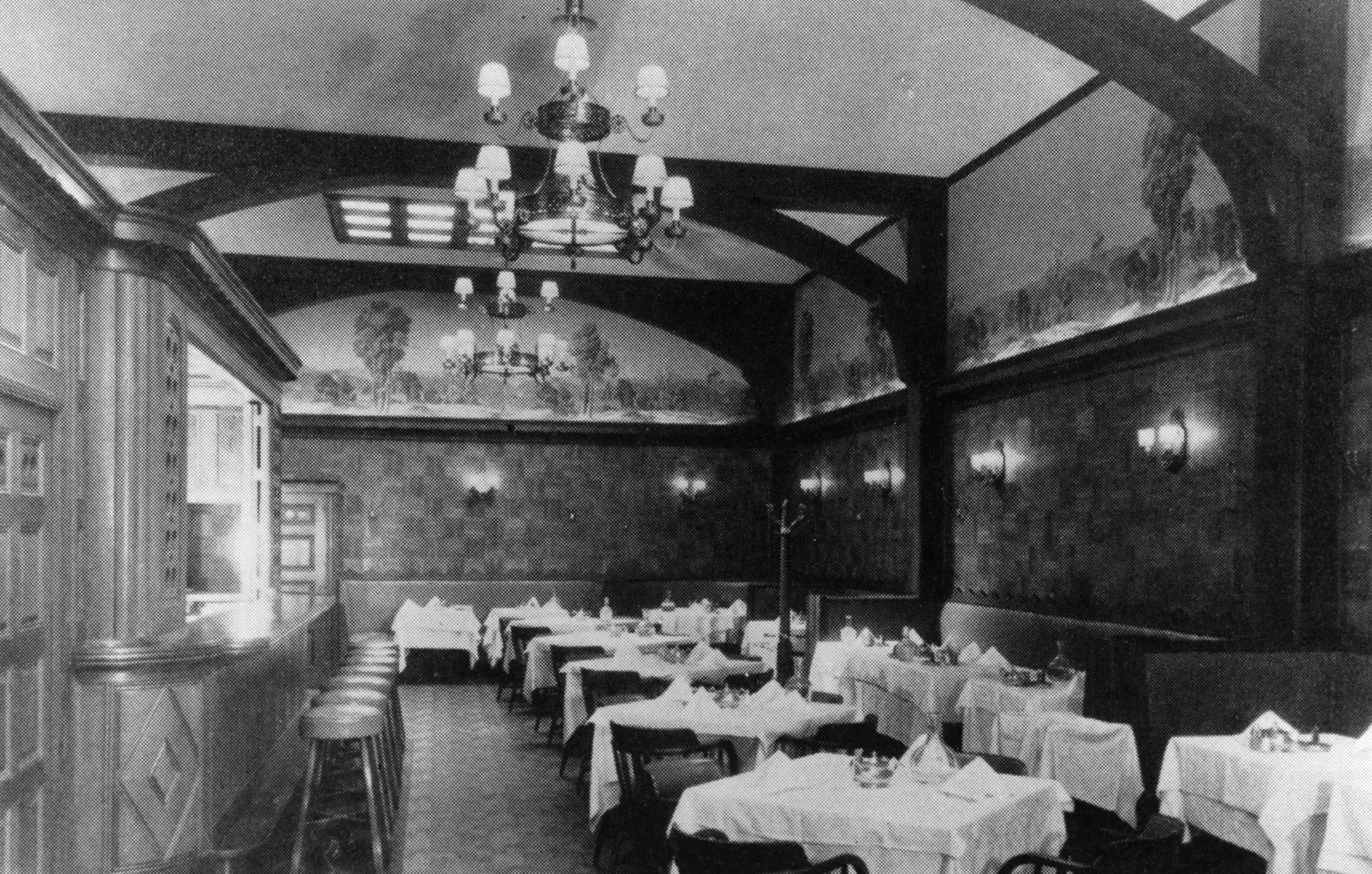
The “New Room” décor at the Musso & Frank Grill added in 1955
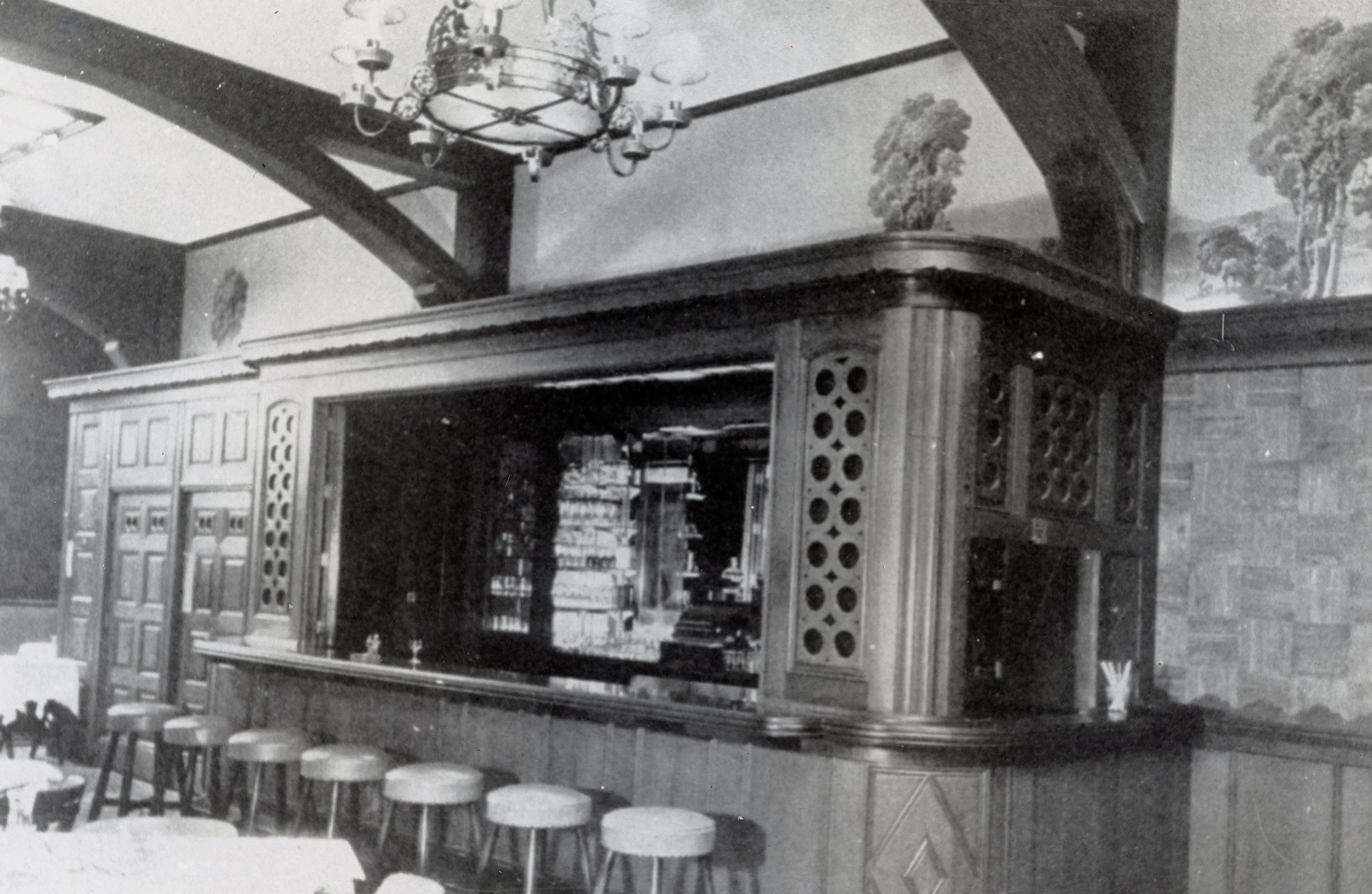
The world-famous bar in the “New Room” at the Musso & Frank Grill
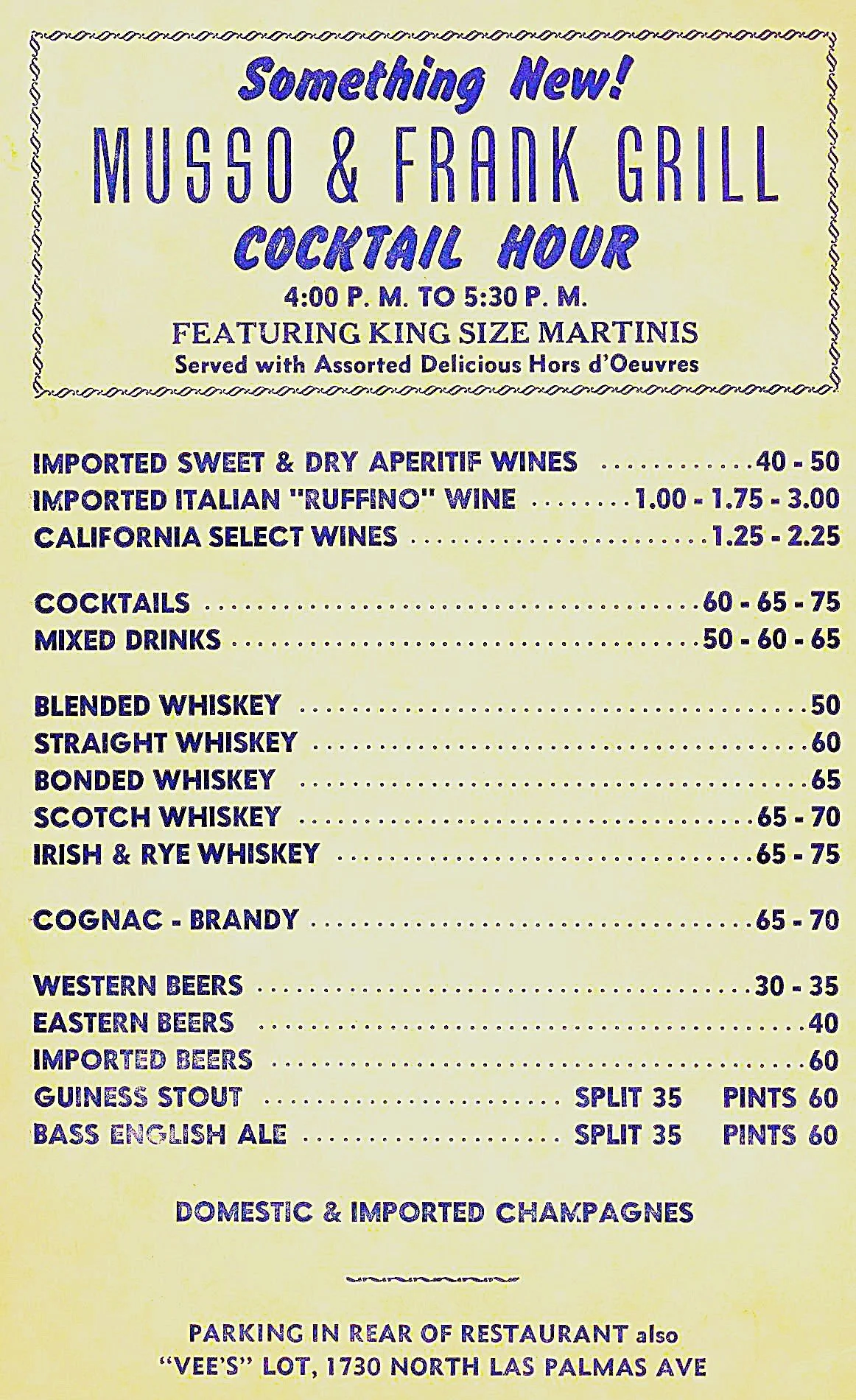
Beverage menu announcement for a Musso & Frank Grill Happy Hour
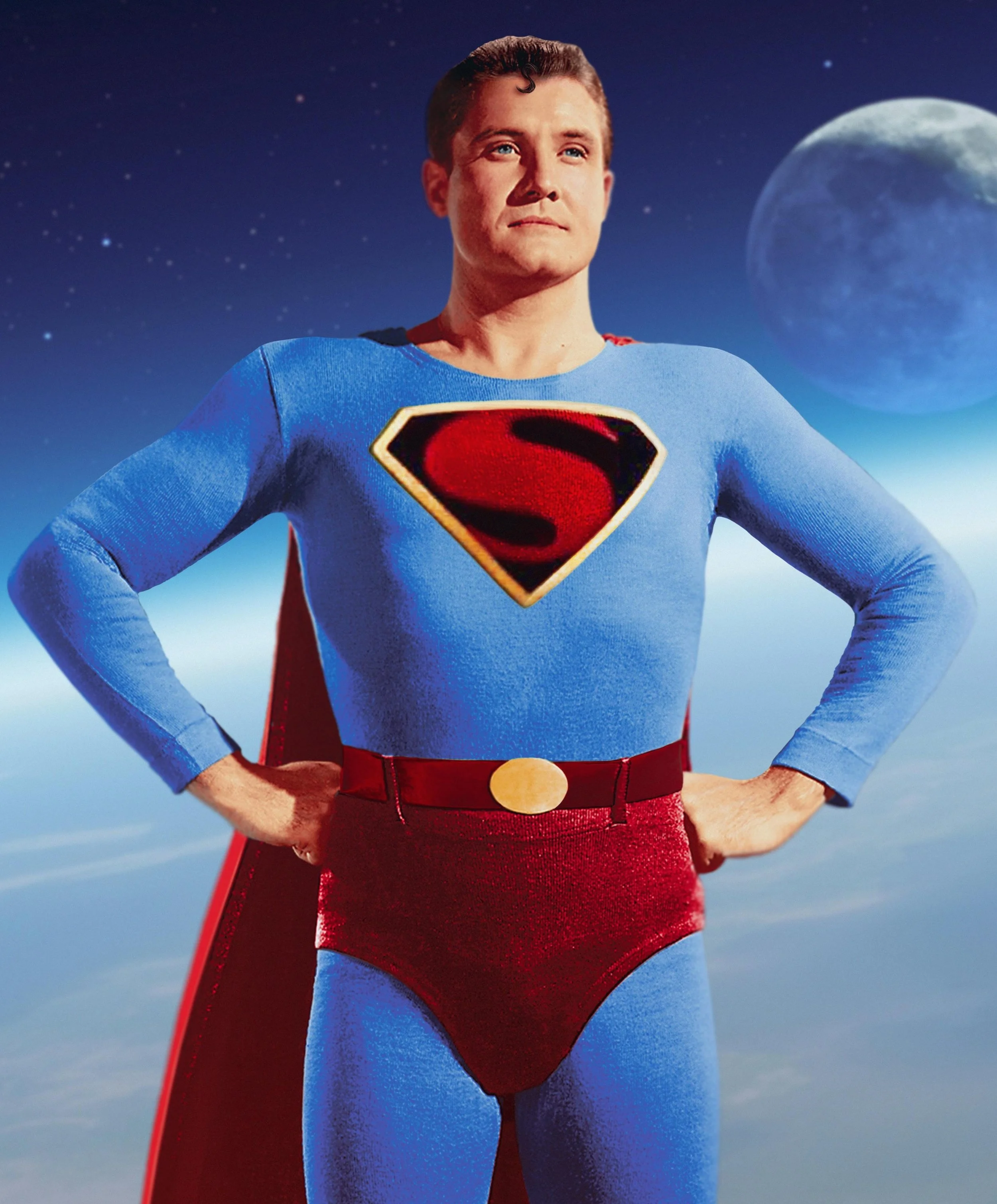
George Reeves allegedly once set fire to his Superman costume in Musso & Frank’s parking lot
Legend has it that George Reeves, TV’s iconic Superman, had a ritual that would signal the end of a year’s filming season of the show. He would carefully remove the S from his costume and give it to a friend. Then he would proceed to pour gas on the rest of the wool suit, set it on fire and step back to watch it burn. One year he chose to do it in the parking lot of the Musso & Frank Grill. When it was charred to his satisfaction, he went into the bar and celebrated.
When he wasn’t at the Cock N’ Bull, the multi-talented Jack Webb would occupy a corner booth, drinking Crown Royal.
Myrna Loy and friend Beatrice Lillie, a comedy sensation in London and on Broadway, would often rendezvous here. As Loy recalled, “When we were both working in Hollywood and living at Chateau Marmont, we would go over to Musso Frank’s for dinner and talk the night away.”
You don’t need to be a far-east mystic to speculate that nearly everyone who has had any position in the entertainment industry has been here at least once. And it is just as easy to speculate that almost anyone interested in the history of Hollywood movie making has been here at least once.
Musso & Frank Grill is divided into two rooms, a counter grill and dining area to the west, and grand dining area “the new room” and bar to the east which opened in 1955. The back room that was such a favorite to the literary crowd was handed over to the Vogue Theater next door.
Among the many charms of Musso & Frank’s Grill is how original the entire experience remains. It truly is a step back in time. The ambiance is achieved with the low voltage of the vintage sconce lighting fixtures; cozy mahogany and red leather booths, wood paneling and vintage wall paper make the setting intimate, warm and cozy.
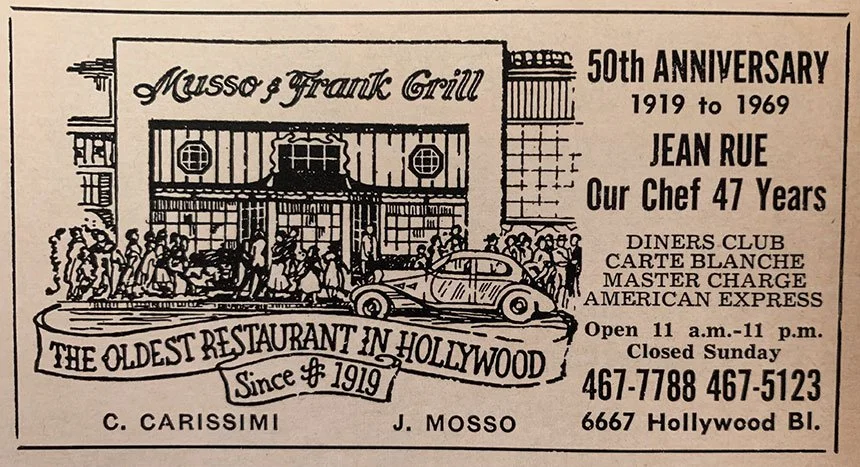
The Musso & Frank Grill celebrated its 50th Anniversary in 1969
Over the decades, so many landmark bar and cocktail lounges have been lost over lease disputes with their landlords. Not to worry here, the owners of the Musso & Frank Grill own the building and the land.
The all-male staff of waiters and bartenders possesses a vintage vibe, wearing smart black trimmed red waist coats and black bowties. Even the busboys have a similar smart uniform though theirs are done in green.
The staff — still all male — have been working there for 20, 30 or even 50 years. Some migrated here from the Hollywood Brown Derby on Vine Street which closed in 1985.
Over the years, some of the waiters have become almost as well-known as their clientele.
Sergio Gonzalez was a favorite with many and served Musso & Frank Grill patrons for 56 years.
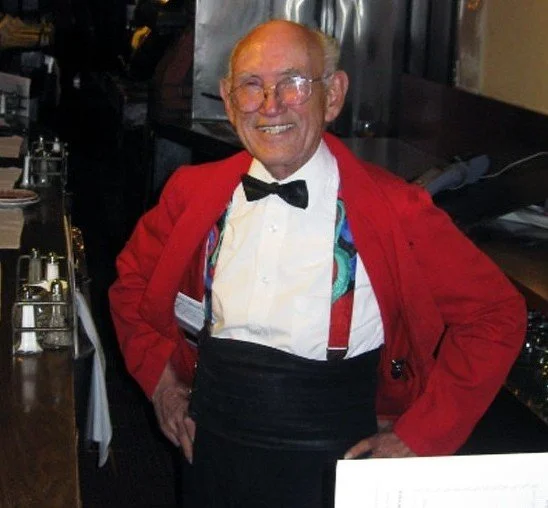
Manny Felix
Manny Felix served for 35 years and was known to perform close-up magic tricks for his delighted customers. His signature illusion was the pouring of a sugar packet into his loosely fisted hand. After saying the appropriate “magic” words he would open his fist to reveal that the sugar had completely disappeared without a trace.
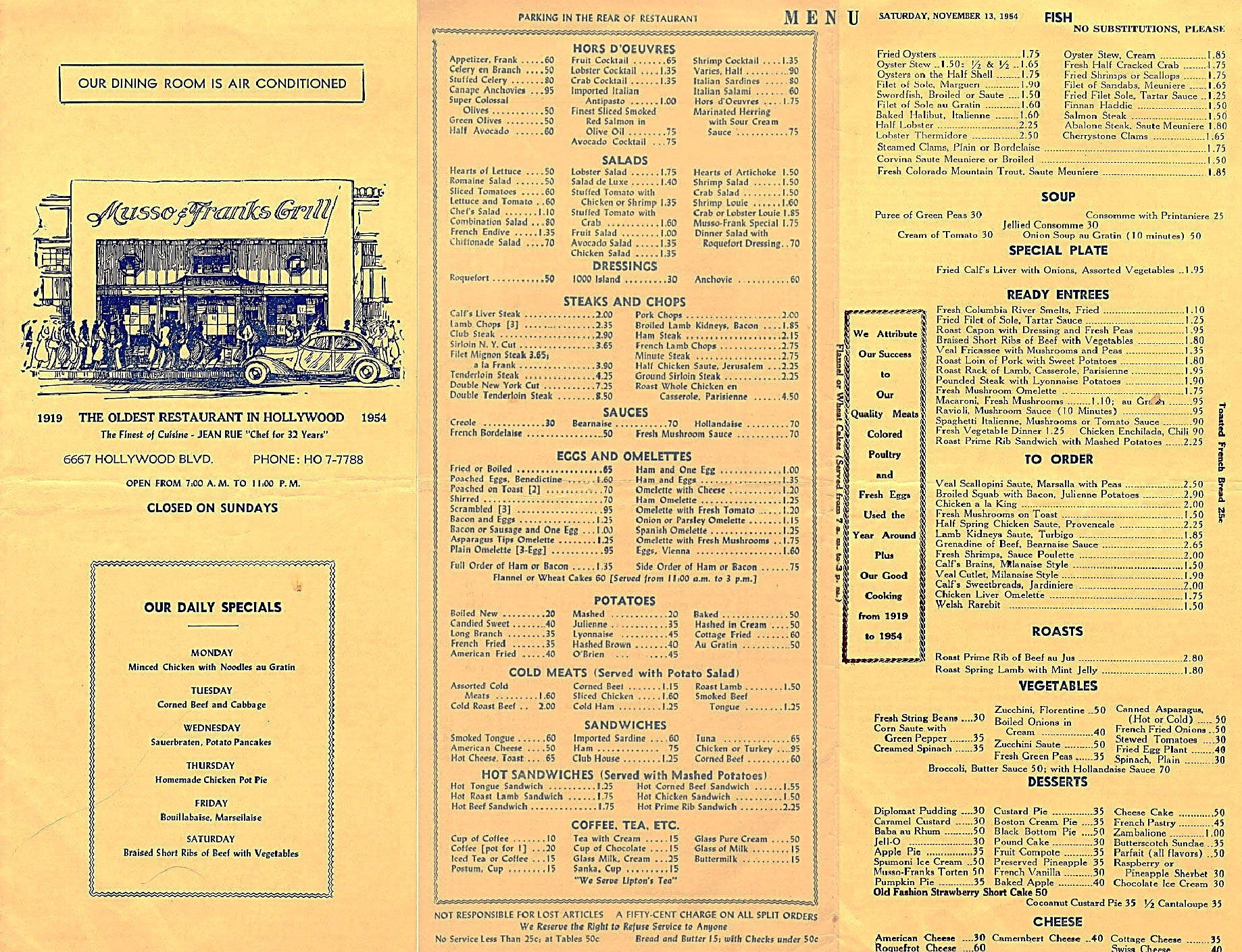
A printed vintage menu from Musso & Frank’s Grill
And for an added layer of old school charm; Musso & Frank Grill still prints their menus daily in a format and font that has stayed the same for decades.
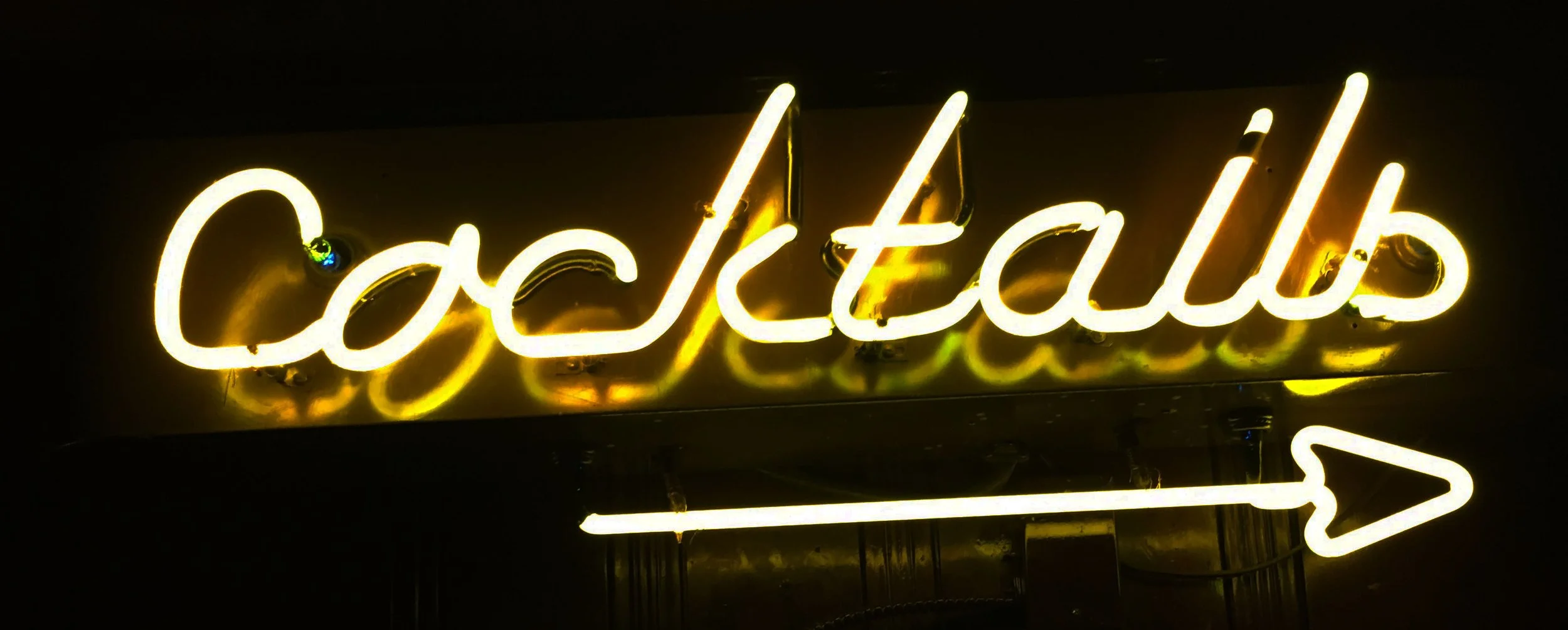
The Musso & Frank Grill’s iconic neon cocktail sign
The signature cocktail at Musso & Frank Grill is their famous martini and it has legions of fans. In fact, Forbes Magazine once declared the martini at Musso & Frank’s Grill to be “the best in LA, or maybe anywhere.” Esquire magazine called the bar at the Musso & Frank Grill one of the “Best Bars in America”. And GQ magazine rated their martini “Best in America”.
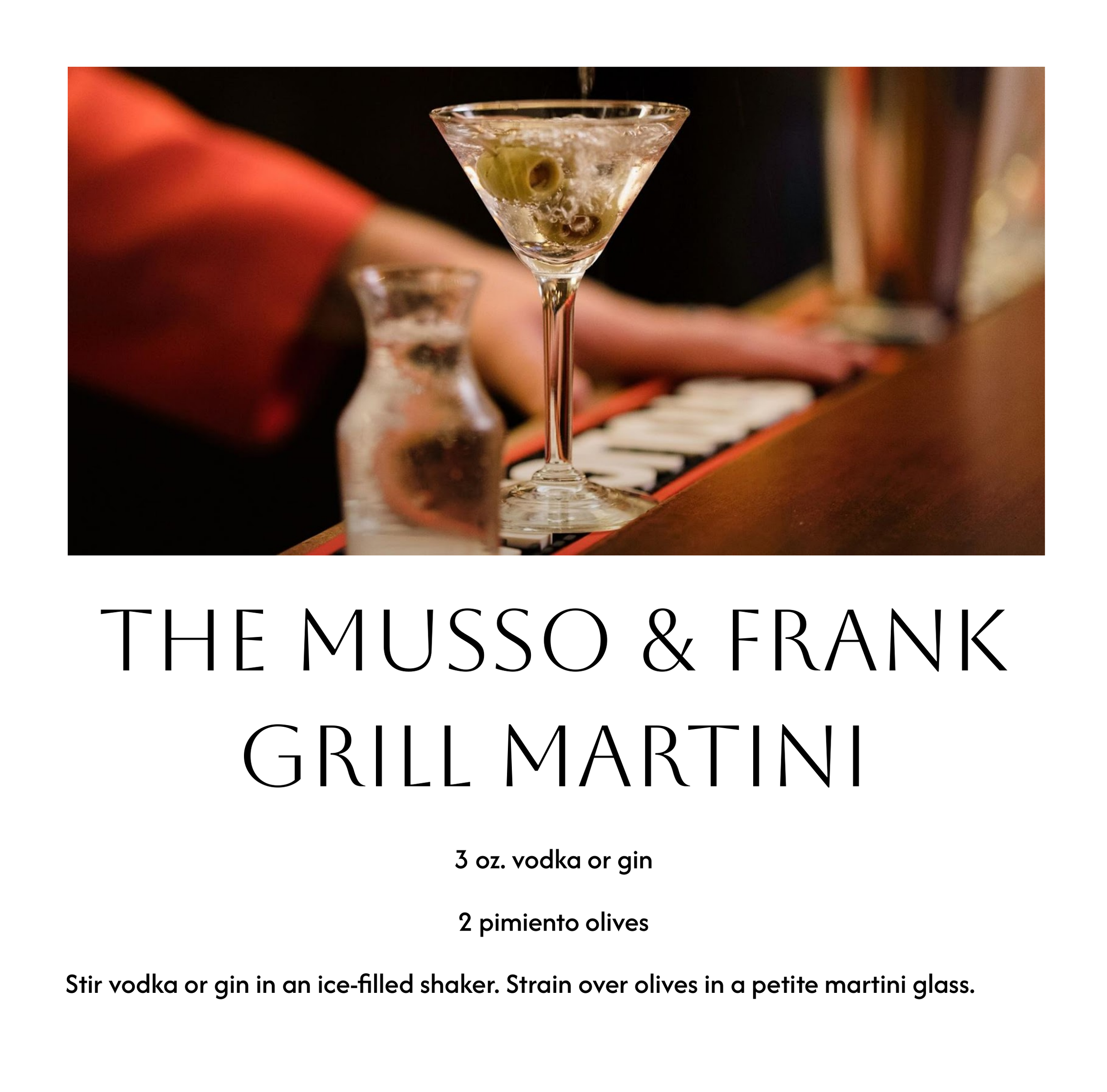
Their version is always stirred, never shaken (sorry James Bond), no vermouth and served in a small stemmed glass with the remains presented in a petite glass carafe cradled in ice. And for an extra touch of exclusivity, the cocktail olives that come with it are cured in house.
Although a well-guarded secret, below is the martini recipe. And as a tribute to the many famous writers that flocked here, William Faulkner’s Mint Julep recipe has been included.
The Musso & Frank Grill continues to be a vital watering hole for writers and all members of the entertainment industry. A visit here is a trip back to a time when the world seemed to make more sense. Whenever you have the opportunity, go!
The Musso & Frank Grill
6667 Hollywood Boulevard
Hollywood, California 90028
(323) 467.7788
For more information please visit: mussoandfrank.com

William Faulkner’s
Mint Julep
2 oz. of Bourbon
4 sprigs of fresh mint
1 teaspoon powdered sugar
In tall Collins or Old Fashioned glass, muddle the mint leaves and sugar lightly together, add bourbon and fill with cracked ice; stir gently until glass is frosted.