Introduction TO
Hollywood Cocktail Party
Celebrating Screenland’s favorite nightclubs, lounges and bars, past and present, the cocktails that make them so unforgettable plus the legendary stories and fascinating personalities that made them famous! Featuring recipes for vintage signature cocktails from each establishment.
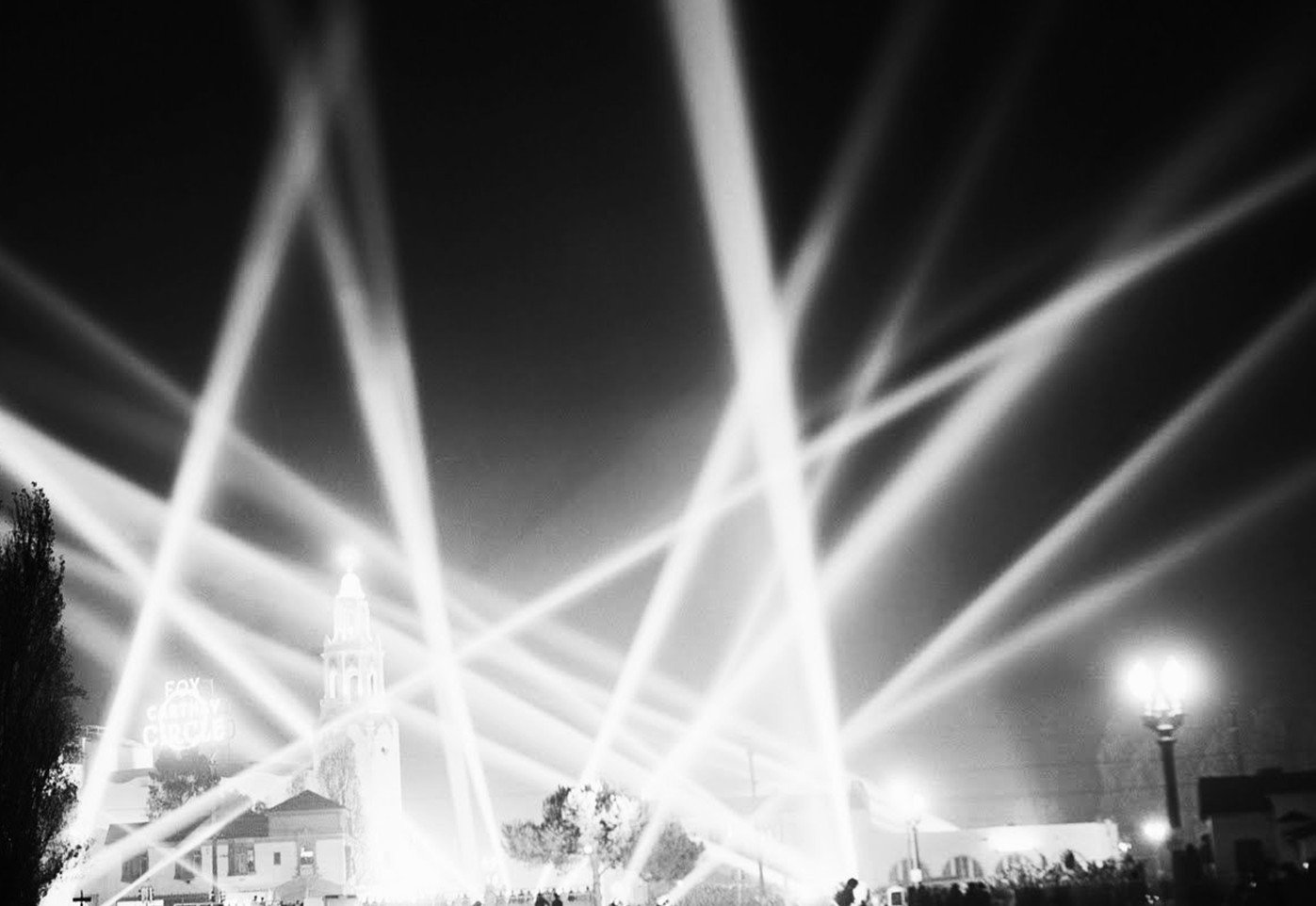
When Hollywood Was Hollywood
For those in the know, even after all the decades that have passed, the classic Hollywood drinking establishments of yore still resonate with a national and international appeal as the epitome of movie star glamour, debauchery and alcohol fueled shenanigans.
All of these legendary drinking establishments, restaurants and supper clubs were the product of people with big dreams that beat the odds, made their visions come true and made life more fun and exciting for all! And many of these dreamers were ahead of their time, knowing the value of “branding” long before it became a modern business model.
If glamour can be defined as wealthy, well-dressed, good-looking people having a grand time, then these nightspots were a humongous metaphor for the term. So much of the history of motion picture making is centered in and around these establishments. There the rich and famous could flaunt their success, fame and notoriety with abandon, and they and the movie-going public loved it.
Montmartre Café
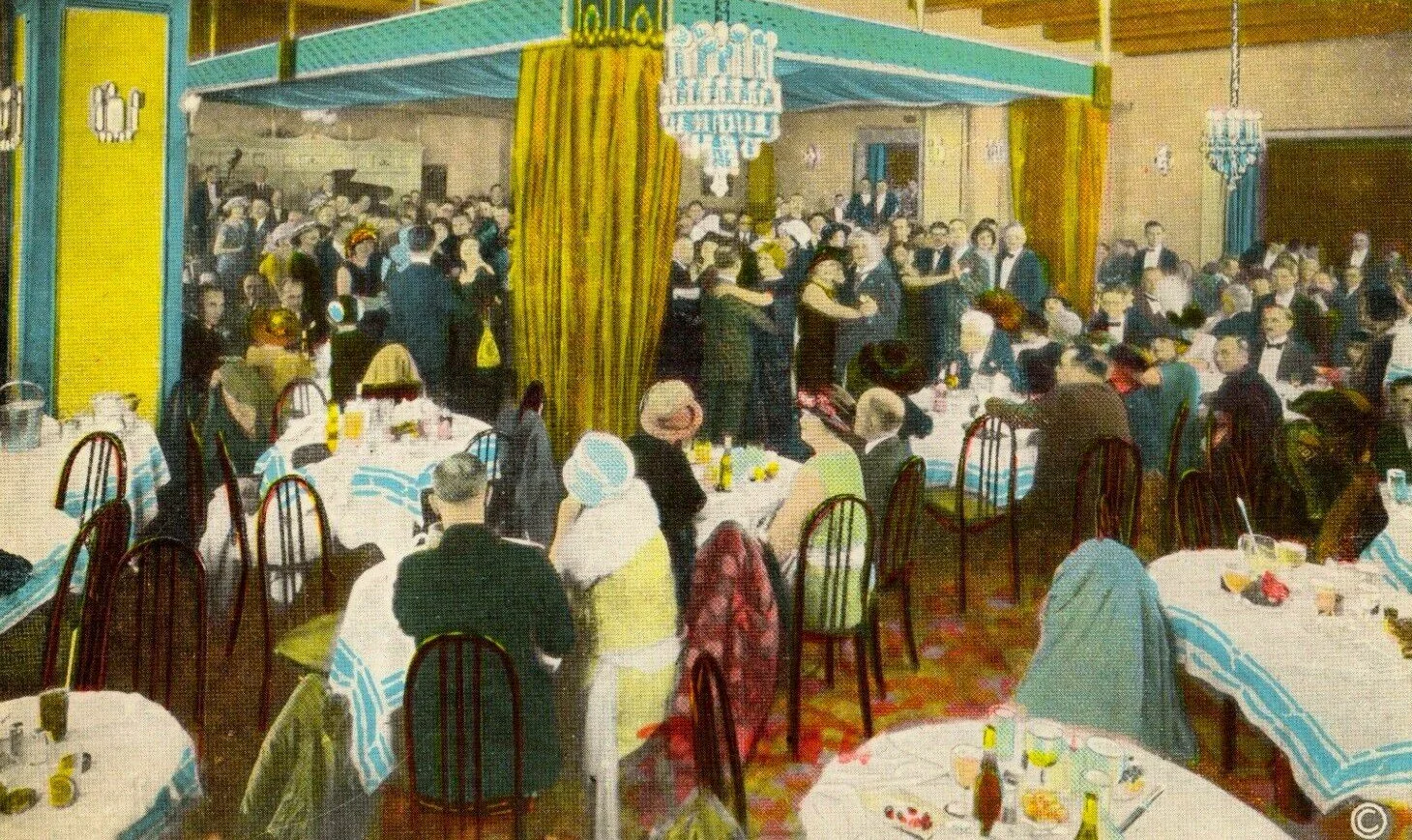
Most Hollywood old-timers credit the Montmartre Café as the first of the glamorous night spots. Hard to believe Hollywood was once a one-horse town but it was. When the movies arrived in 1913 things began to change rapidly.
Jimmy Starr, an aspiring writer, arrived in Hollywood in 1919, at the ripe old age of 15. Starting his career as an office boy at Metro Pictures he would later advance to screenwriter at Warner Bros. He literally saw Hollywood and the industry’s development from the ground up. His observations included the Montmartre Café when it opened on January 22, 1923.
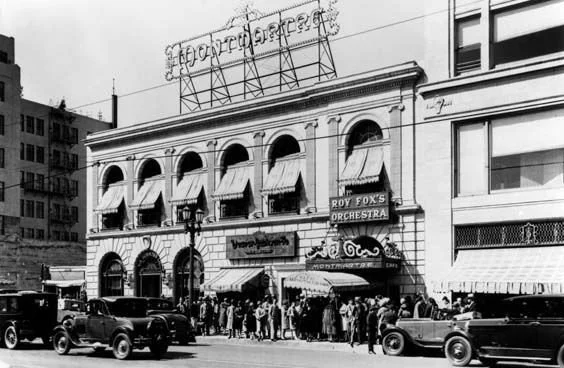
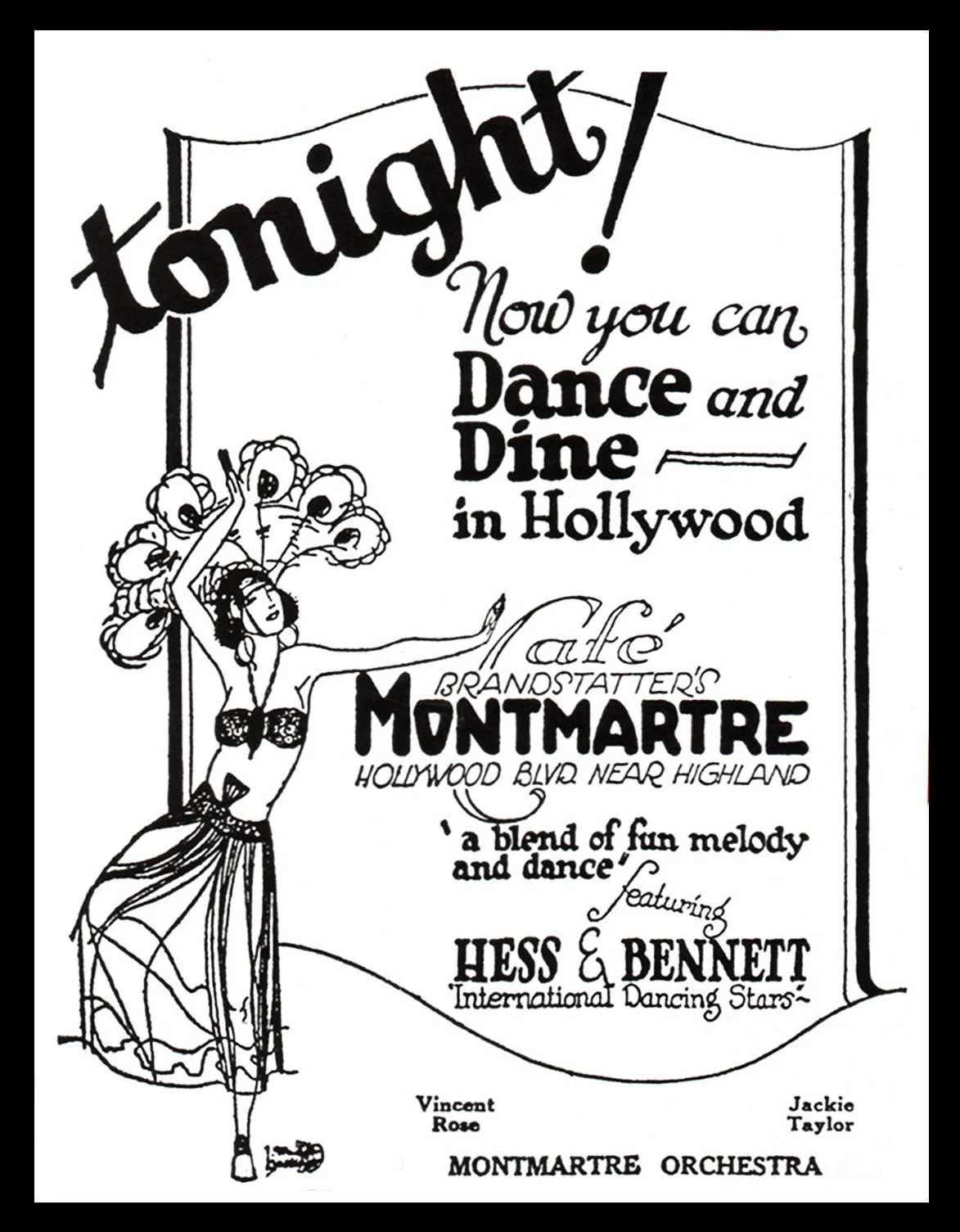
“Eddie Brandstatter had cherished dreams of providing a proper setting for the personality gems of movieland. With financial help from C.E. Toberman, Hollywood real estate man, Eddie opened a dining and dancing showcase, which was to reign supreme for a dazzling decade.
“Brandstatter was a good showman inasmuch as he knew how to cater to his temperamental quests. He printed elaborate menus in French. Actually, only a few of his customers could pronounce Filet de Pompano, Vin Blanc Pomme Parisiènne.
“Discovering what he believed to be a gold mine, Brandstatter went further by having special Saturday luncheons with tea dances. With the always-efficient aid of Miss Sunshine Duncan, the social secretary of the organization, he introduced various gimmicks. One was the Bachelor’s Table. This provided handsome men as dancing partners for the wives of stars and producers who might be lunching there.
“Still expanding, Brandstatter really reached out for the crème de la crème by opening a swank addition on July 29, 1931, eight years after his original splurge. This glittering new dine and dance place was called Embassy Club Roof. Hal Grayson’s popular orchestra was a featured attraction, and the band singer was none other than Mrs. Bing Crosby (Dixie Lee).
“The heyday of the Montmartre, however, was when Vincent Rose and Jackie Taylor led the orchestra. Hollywoodites went there to see and be seen. The only other place frequented by the stars and the young cinema hopefuls was the Ambassador Hotel’s famed Cocoanut Grove.”
Famous patrons at the time included John Barrymore, Mary Astor, Rudolph Valentino, Bebe Daniels, Douglas Fairbanks, Clara Bow, Viola Dana, Fatty Arbuckle and Dolores Costello.
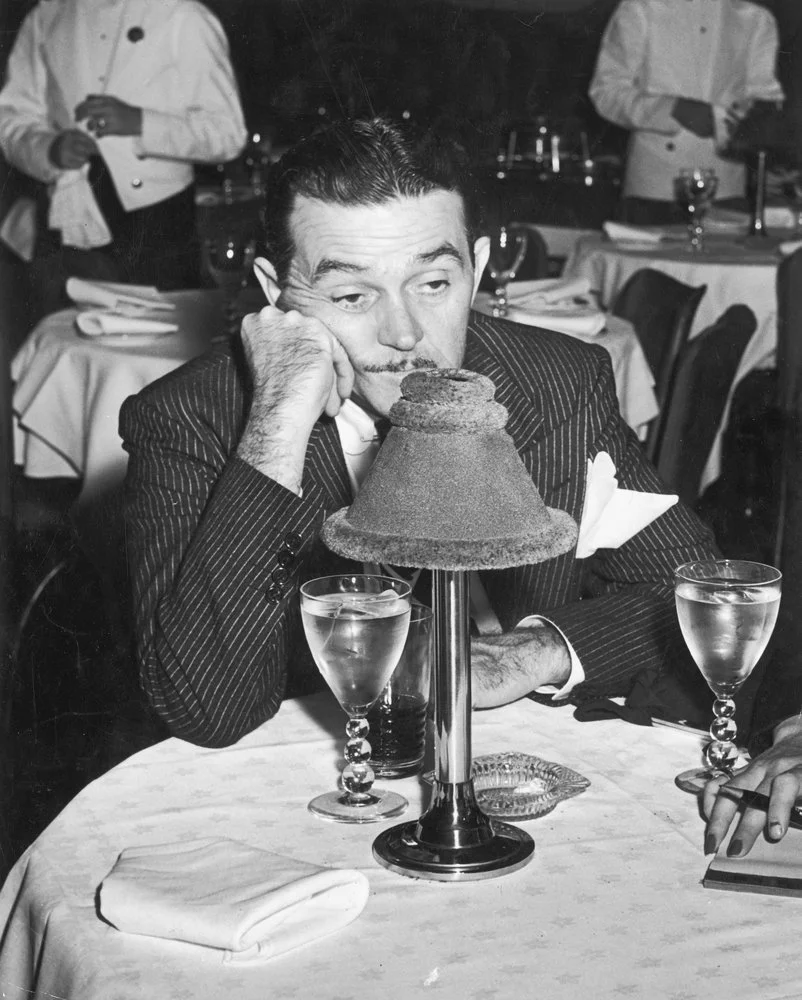
William Richard “Billy” Wilkerson
These pleasure palaces were the brainchild of countless dreamers. But one dreamer stands out among the crowd. William Richard “Billy” Wilkerson, more than any other individual, brought sophistication and glamour to the Sunset Strip. And he blatantly promoted his establishments with his own mouthpiece, The Hollywood Reporter.
As owner of the Café Vendome, Café Trocadero, Ciro’s and La Rue, his clubs reflected his own personal tastes and preferences for the finer things in life. His love of France was reflected in each club; from the decor, the menu, and the wine selections. He could have been one of the wealthiest men in Hollywood if he wasn’t cursed with an addiction to gambling. Ironically, he didn’t drink alcohol, but he made up for it by drinking countless Coca-Cola’s and smoking cigarettes like an old coal plant.
Hollywood’s top stars and power brokers, legendary entertainers and all the various wannabes sought out the best tables. And the booze flowed freely without much fear of a ticket on the way home, since the clubs on the Sunset Strip (and surrounding areas) had a special relationship with law enforcement. At the time, the Sunset Strip was unincorporated with the city of Los Angeles. Kind of a no man’s land.
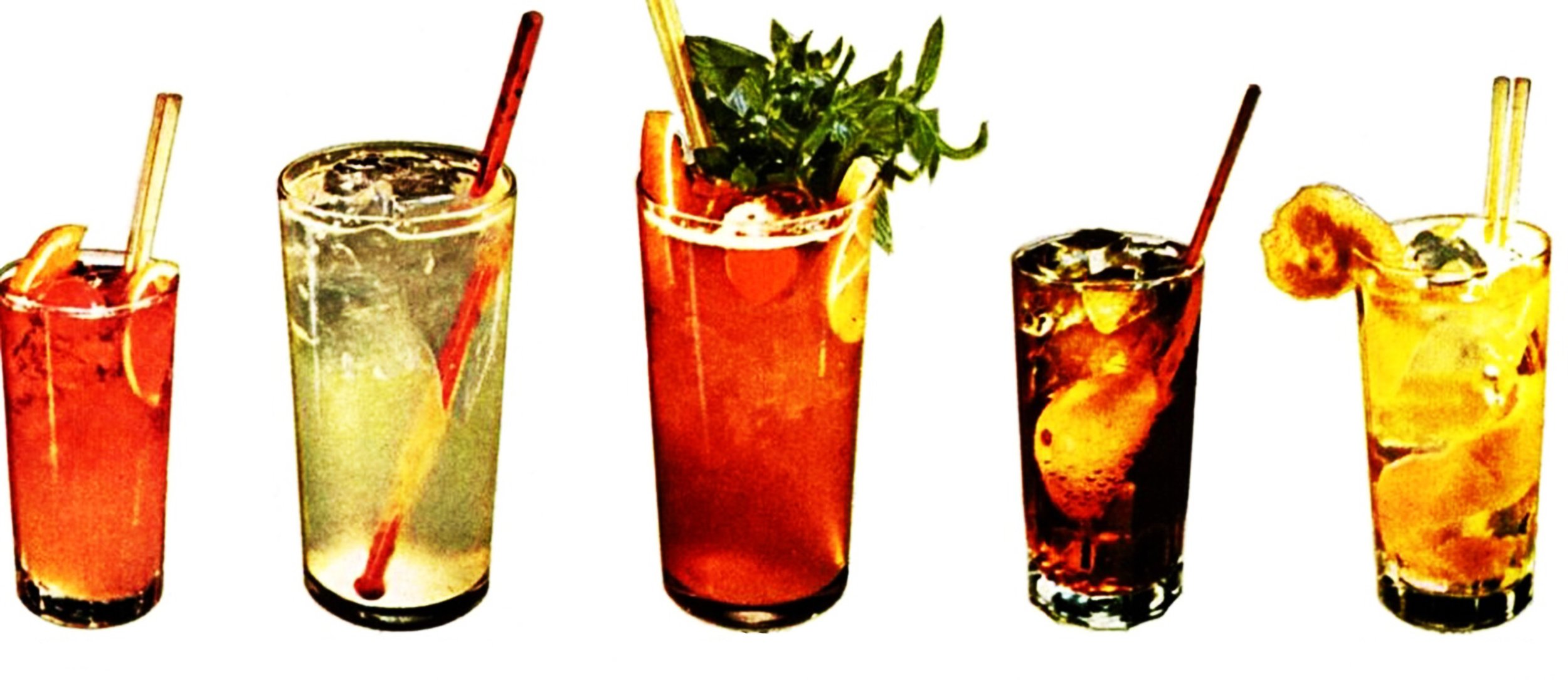
“Before dinner, you had two or three martinis,” recalled Ciro’s talent manager George Schlatter. “Then you drove to the club, and you sat down. There was a two-drink minimum. Then you had dinner; usually you had a little wine. Following dinner, you usually had a little brandy. Then you had a nightcap, usually followed by one for the road. That’s enough alcohol to make you inflammable. The best part was we all had a relationship with the California Highway Patrol. They wouldn’t arrest you; they’d take you home. Like the night they snared Martin and Sinatra. They put the flashlight in his face, Dean started singing. They asked him to walk a line, and he said, ‘Not without a net.”
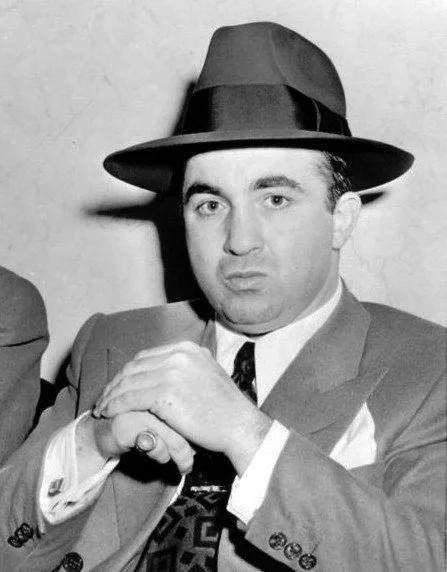
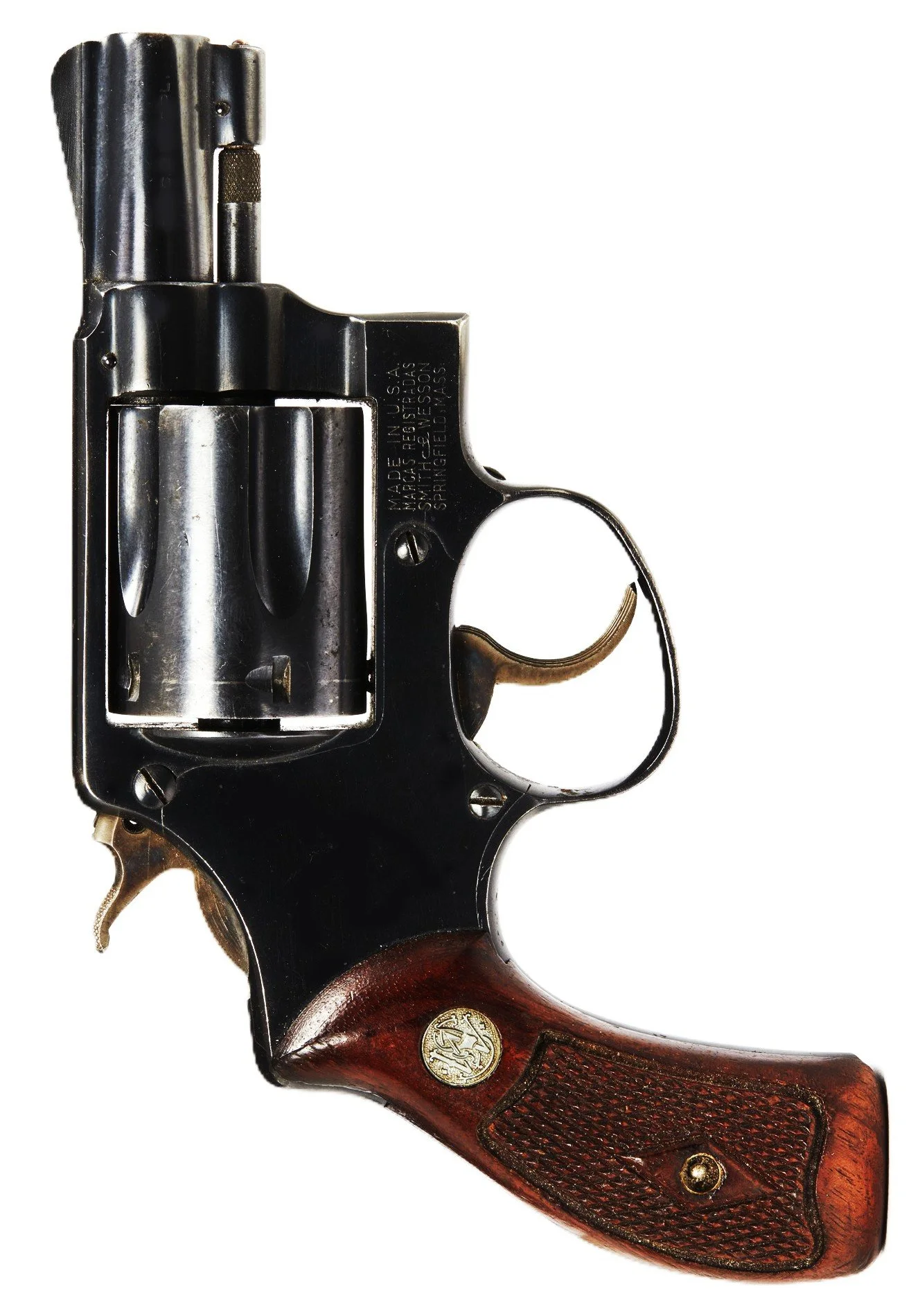
Mickey Cohen was Hollywood’s most notorious gangster
Hail, Hail, The Gang’s All Here!
Los Angeles’ underbelly of flashy and nefarious gangsters was also well represented there. Many were attracted to these venues, not just for the proliferation of pretty girls, but the almost obscene profits that could be generated within them. Another draw was the illegal backroom gambling that took place in many of these clubs. Some of these clubs were alleged to be fronts for the National Crime Syndicate AKA The Outfit, Murder, Inc., and at one time the California Crime Commission estimated the Mob operated over 30 bars and 14 nightclubs in the Hollywood area alone.
The allure of Hollywood night life was contagious. Many real-life tough guys like Johnny “Johnny Handsome” Rosselli, Benjamin Siegel and his successor, Mickey Cohen, were totally seduced by Hollywood and all its trappings. Los Angeles gangsters like Siegel and Cohen had investments, either directly or indirectly, in more than a few of these establishments.
Many of these celebrity gangsters would be on a first name basis with many of Hollywood’s biggest stars. A major conduit between Hollywood and the Underworld was actor George Raft, who knew many of these characters from New York, a fact he never denied. “I was born in a gang neighborhood, brought up with gangsters and given a movie career by friends in the underworld. That is something no one can change, and I owe much to the many men who stayed with me when the going got rough.”
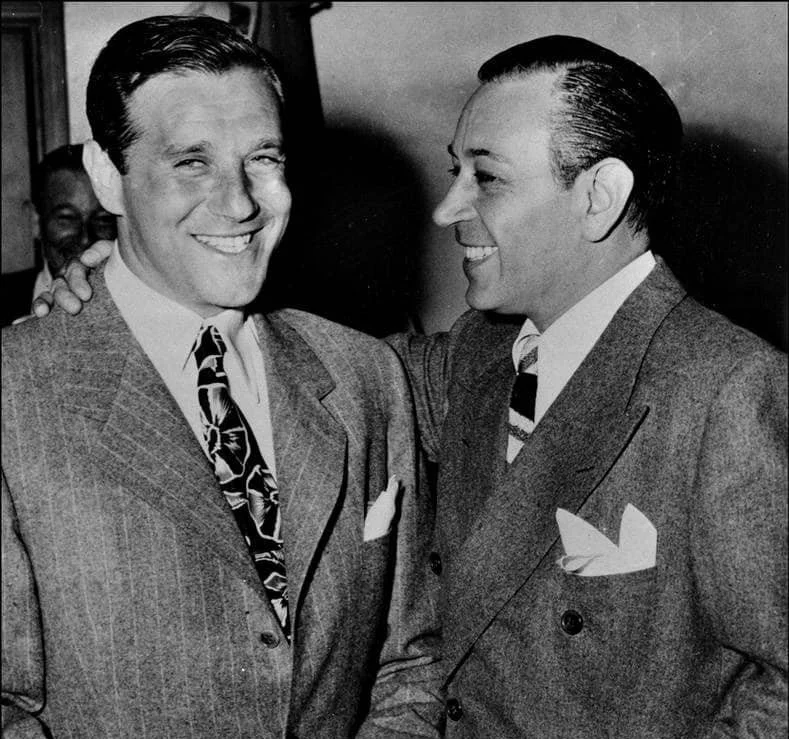
Benjamin Seigel and George Raft were childhood friends in New York City

George Raft with Norma Shearer at the Cocoanut Grove
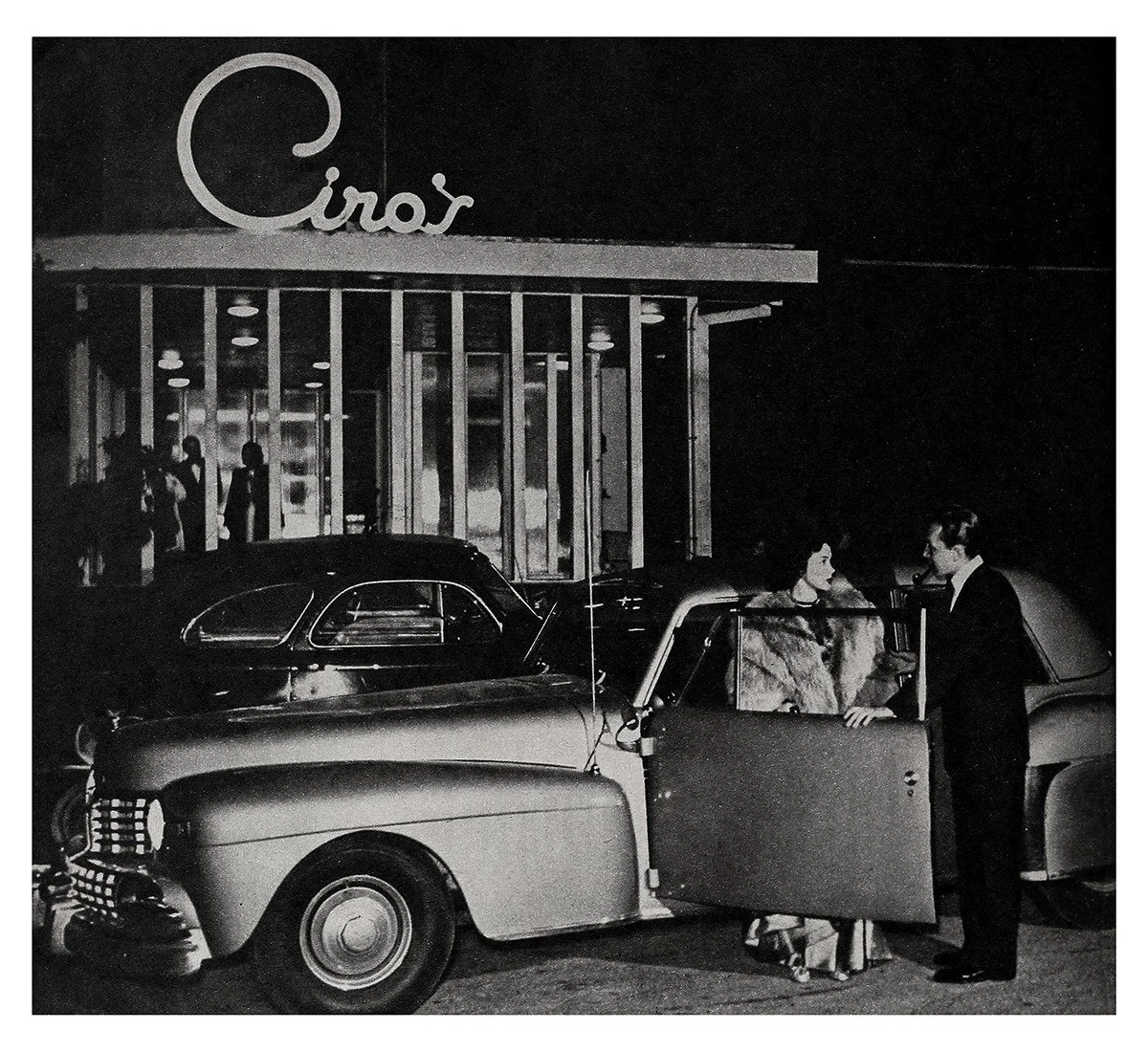
Ciro’s patrons arrive in style
To See and Be Seen
Much of Screenland’s nightlife was located along the Sunset Strip, dubbed “Hollywood’s Playground” by the media of the time. Arriving in the latest model Packard, Cadillac, or Lincoln Continental they would pose for the cameras outside before making their grand entrance.
There was no modesty in showing off the exclusive and most expensive jewelry paired with the latest fashions from Beverly Hills, some of it on loan for the valuable publicity. This flashy vignette was often performed by popular actresses looking to climb up the next rung of the Hollywood ladder.
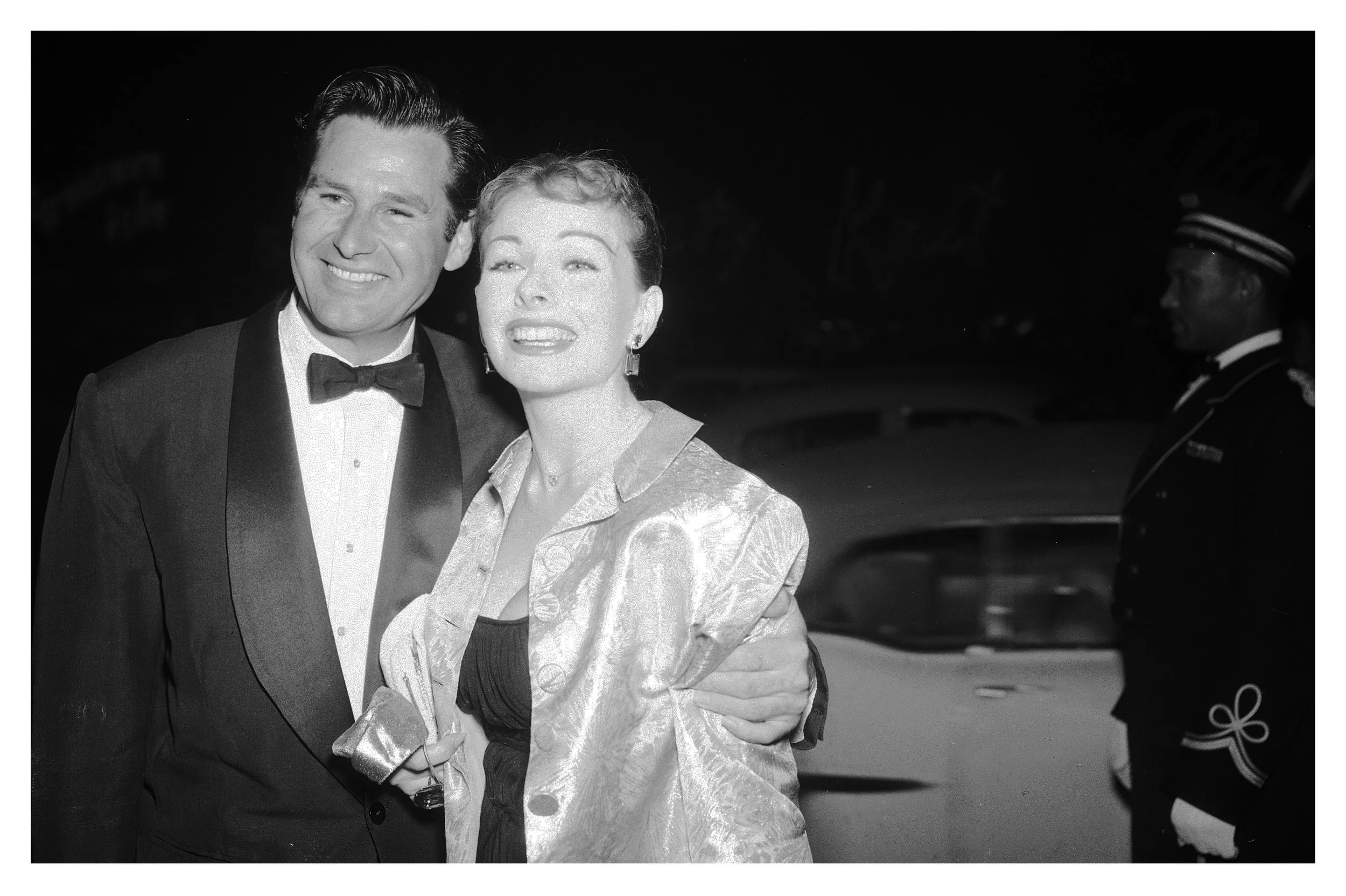
Jeanne Crain with husband Paul Brinkman
Jeanne Crain was dubbed by the press as “Hollywood’s Number One Party Girl”, a reputation that she gladly lived up to.
“I’m past 25, I’m married and the mother of four, and, for the first time in my life, you really see me everywhere these days. I go out on the slightest pretext – and I love it.”
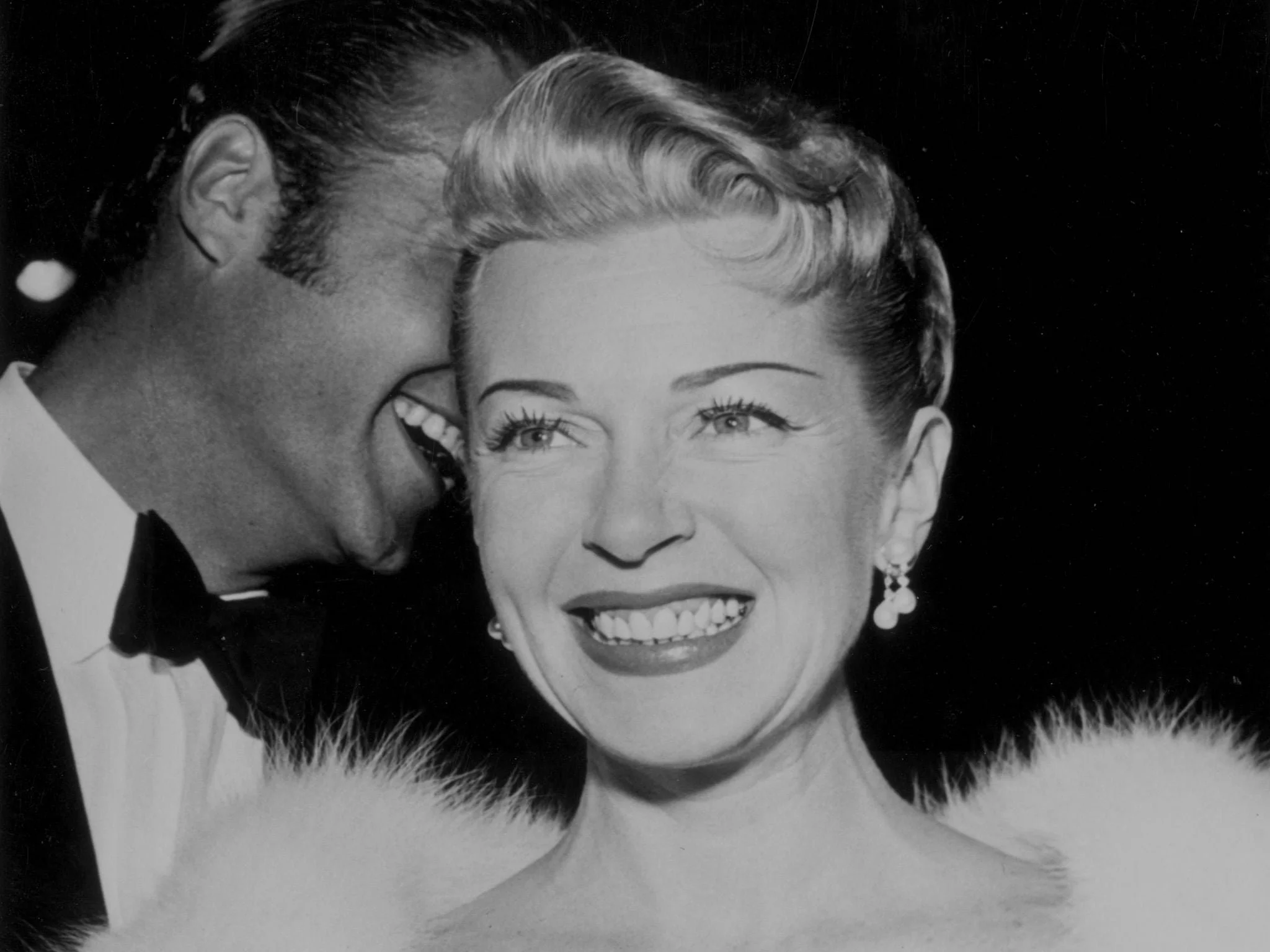
Lex Barker and Lana Turner
Marlene Dietrich was crowned “The Queen of Ciro’s” because of her frequent patronage. Lana Turner took claim to the entire boulevard and was dubbed the original “Queen of the Sunset Strip”. Turner spent enough time “Clubbing” to have the bartenders at the Tropics Restaurant create a cocktail in her honor, calling it “Untamed” and for good reason.
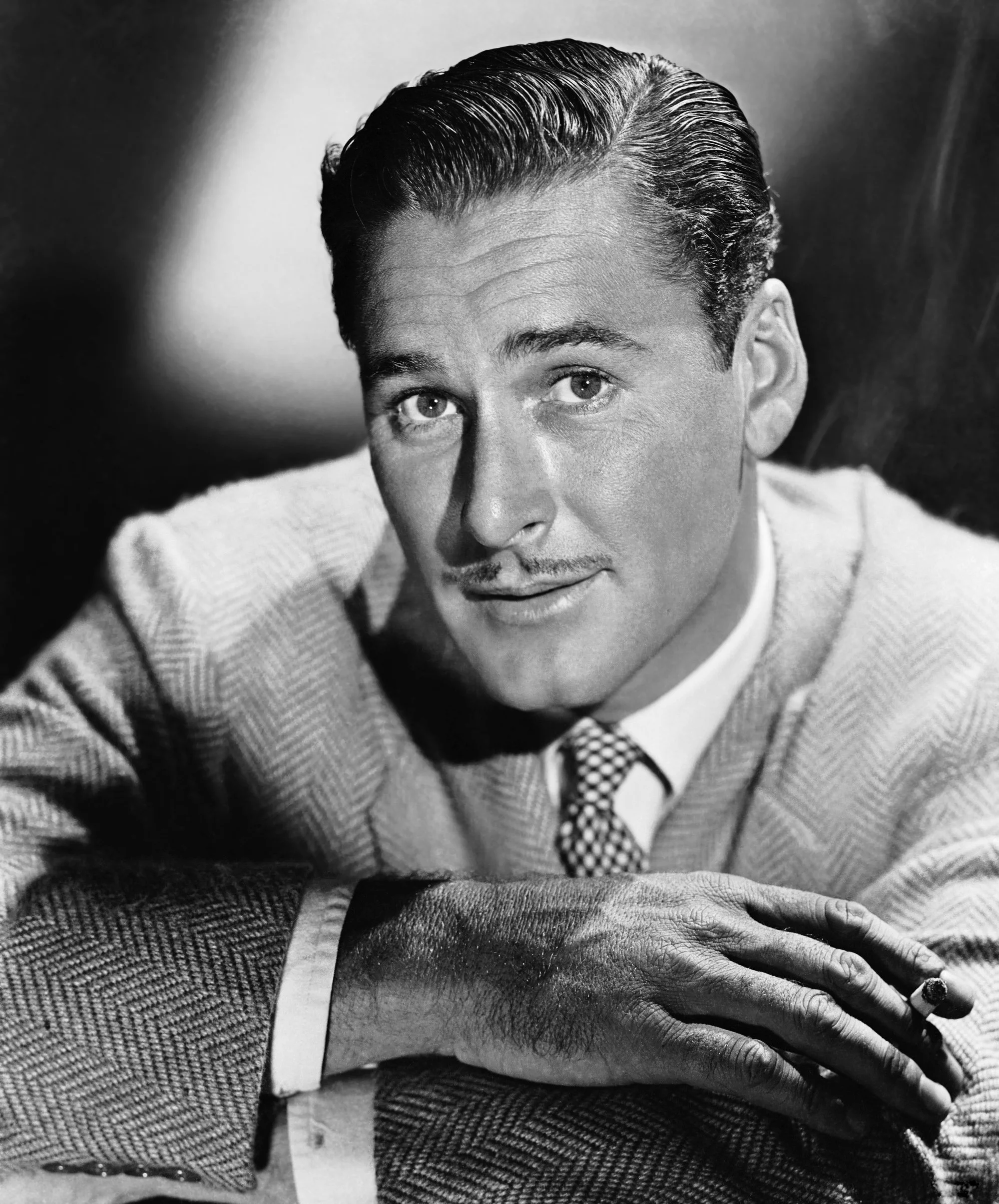
Errol Flynn
Their male counterpart in club going would have been the fun-loving Errol Flynn. Living life to the fullest, and then some for good measure, his fingerprints were found in practically every night club in town! Marlene Dietrich nicknamed him “Satan’s Angel.” He burned the candle at both ends, and he wasn’t alone.
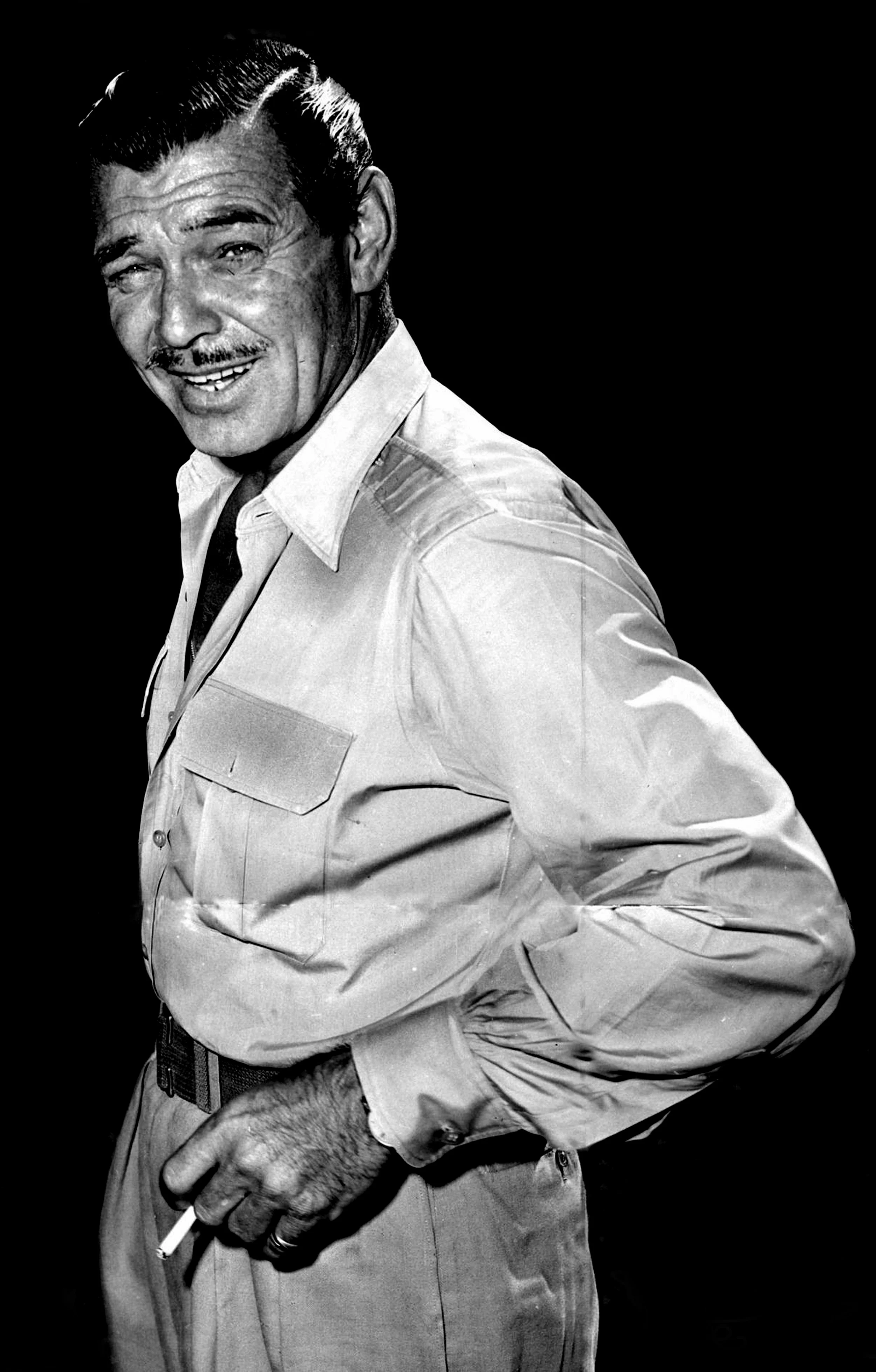
Clark Gable
Back in the grand days of these nightclubs, men were often defined by their ability to consume and hold large quantities of liquor. And most likely, along with the ever-present drink in one hand, you had the ever-present cigarette in the other. Clark Gable once remarked on friend Errol Flynn’s cigarette smoking, stating that he was killing himself “like I’m killing myself.” When Gable was asked about his doctor’s advice on curtailing his own smoking and heavy drinking Gable replied, “Yeah, I heard about it. I was having a high-ball at the time.”
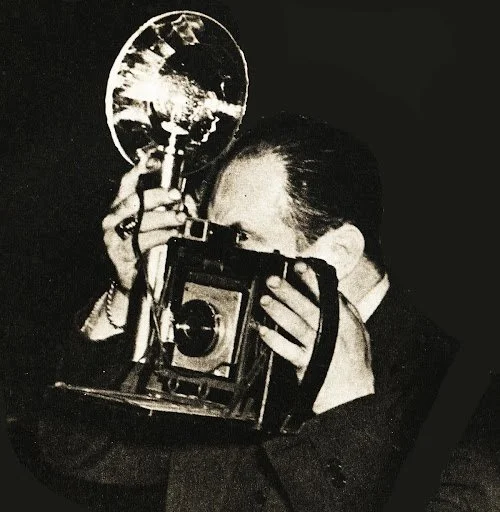
Hymie Fink
Once inside these swanky locations, the flash bulbs would continue to pop as movie magazines would gather material for the next issue and house photographers would document the famous clientele for future publicity purposes.
The maître d’ would greet them like a long-lost friend (and to many, they were friends). Great flourish was exhibited as the patrons would stroll to their reserved table, hoping everyone in the room took notice. Then as now, table position was always important, a result of your current star status, or lack of. Once seated, they would causally scan the room for a familiar face or the famous face of someone worth being seen with, not always one and the same. For many it was all about getting noticed, attracting attention and amplifying the fun for onlookers, making everyone wish they were at your table.
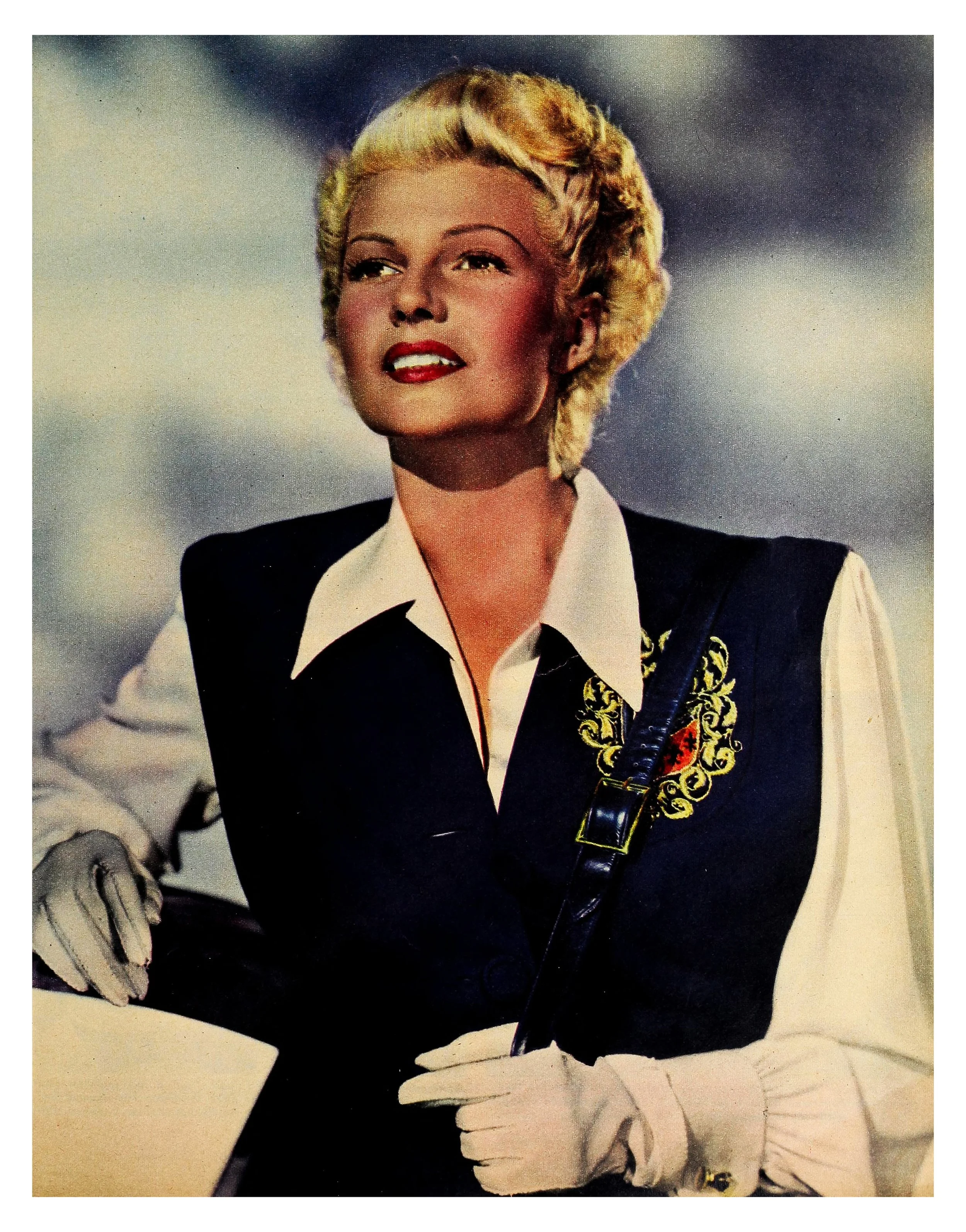
Rita Hayworth
Rita Hayworth confessed, “Do I mind all the photographers, the attention? I would say not – I just think of the times I had tried to attract attention at the Trocadero!” After all, careers could be made if you played it right but it didn’t always come easy. Joan Blondell agreed, “It was hard to really have fun when you had to be “on” every minute.”
After ordering a cocktail or Champaign, the table hopping would commence. Friendships would form (real and fake) deals done and projects pitched, all while enjoying classic cocktails and upscale meals permeated with endless clouds of cigarette smoke. “It was different in those days. People used to meet people easily,” remembered infamous talent agent Henry Willson.
Tony Curtis agreed, “We socialized with each other, took out our dates, met at social clubs without having to carry membership cards. We finished work and at the end of the day couldn’t wait to get in our cars, go home, clean up, then hit the clubs: Morocco, Ciro’s, Mocambo, Lucy’s, and the Club Gala... All-night madness—we didn’t know there was a tomorrow.”
And, back in the day, the Hollywood night club circuit was in many ways an extended family, always welcoming a new pretty face, preferably with talent, fame and money. But not necessarily in that order.
Believe it or not, Hollywood was once a small town, where everyone knew everyone, or at least knew of them. Everyone worked and played together within a designated area, a radius of a certain number of miles. This was a time when 85% of all movies were filmed in Hollywood and the surrounding areas. They were constantly meeting, introducing and bumping into each other. And most of them tended to haunt the same establishments.
All that fame, glamour and treasure stirred the passions. Many a romance started at these haunts, like Ronald Reagan and Jane Wyman. “Neither Ronnie or I were stars. We were both featured players making $500 a week. I wasn’t a glamour queen and he wasn’t a matinee idol. We were just two kids trying to break into pictures…. When I first met Ronnie, I was a night club girl. I just had to go dancing and dining at the Troc [Trocadero] or the [Cocoanut Grove] Grove or some night spot to be happy,” said Wyman.
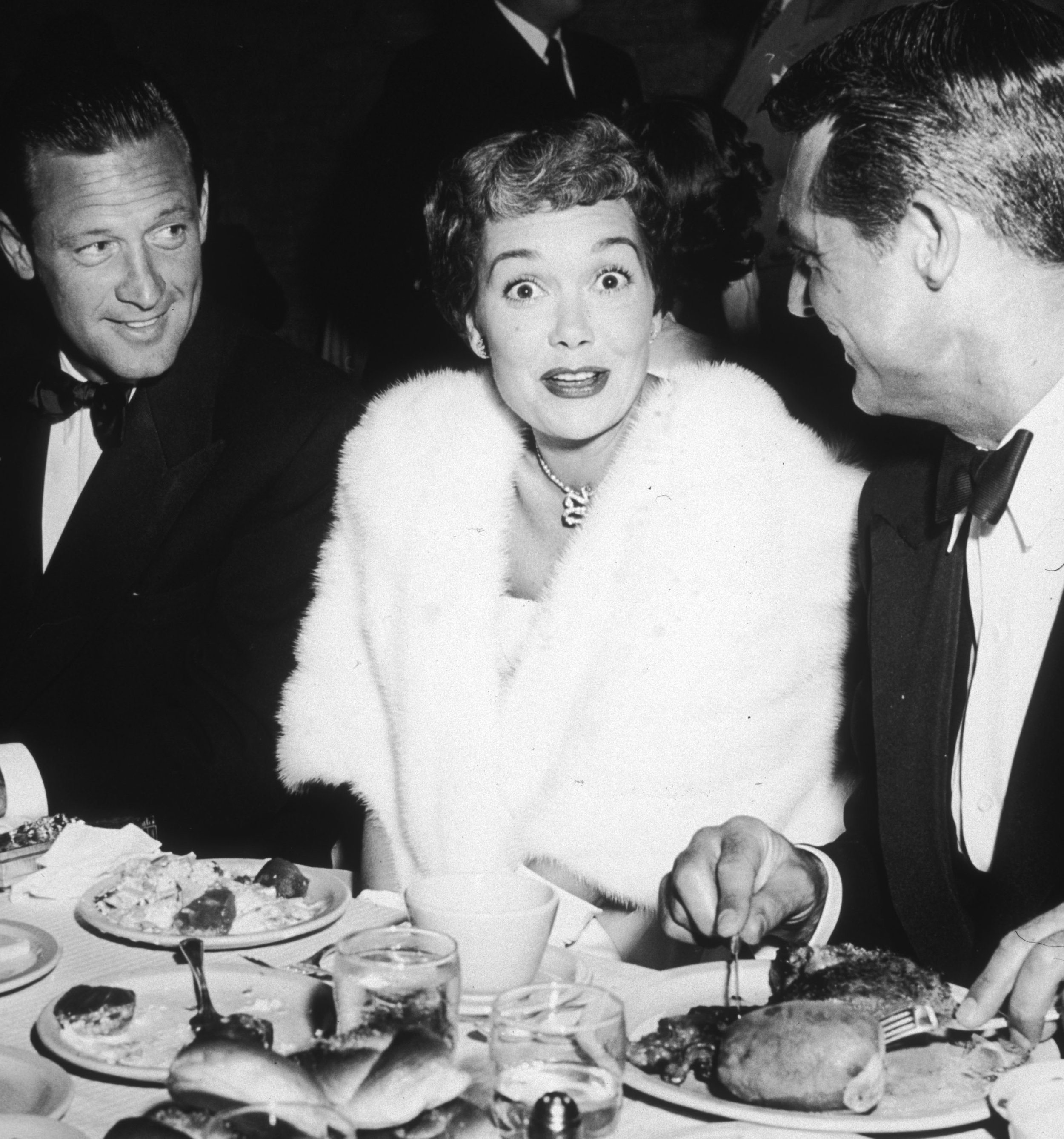
William Holden, Jane Wyman and Cary Grant at the Cocoanut Grove
Most of these establishments featured live entertainment in a mostly intimate setting. There, a mere stone’s throw away, were Frank Sinatra, Nat King Cole, Lena Horne, Count Basie, Peggy Lee, Sammy Davis Jr. or Dean Martin making music magic.
And it was at many of these clubs that the Los Angeles color barrier began to break down, giving entertainers of color access to an even wider audience. Many would see their careers advance to another level of popularity, acclaim and success.
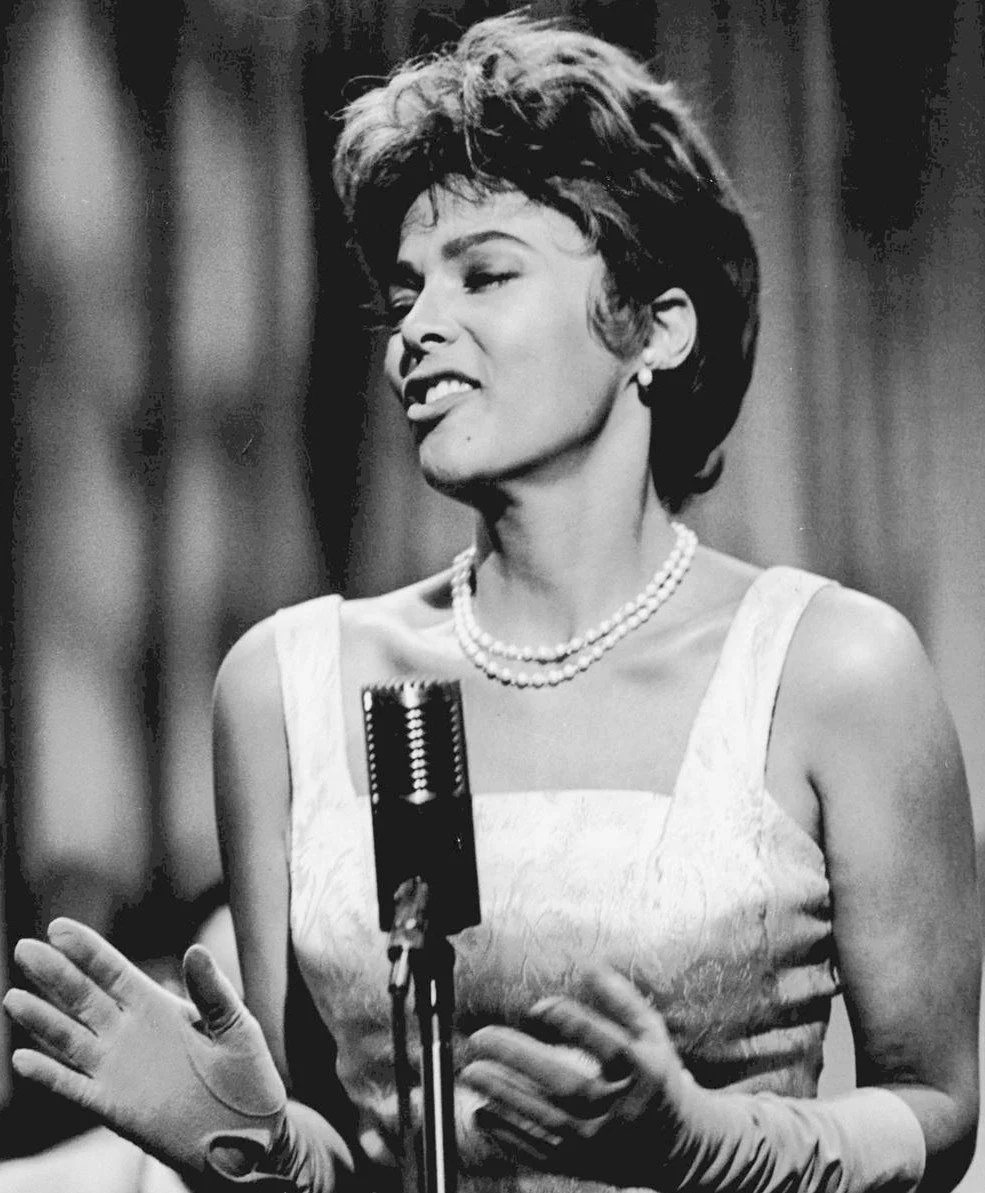
Dorothy Dandridge
The price of admission to these establishments was usually steep so the mere mortal could likely attend only on a rare occasion if at all, a lucky serviceman on leave, that special birthday, an anniversary or the celebration of an engagement, marriage or divorce.
Have You Heard The News Today?
So even though these were fairly exclusive enclaves for the Hollywood elite, almost everyone knew about them. What made these places so famous? The heyday for these establishments closely paralleled the Classic Hollywood period, from approximately 1916 to 1960. For most of these years, the Hollywood movie industry and their studios ran supreme.
The influence of Hollywood cannot be overstated in the United States and around the world. For decades, approximately 60-70% of the American populace attended the movies every week. Consequently, the coverage of all things Hollywood was exhaustive.
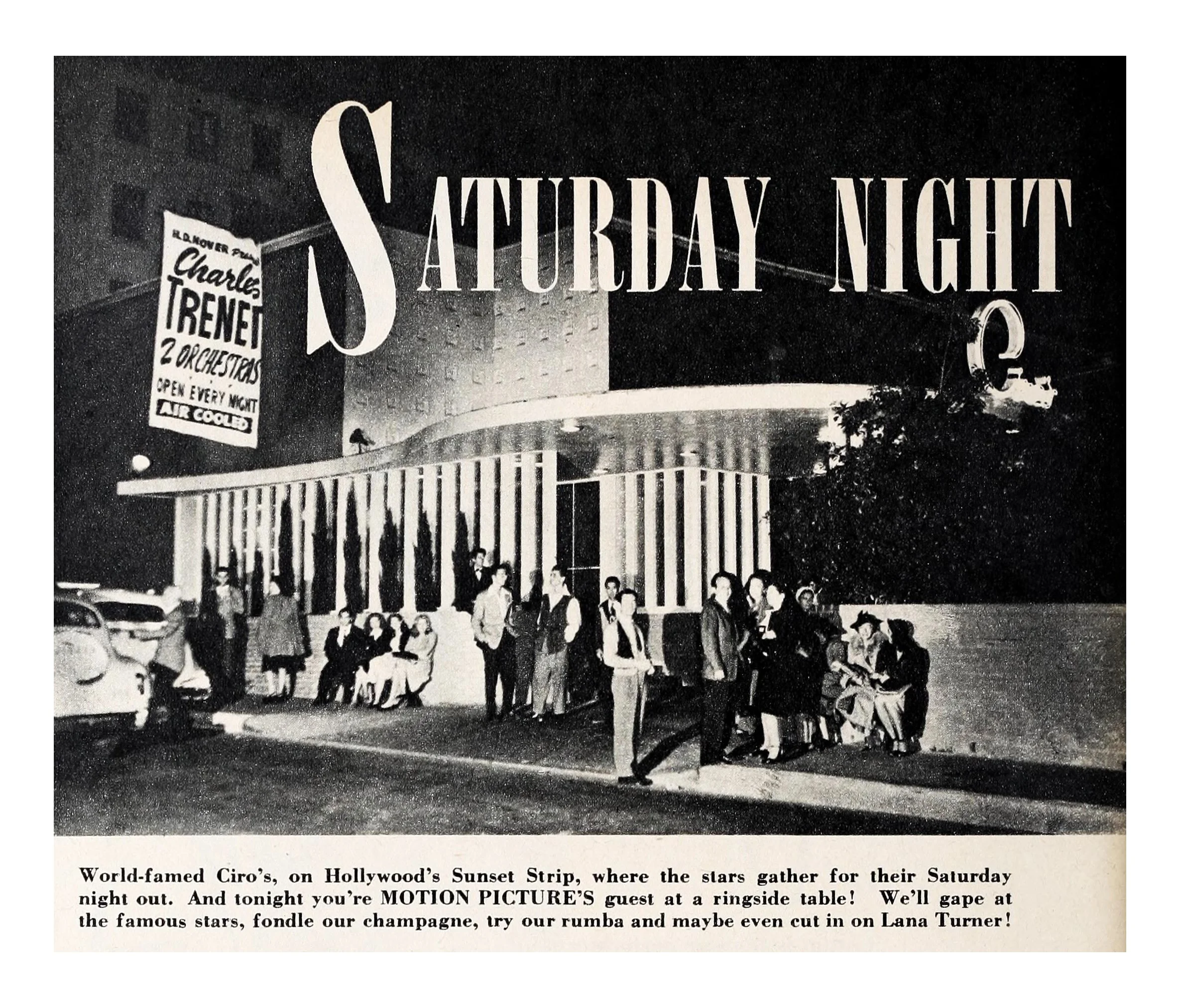
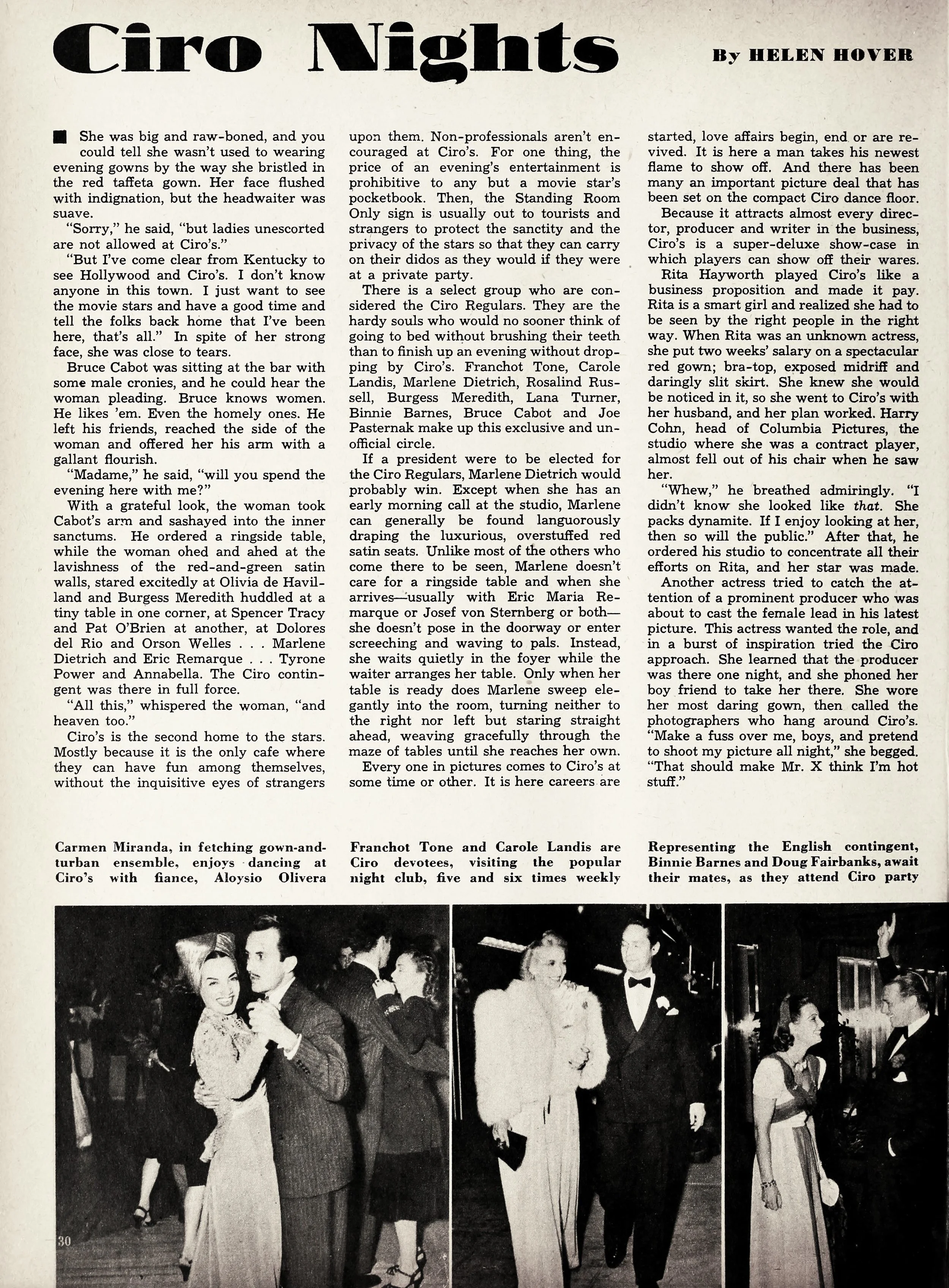
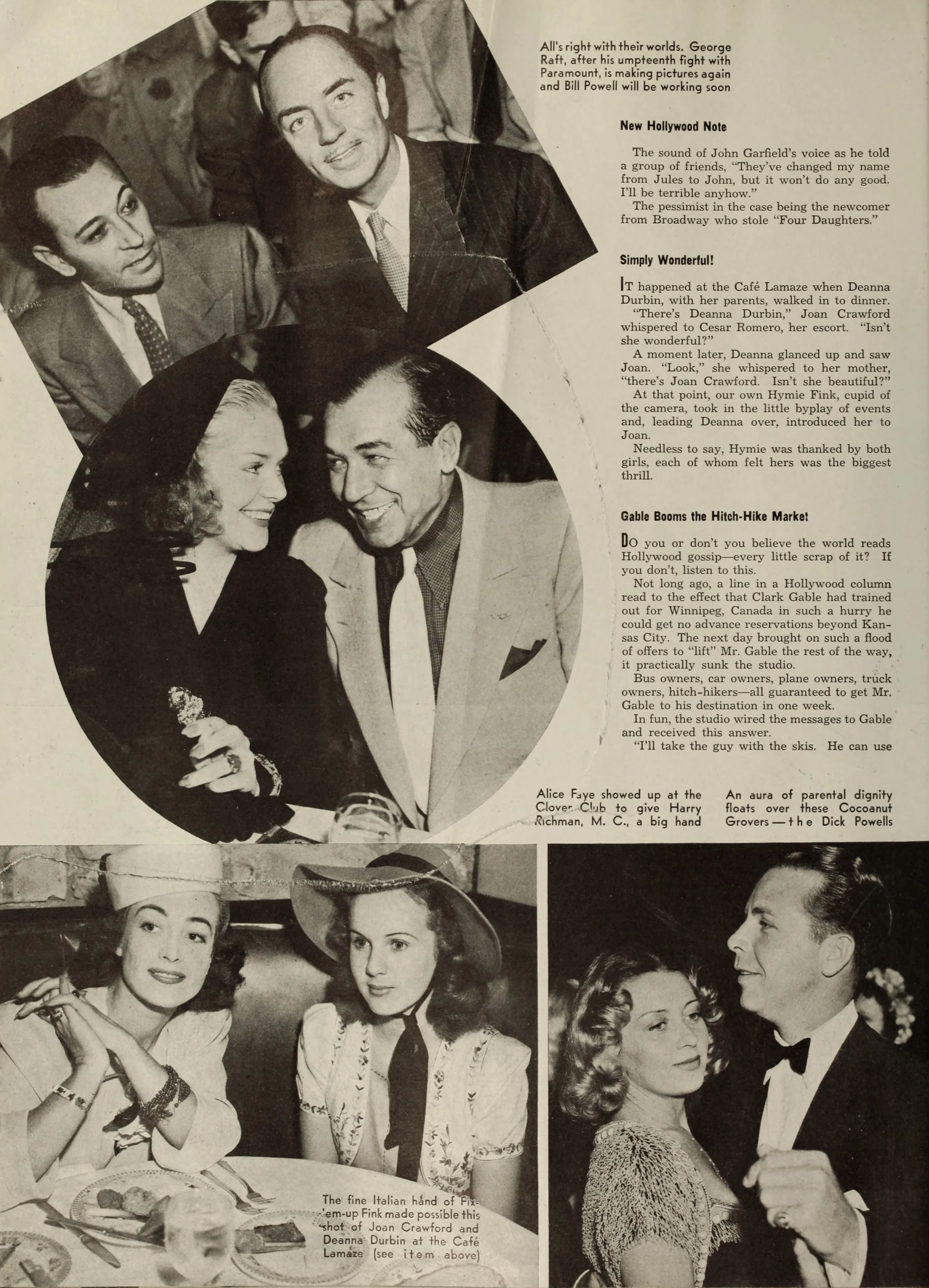
Articles on the Hollywood nightlife were a regular feather of the movie magazines
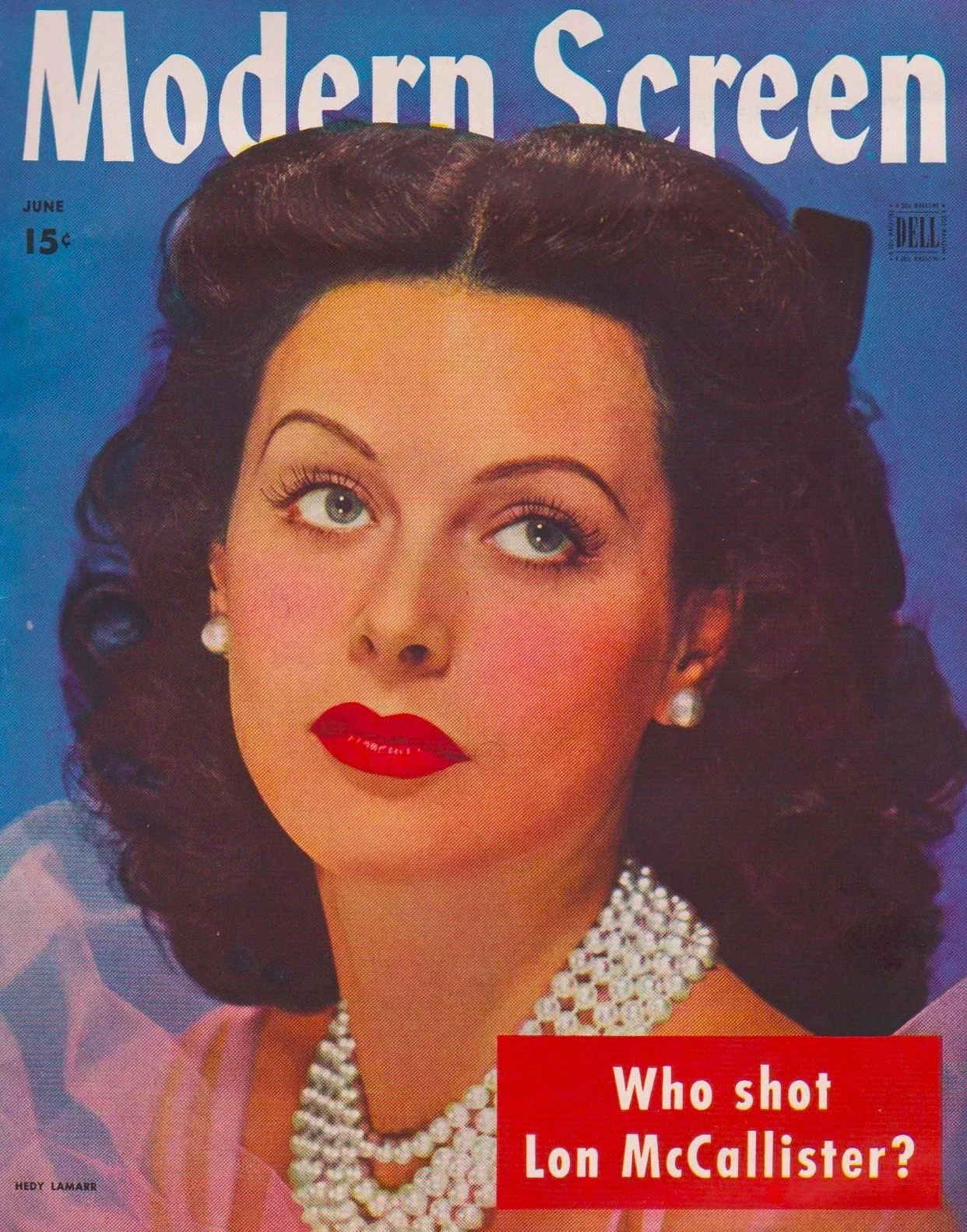
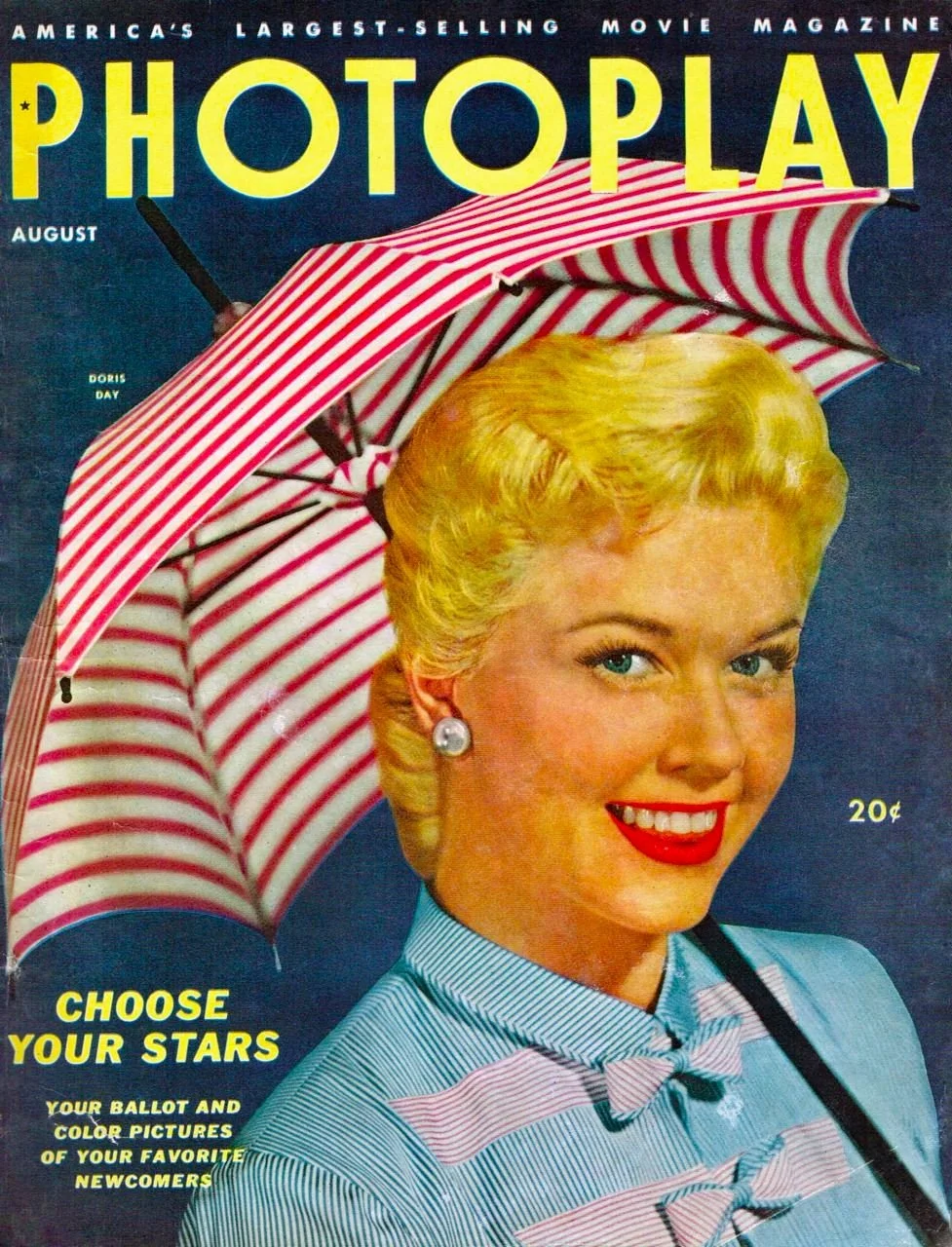
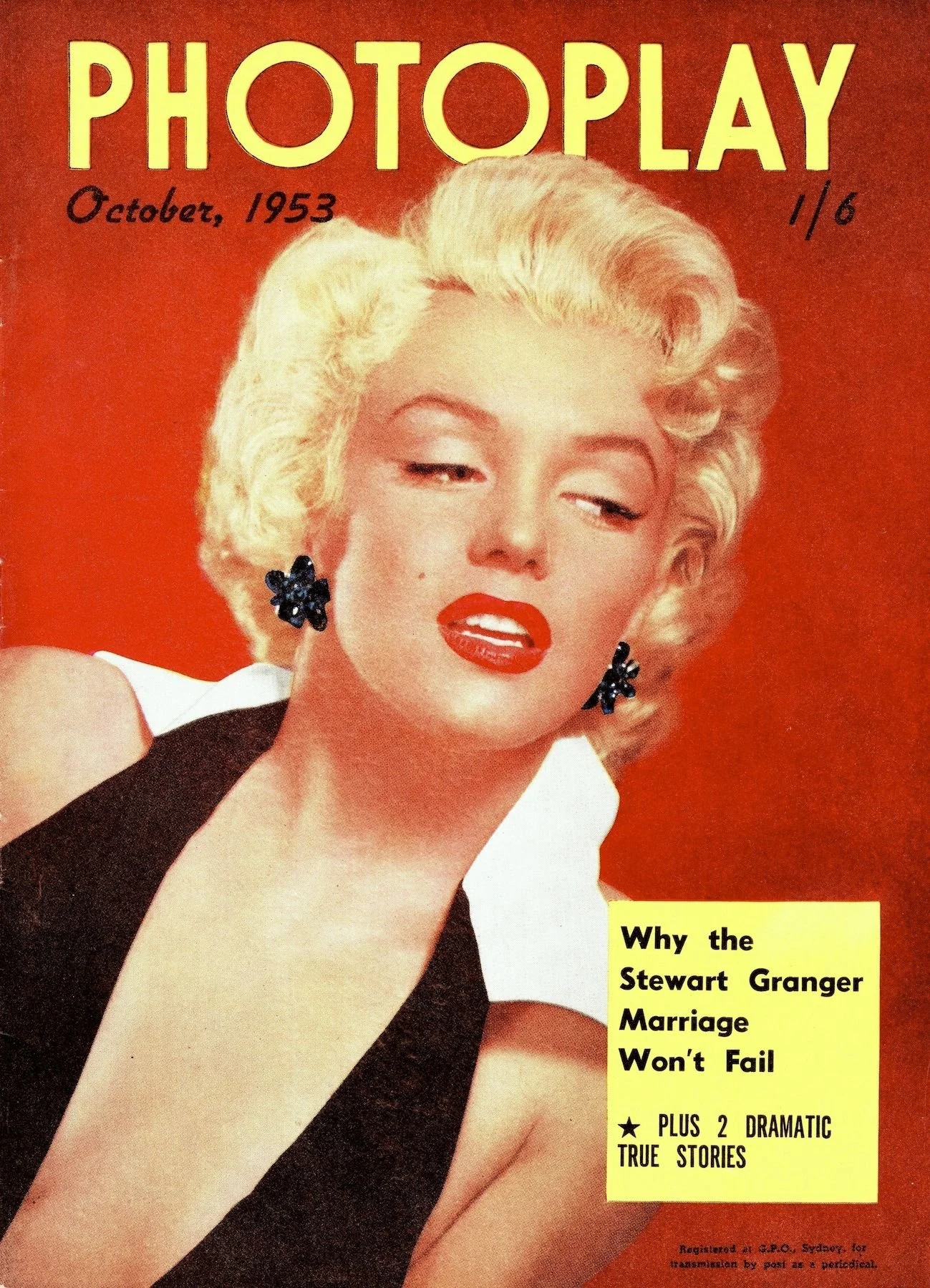
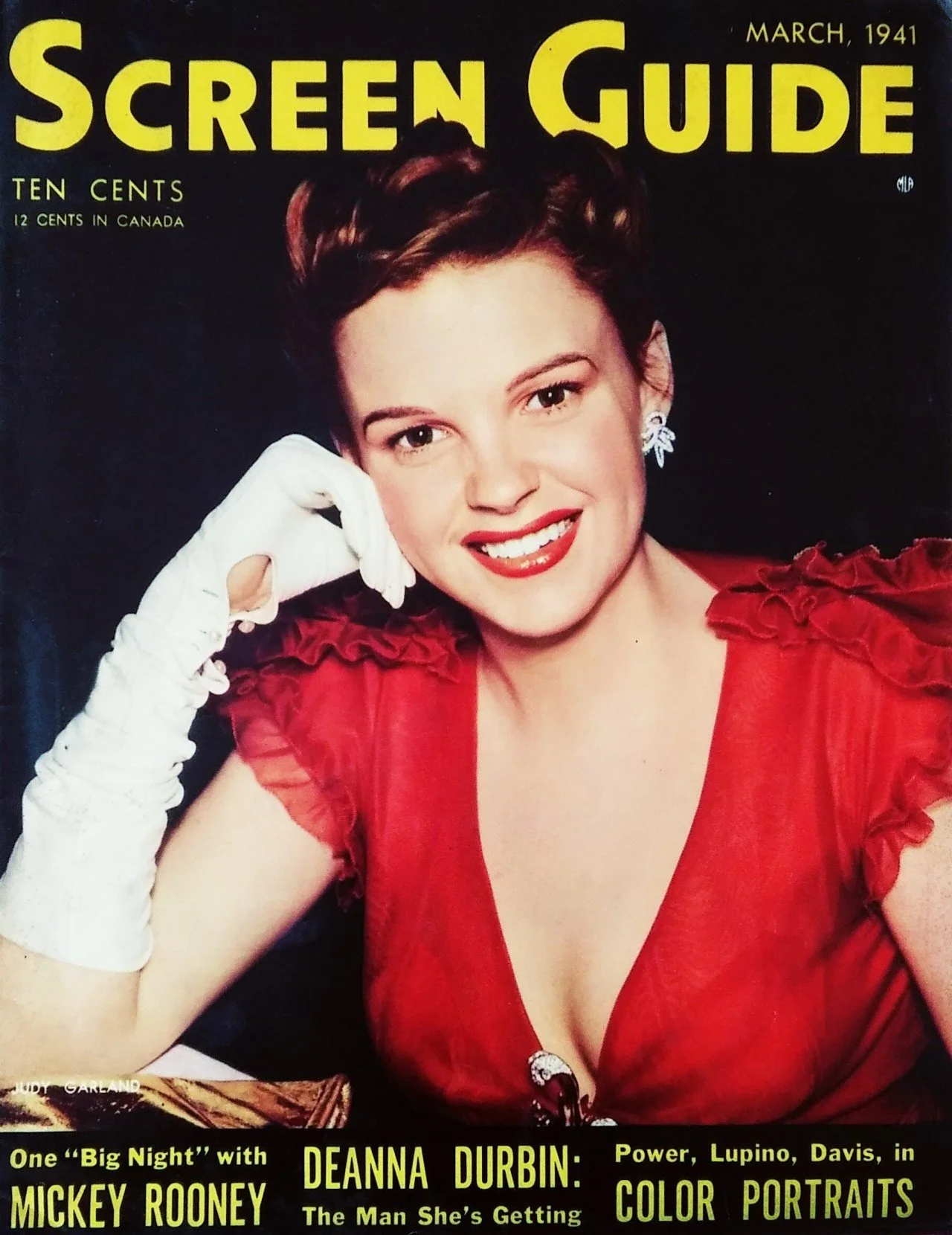
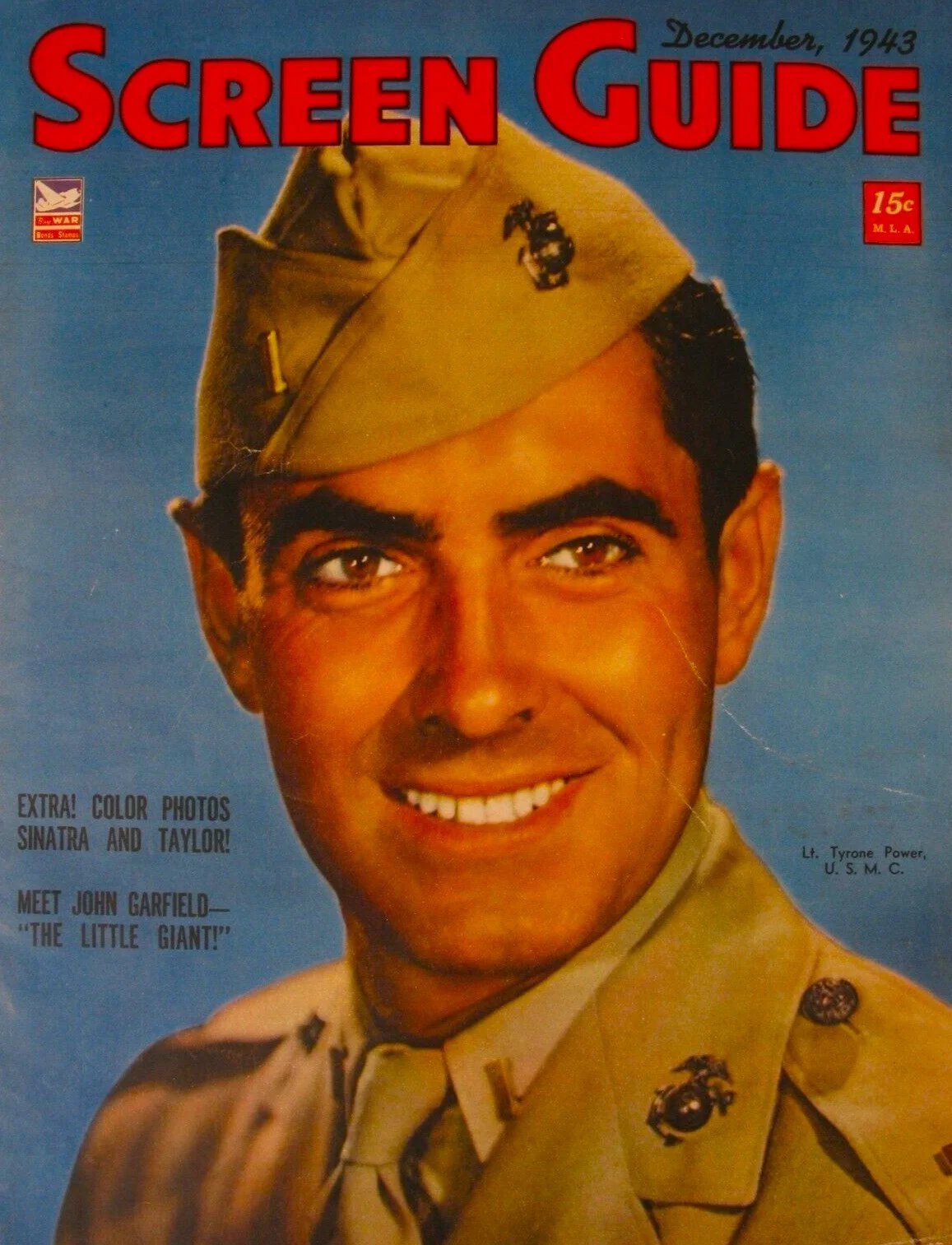
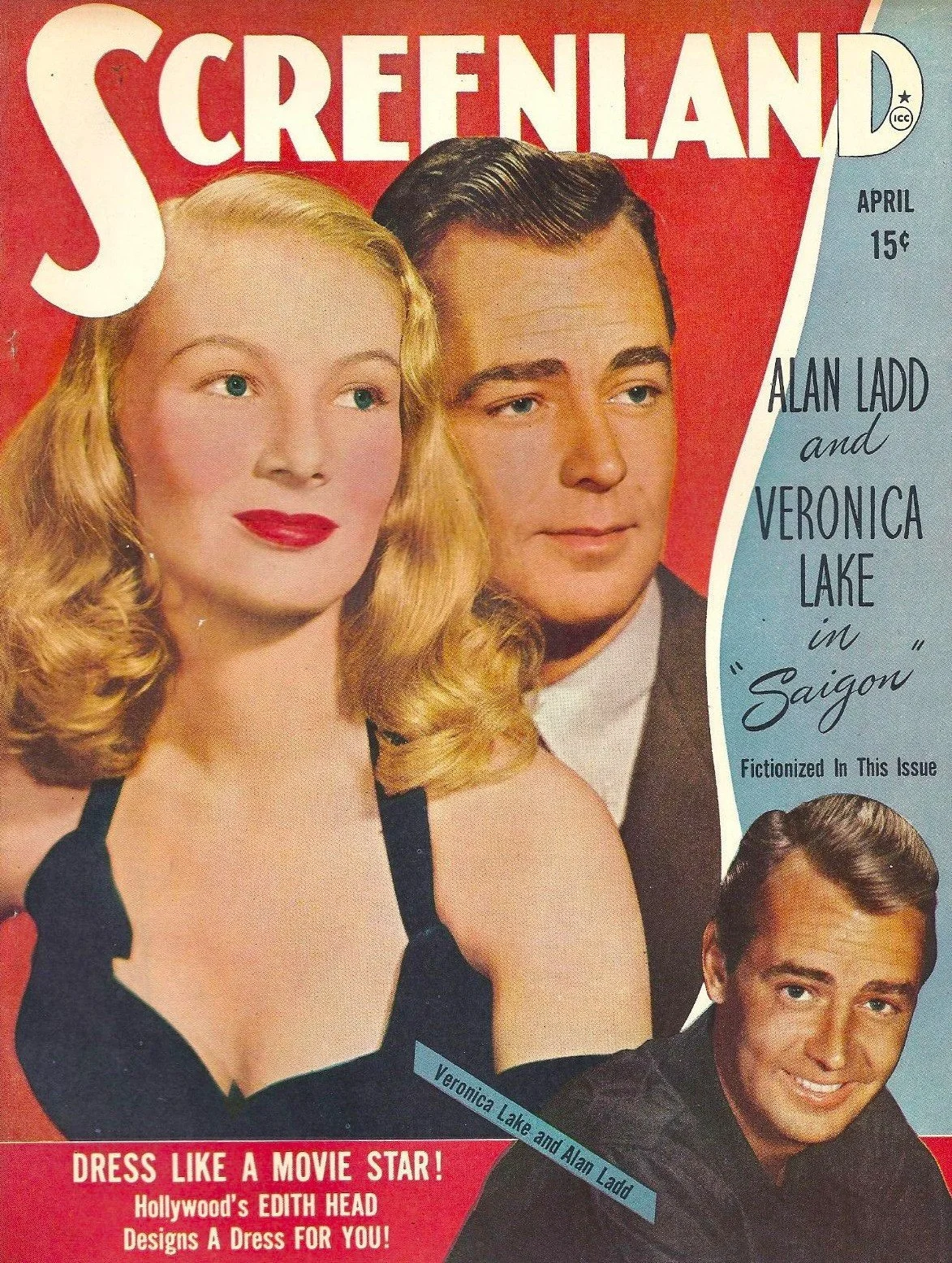
Movie magazines were a popular form of reading entertainment from the 1920s thru the 1950s.
Movie magazine articles in Photoplay, Screenland, Modern Screen, Screen Guild, Motion Picture and Movie Mirror and many others churned out countless stories of Movieland’s glamorous and exciting nightlife sins. And the reporters covering these clubs didn’t have to travel far, since many of these fan journals had offices in Hollywood.
McFadden Publications, Inc., publishers of Photoplay, TV-Radio Mirror and Motion Picture magazines, had an office in the thick of things at 7751 Sunset Boulevard. And of course, these articles were well illustrated with photographs of the stars cutting loose.
Humorist Robert Benchley saw through some of the manufactured hokeyness, “It was rather amusing to observe blissfully happy, world-famous lovers suddenly drop their dazzling smiles and scan the room – in opposite directions – once the lensboys had filled their quota of snapshots!” Armies of photographers covered the Hollywood scene, but some of the most famous shutterbugs included Hymie Fink, Len Weissman and Jules Buck.
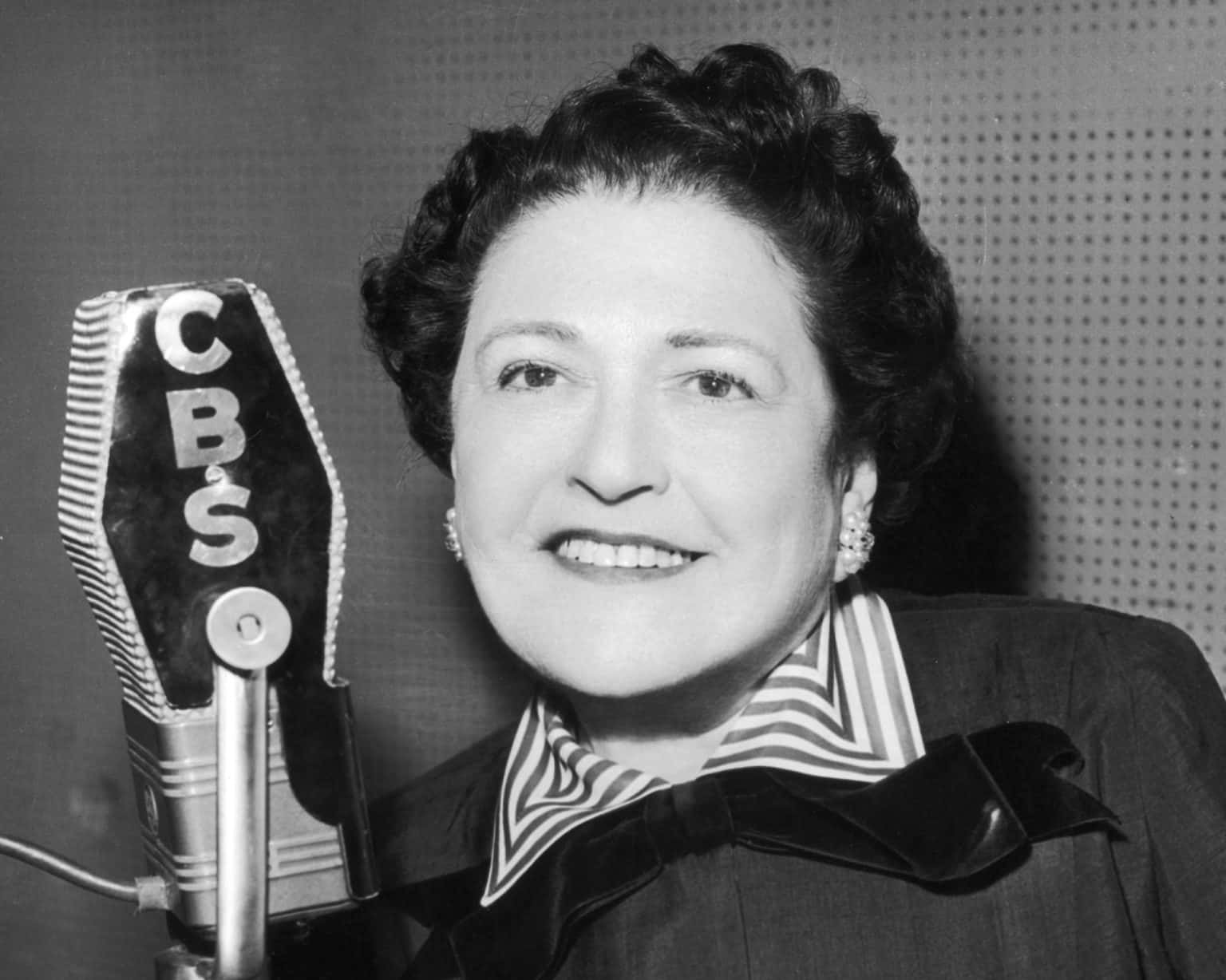
Louella Parsons
The airways added to the onslaught of nightclub publicity; radio programs were often broadcast live from the lobbies and tables of some of these locations. Famous newspaper gossip columnist of the day and frequent club goers themselves, Hedda Hopper, Louella Parsons, Walter Winchell, Mike Connolly, Sidney Skolsky, Cal York, Sheilah Graham, Jimmie Fidler and many others referenced these clubs regularly to their devoted readers, which numbered in the tens of millions. Parson’s column alone reached 40 million readers and was carried by 950 papers world-wide, earning her the title, “First Lady of Hollywood”. Her chief rival Hopper had a readership peak of 35 million. With that kind of influence, people bowed and genuflected, hard as it may have been.
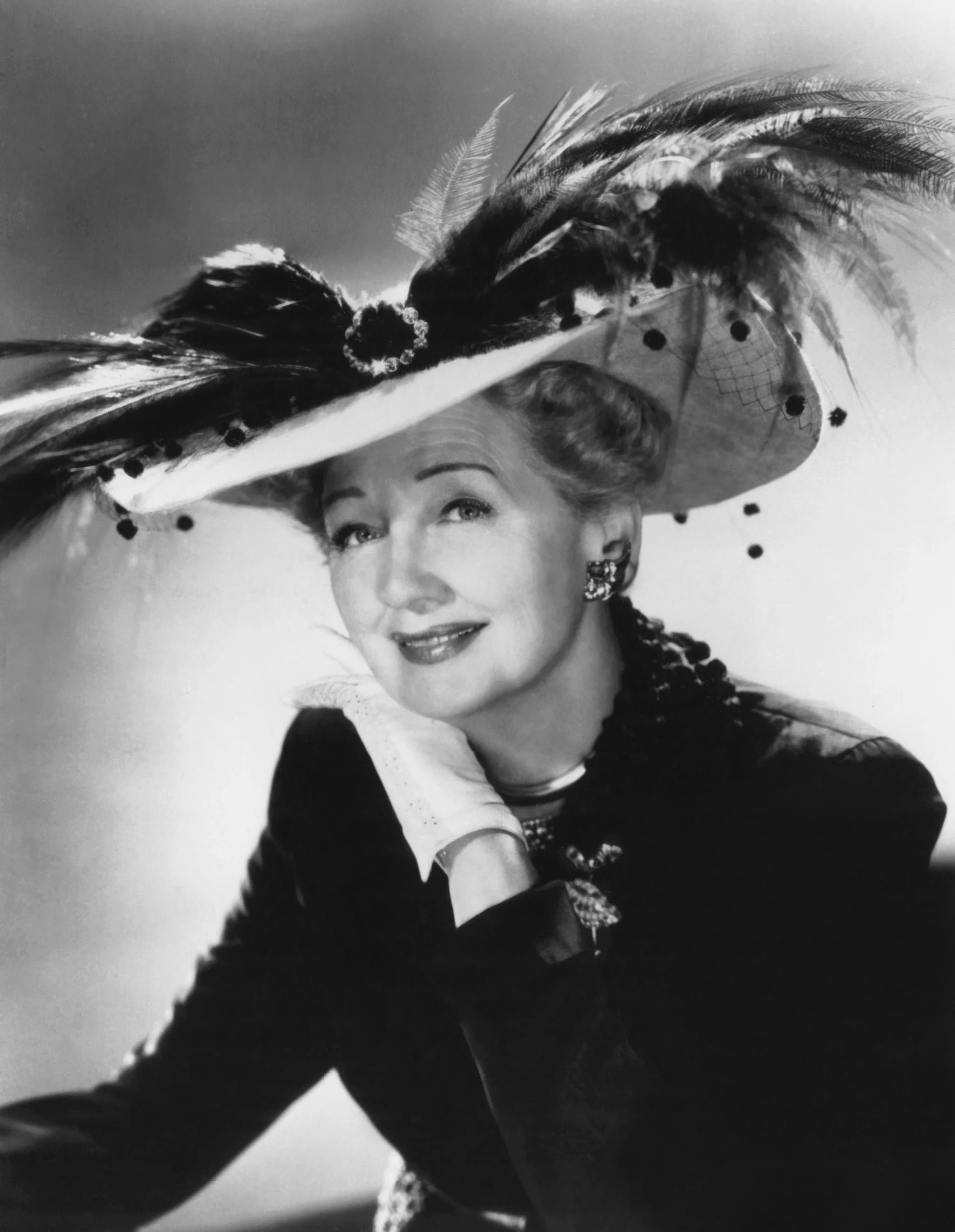
Hedda Hopper
One reluctant actor was Stewart Granger, who described the dueling gossips in less than flattering terms. “Parsons was a bloated, over made-up, simpering, inebriated, pathetic creature, who was not basically unkind, just overwhelmed by her power. Hopper was a different matter, tall, horse-faced, arrogant, funny, dangerous, with a penchant for outrageous hats. If she disliked you, she was vicious and unforgiving, and wouldn’t miss a chance to inject some bitchy remark about you, your family and your films into her column.”
Many gossip writers had “spies” inside, some paid informants, to relay tidbits for their columns. Some club owners themselves gave the gossip items to print in exchange for favorable publicity. Trade papers like the Hollywood Reporter (owned by three-time Sunset Strip club owner William “Billy” Wilkerson) and Variety mentioned the goings-on regularly in their columns. Some clubs like Ciro’s even had their own glossy newsletters and printed programs.

In addition to never ending publicity, these club owners had many of the world’s most talented artists to choose from to help make their visions a reality. Hollywood’s art directors, designers and decorators used many of these clubs to showcase their talents. The motion picture industry itself had great influence regarding the success of these night spots. Feature films, especially the lavish musicals from M-G-M, 20th Century-Fox and Warner Bros. often had glitzy nightclubs for their settings. This was even more so during the WWII years of 1941 to 1945 when the desire to temporarily escape from the endless horrors of war was paramount.
Many of these venues served as the inspiration for fictional movie settings and would sometimes even serve as the actual locations. Movie shorts and cartoons featured and parodied these locations. Movie goers were bombarded with sights and sounds of Hollywood’s glamorous nightlife. Movie fans all around the world could know everything about a club, restaurant or bar without ever setting foot inside by simply visiting the neighborhood theatre.
Hollywood night clubs, both real and fictional, where settings for countless movies, cartoon and short subjects, including Columbia Pictures’ cartoon Seeing Stars 1932, the fictional Orchid Room in Warner Bros.’ Hollywood Hotel (1937) the Tex Avery M-G-M cartoon Red Hot Riding Hood (1943), Monogram Pictures’ Rhythm Parade (1942), Tom Brennan’s featured in Breakfast in Hollywood (1946) and the fictional Golden Safari Nightclub featured in Mighty Joe Young (1949).
This constant exposure made them a favorite destination for the well-heeled tourist or autograph hound who would unfortunately find that most had an enforced policy of “no harassment” of the famous clientele allowed.
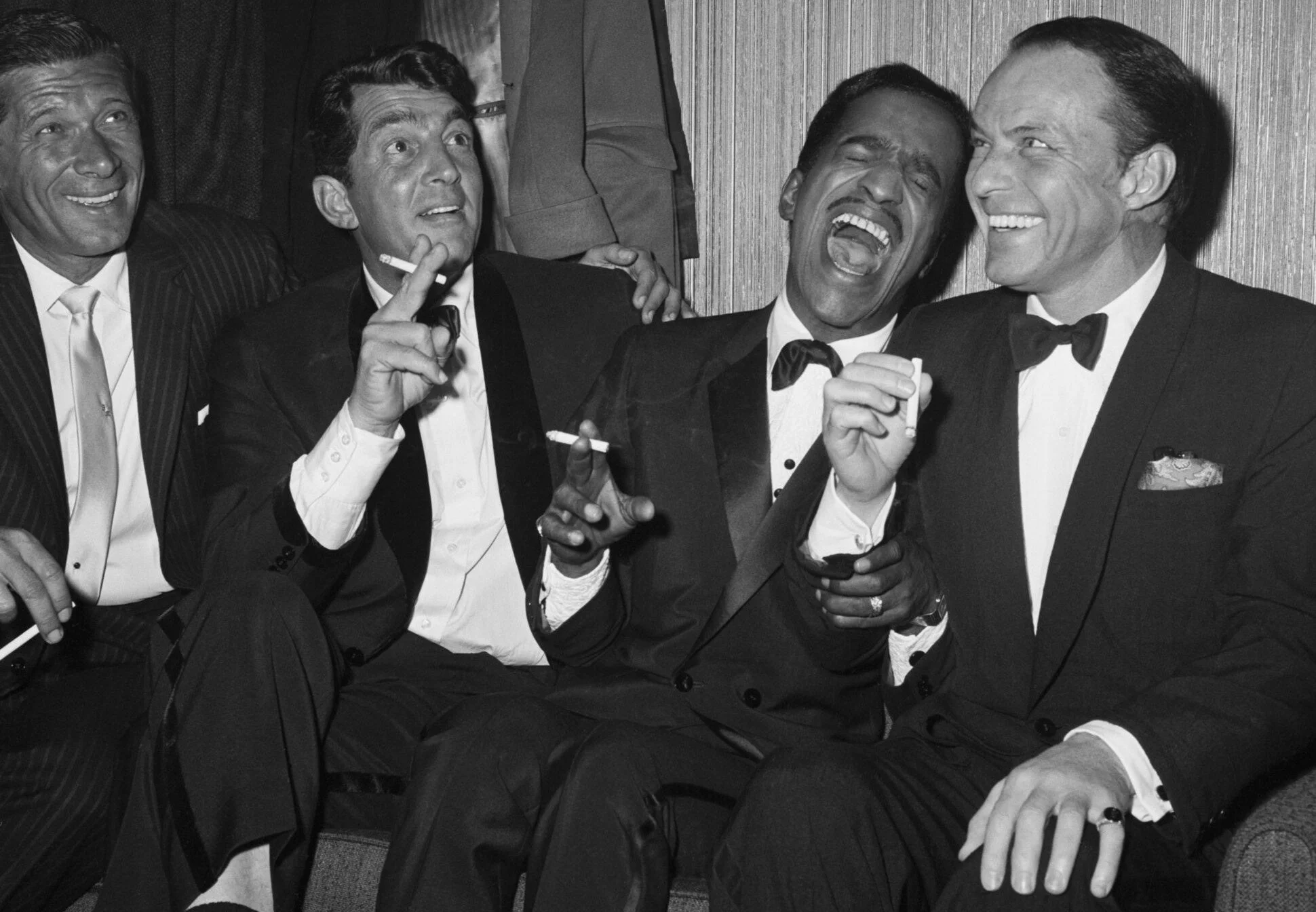
Jan Murray, Dean Martin, Sammy Davis, Jr. and Frank Sinatra
What A Swell Party It Was!
After the last call, many celebrities were more than willing to keep the party going after hours. It was common in those days for many to have a fully stocked bar at home. Marion Davies, William and Edie Goetz, Clifton Webb, George Cukor, Joan Crawford, Jerry and Connie Wald, Judy Garland and Jack Warner are just a few of the Hollywood notables that perfected the art of entertaining at home.
Actor Richard Anderson, who was under contract at M-G-M, experienced the tail end of the nightclub/cocktail party era in Classic Hollywood, had fascinating details about attending some of these soirees back in the day. According to him, these affairs always featured a large bar, often an entire designated room and a full orchestra. The size and scale of some of these shindigs rivaled those of the famous nightclubs and often the featured entertainment was of the same caliber.
Hume Cronyn remembered some of those parties fondly. “A gang of us used to meet on the weekends, most of them members of “The M.G.M family”—which is how the publicity department, under the influence of L.B. Mayer liked to think of us. These gatherings would shift from house to house, but those I remember best were at the house of Gene and Betsy Kelly. It was at Gene’s house that I first heard Judy Garland sing “Over the Rainbow” and Nancy Walker sing “Pass That Peace Pipe.” Hugh Martin and Ralph Blain played us the whole score of “Meet Me in St. Louis.” All these were months in advance of the release of the films involved. Hoagy Carmichael would play the piano and sing his blues songs in that persuasive rusty voice of his. There was a lot of talent in those rooms. One night Paul Draper, surely one of the great classical tap dancers of all time, hopped onto a glass-topped table—yes, it was very heavy glass—and danced for us.”
NOTHING LASTS FOREVER
Unfortunately, many of these legendary establishments did not survive. A number of factors hastened their demise including changing tastes, social shifts, aging patrons, that old reliable, go-to villain, television, and a much stricter enforcement of DUI laws. The city-wide crackdown on vice and corruption by the Gangster Squad was a success. According to Jack Webb, Dragnet’s Sargent Joe Friday, “They saw to it that the word got out to other cities that Los Angeles was a ‘hot town for alien hoods. And locally, they followed the individual, rather than the crime. For the underworld it was aggravation all the time…Finally the word got out, L.A. is closed.” This exodus helped drive the action away from Hollywood and in turn, fueled the rise of Las Vegas.
And the ever-increasing grittiness of the surrounding neighborhoods where many of these establishments were located all contributed to a toxic environment that ushered in their eventual downfall. As the Greek philosopher Heraclitus once proclaimed, “The only thing that is constant is change.” And Hollywood was no exception to that rule.
Yes, that glamourous moment in time is long gone. Yet, the sheer notoriety of these clubs, the talent that performed there and all the high jinks and fun that occurred within their walls makes them worth celebrating. The focus of this project is to celebrate their existence, their history, their famous patrons and the vintage cocktails served that you can now recreate and enjoy while hosting your own Hollywood Cocktail Party.
So here, together for the first time ever, are the best of the Hollywood hangouts, past and present and the recipes for the classic cocktails that helped fuel all the fun!
As always, please enjoy responsibly.
Cheers!
Stephen X. Sylvester