LUNCH AT MUSSO’S WITH Napoleon SOLO*
by Stephen X. Sylvester
*A version of this essay appears in 50 Films That Transformed Hollywood: Triumphs, Blockbusters, and Fiascos by Steven Bingen
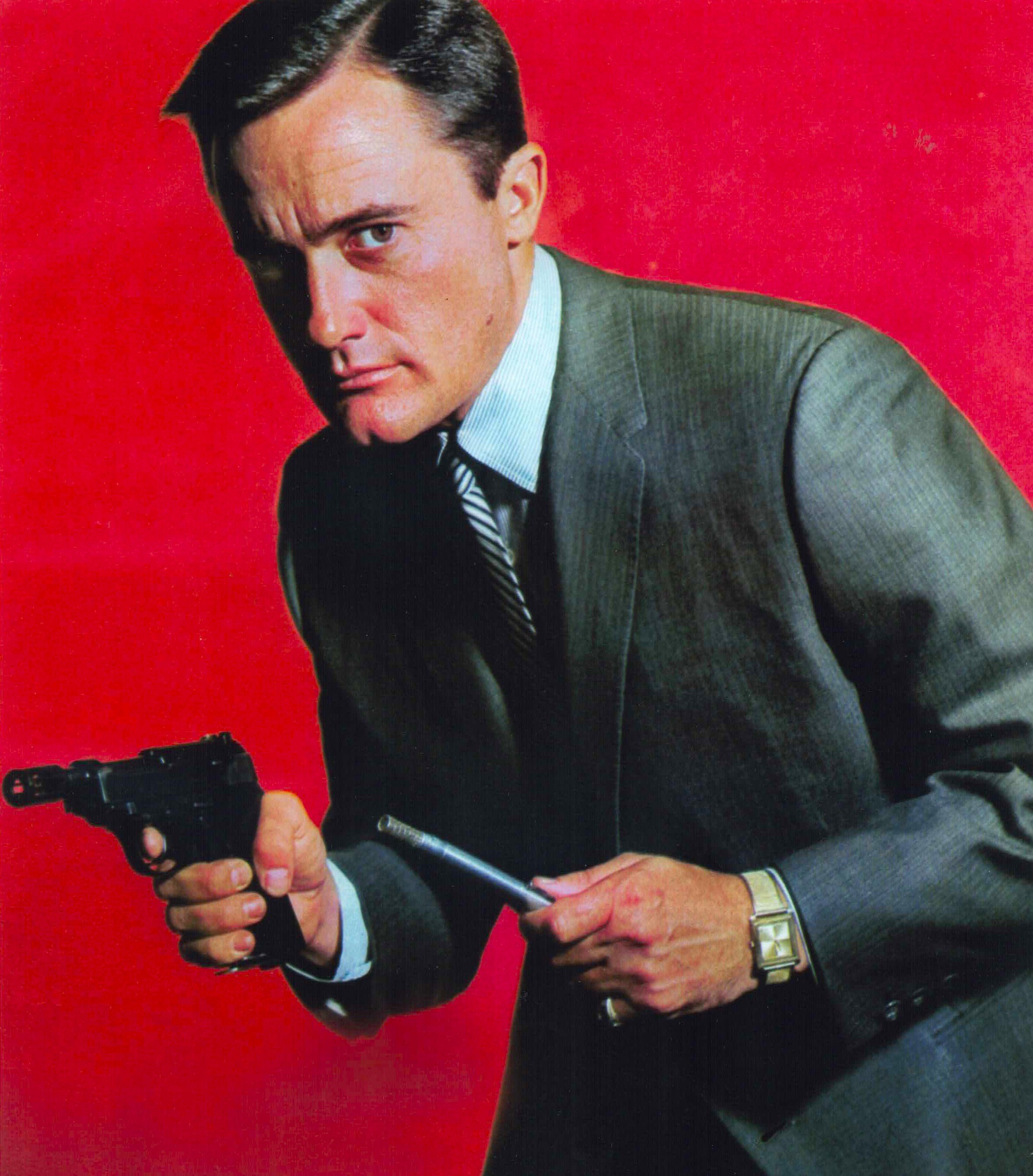
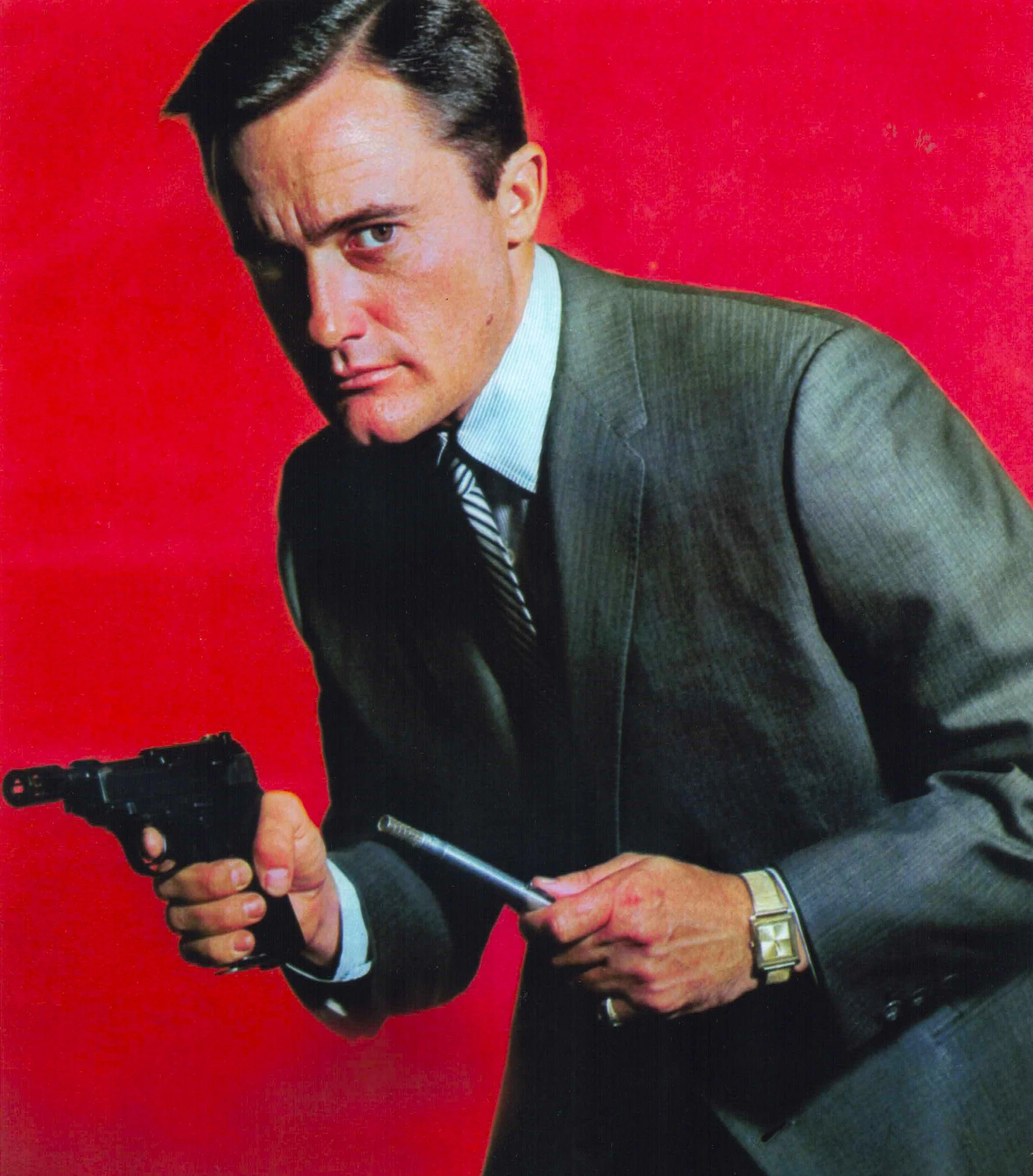
Over 40 years after my favorite T.V. series The Man from U.N.C.L.E. ended, I had the opportunity to meet and befriend my childhood hero, Napoleon Solo aka Robert Vaughn. Over the years, I would spend many enjoyable hours with him and one afternoon we had a memorable lunch at Hollywood’s Musso & Frank Grill. I have always looked forward to going there and was glad to have a great reason to go again. Best of all, it was his suggestion; he ate there whenever he was in town. He had moved from Los Angeles to Ridgefield, Connecticut over 20 years ago.
The iconic Musso & Frank Grill rooftop neon signage
Musso’s has long been a Hollywood lunch go-to. Great food, great atmosphere, great history. A step into a place that can make you forget a world gone insane. A couple of their signature martinis could help too. The Grill has managed to outlive most of the competition over the decades, from Steve Lyman’s, Sardi’s, the Tic Tock Cafe, the Vine Street Brown Derby, the Italian Kitchen and others, all long gone.
The Musso & Frank Grill dining room
Yet, Musso & Frank Grill survives, carrying on the Classic Hollywood vibe known and loved by generations. Back in the day, the bar at Musso’s was a known writer’s oasis, a place to drink and complain about how shabby the studios were treating them. The industry related history here is long and utterly fascinating, but that is a story for another day. Even today, the Musso and Frank Grill still serves a steady Hollywood clientele. So, what better place to have lunch with a celluloid hero?
The Musso & Frank Grill bar
In between the signature sour dough bread, famous French onion soup and roast beef sandwich, he shared stories of making the series and other tales of his career, his childhood hero (the magnificent John Barrymore), his utter disdain of guns (how ironic), and his political evolution (from very liberal to, much less liberal). I was tempted to order a Musso’s martini, but I didn’t want to give the wrong impression. At a later date, we drank multiple margaritas at the Elephant Bar after viewing Danny Biederman’s SpyFi collection at the Reagan Library, but that too, is another story.
He shared fascinating stories about Bette Davis, Joan Crawford, Marilyn Monroe, Steve McQueen and Charles Bronson, many of which he later included in his autobiography, A Fortunate Life: Behind-the -Scenes from a Hollywood Legend.
During our conversation he mentioned that people were still constantly asking him about all the traveling he did during the filming of the U.N.C.L.E. series. He was always amused at their stunned reaction when he shared the fact that 95 % of the series was shot at the M-G-M studio in Culver City, California. Perhaps a testament to the authenticity of the M-G-M backlot!
I didn’t dare tell him that at the ages of 6, 7 and 8 I wore my Ideal Man from U.N.C.L.E. Secret Service cap gun under my sport coat to Catholic Mass every Sunday. This, of course, was just in case agents from THRUSH reared their ugly heads. That most likely would have ended the lunch prematurely.
However, I did tell him that when I was interviewed to attend a private Catholic Prep School, I was asked by one of two priests who I admired most in the world. I replied without hesitation, “Robert Vaughn…You know, the man from uncle.” The two priests looked at each other with a surprised, puzzled look. Smart kids would have said Jesus Christ or the Pope. Even so, I was still accepted. The school needed the money.
The waiters there at Musso’s all knew him from their decades of taking his order at several famous Hollywood eateries past and present, including the long-gone Hollywood Brown Derby. Several asked if he still had his George Barris customized 1964 Lincoln Continental convertible, bought with an early U.N.C.L.E. paycheck. Fortunately, he did, and with some encouragement from me, he later had it completely restored. At one point during our conversation, I told him he was a 1960s icon, like the Ford Mustang, James Bond and the Beatles, to which he replied, “I’ll have to tell that to my wife the next time she tells me to take out the garbage.”
And as I sat there listening to his insightful tales, a voice inside me was crying out, “Hey everybody, look who’s having lunch with Napoleon Solo!” But I played it cool and laid back, you know, just like a seasoned U.N.C.L.E. agent, despite the fact that the impressionable seven-year-old boy inside me was completely and totally ecstatic. They say, “Never meet your childhood hero, you’ll only be disappointed.” That was certainly not the case with me. I’m glad I did, and I now have some really fun memories that bring a smile to my face.
By the time we had lunch, he had attended several autograph shows. I sat next to him during the shows located in Los Angeles. He once turned to me and said, “I’ll never get over how many middle-aged men have me sign their dolls.” I was never so glad that I never had or wanted an U.N.C.L.E. doll. I was a super fan but I had to draw the line somewhere.
But there is much more to this story.
Because The Man from U.N.C.L.E. was my favorite television show, I just had to see where all that amazing action played out. During the summer of 1968, I was fortunate enough to take a tour of the impressive facility. The M-G-M studio tour opened a door to a fascinating and surreal world I never knew existed. Anything you could ever imagine needed to tell fantastic stories on film was there within those walls, causing a complete sensory overload.
Lot 1 of the M-G-M magical kingdom
The tour of Lot 1 was a cornucopia of all the integral ingredients with multiple cavernous soundstages, a busting-at-the-seams prop house, a massive wardrobe department, vintage military vehicles from WWII and the massive painted backdrops. Could it get any better than this? Yes, it could and it did. Lot 1 was amazing, but now the tour would be bumped up a couple of notches from what was just amazing to sheer incredibility.
Next on the tour agenda were the exterior backlot sets on Lot 2 and Lot 3. What’s a backlot? I had no idea, but was about to find out, bigtime. There were the most fascinating juxtapositions of architecture, culture and locations you could ever imagine. Grand Central Station next to the Great Wall of China, next to the Three Musketeers Court, next to the Northern Italian Village of Verona, Small Town Square at the southern end of New York’s urban Fifth Avenue, an Ocean Liner (a near full-sized façade) docked at a big city harbor within a short walking distance to New England (Andy Hardy) Street.
The amazing facades on M-G-M’s Lot 2
Touring this acreage was truly a condensed trip around the world and a bombardment of visual delights. I kept wishing the bus driver would slow down.
For a kid who loved magic, these were the ultimate full-sized illusions. No offense, but the trip to Disneyland the following week paled by comparison. So, it was The Man from U.N.C.L.E. that would begin my keen interest in the studios of M-G-M and lead to the eventual collaboration on M-G-M: Hollywood’s Greatest Backlot. But hey, I digress.
M-G-M’s massive Lot 3
By 1964, the studio of Metro-Goldwyn-Meyer was everything it would ever be, a compilation of 40 years of being at the top of the Hollywood hierarchy of moviemaking. It was no secret that movie theatre attendance had been on the decline since 1950. Much of the audience had turned their attention to that free, in-home form of entertainment, television. The grand movie factory was now in a deep slumber.
And M-G-M was late, like many of the other Hollywood studios, to enter into the then new medium of television. Instead of figuring out how to own it, they first ignored it, fought it and then lost out to it. Consequently, their first TV program which was a rather lame attempt, broadcast on ABC-TV and titled M-G-M Parade (1955-56), described as “a look inside the world of moviemaking” utilizing a combination of clips from their older movies and promotions for upcoming productions. Ultimately the audience was not impressed and the show ended after a nine-month run.
The studio then tried television series adaptations of their previous popular movies like North West Passage, The Thin Man, National Velvet, Father of the Bride and The Asphalt Jungle. But again, the audience reaction was disappointing with the exception of Dr. Kildare, which would become a solid ratings winner.
During the fall of 1962, television producer Norman Felton (Pursuit, Dr. Kildare, The Lieutenant), had approached Ian Fleming, author of the James Bond book series, with a concept for a new television series based loosely on Alfred Hitchcock's hit North by Northwest (1959). Ironically, this proposed series would be yet another to have its conception rooted in an M-G-M movie. Felton’s producing partner on the planned new series was the talented Sam Rolfe, the creator, producer, and writer of such acclaimed series as Have Gun Will Travel, Playhouse 90, and The Eleventh Hour.
On September 22, 1964 they premiered their new series now titled, The Man from U.N.C.L.E., on NBC-TV in time to capitalize on the emerging spy craze, in large part fueled by the massive box-office success of Dr. No (1962) and From Russia with Love (1963), the first two in a series of James Bond movies based on the Fleming novels.
At that time many countries did not have the level of saturation of television sets like in the United States, and certainly not color TVs. Eight of the two-part TV episodes received a boost in budget for a few additional scenes and were edited into feature films that played to mostly international audiences. The Alexander the Greater Affair two-part TV episode played in movie theaters with the title One Spy Too Many,The Bridge of Lions Affair became One of Our Spies is Missing, The Concrete Overcoat Affair became The Spy in The Green Hat, The Five Daughters Affair had a theatrical run as The Karate Killers, The Prince of Darkness Affair became The Helicopter Spies and The Seven Wonders of the World Affair would become How to Steal the World in movie theatres. They proved to be extremely popular in Europe (especially England) and Asia, making “U.N.C.L.E.” a worldwide phenomenon.
U.N.C.L.E. feature films were made by adding additional scenes to 2-part television episodes
National and international fan clubs were formed, with many surviving long after the series would go off the airwaves.
The series stars became pop sensations, much like Elvis Presley and The Beatles. Crowds followed them everywhere. Robert Vaughn (Napoleon Solo) soon had young fans camped outside his house at all hours, some trying to get in. He eventually had to resort to a recording device broadcasting the sounds of a dog barking to keep the would-be trespassers at bay. David McCallum (Illya Kuryakin) received more fan mail at M-G-M then any of their past movie personalities, including the legendary Clark Gable. Leo G. Carroll (Alexander Waverly) added an element of class and sophistication to this show and for that matter, everything else he appeared in. He was a favorite actor of director Alfred Hitchcock and was another connection to the Hitchcock classic, North by Northwest. His role in the movie simply referred to as The Professor, was an undeniable prequel to his future role as Mr. Waverly.
Robert Vaughn holding the U.N.C.L.E gun based on a 1934 7.65 German Mauser pistol
As popular as the series stars were, a fourth “star” of the series soon emerged, the U.N.C.L.E. Special, a futuristic combination of automatic pistol and rifle. The original concept for the weapon was to create a "breakaway" gun with attachments, based on a 1934 7.65 German Mauser pistol. The show’s special effects team (Robert Murdock, Arnold Goode, Bill Graham) and the capable crew in the M-G-M gun room, gave the pistol an extended barrel with horizontal fore-grip, Bushnell scope with mount, custom anodized aluminum grips, an extended cartridge magazine and a collapsible shoulder stock, creating an incredibly unique weapon. Adding an interesting twist to the story, artist, car and motorcycle customizer Von Dutch (Kenny Howard) had considerable input on the overall design of the initial prototype.
Unfortunately, their impressive prototype was deemed too small, unbalanced in scale with the large attachments and even worse, it proved unreliable for firing blank cartridges. Fortunately, Manuel Zamora, “Gunsmith to the Stars” and manager of the M-G-M Gun Room, had a practical solution. Take the attachments from the Mauser and machine them to fit a much more reliable Walther P-38. This was a very common 9mm pistol at the time, surplus from WWII Germany and the M-G-M gun room had an amble supply, extensively used on the Combat TV series which also filmed at the studio.
The U.N.C.L.E. pistol was based on a modified Walther P-38
The Walther P-38 automatic pistol with custom attachments
The standard Walther P-38 automatic pistol was modified, the hammer was bobbed and the barrel was cut and threaded to accommodate both extended barrel and silencer attachments. In pistol form, a handmade flash suppressor “bird cage” screwed into the internally threaded and bobbed barrel that gave it balance and an unmistakable appearance. Soon after their creation appeared on screen, a new star was born. And what a star it would become! The gun would get its share of weekly fan mail, up to 500 letters a week.
So convincing were these weapons that they caught the attention of the Treasury Department, who would fine M-G-M for the offense of manufacturing automatic weapons without a license. Ironic, given the fact that these guns could only fire blanks, with any internal threaded barrel attachment in place, the barrel was essentially blocked.
The Napoleon Solo gun set by IDEAL
The idea for this unique weapon was tied concurrently to a potential toy version tie-in with the series. Stan Weston, president of Weston Merchandising Corporation licensing firm, was hired for the task partially because Weston had an established relationship with the Ideal Toy Corporation. The project design was given to an independent toy inventor, Reuben Klamer, and his staff at Toylab studios. The Toylab staff designers created a plastic toy "breakaway" cap-firing gun with barrel, scope and shoulder stock that evoked the attachments found on the television series originals.
Although the IDEAL toy weapon only vaguely resembled the TV version, the Napoleon Solo Gun set would become one of the biggest selling toys associated with a TV series in television history. A mint-in-an original box example of the toy weapon has fetched over $1,000.00, a substantial increase from the original price of $3.99.
The legacy of the U.N.C.L.E. Special gun lives on, copies of this gun and its various versions have been available for five decades as toy guns, Transformers, copies from Replica Models and The Collector’s Armory, Airsoft configurations, and exact copies of the originals. The gun would become especially popular in Japan, where private gun ownership is prohibited by law. Machinist minded fans of the U.N.C.L.E. Special in the United States even took it one step further and manufactured versions capable of firing live rounds.
This successful merchandising strategy for the series was a bonanza for the studio and the show producers. The wide array of items included lunchboxes, bubble gum cards, books, paperbacks, Gold Key comics, car models, walkie-talkies, a shooting arcade, playing cards, View-Master reels, clothing, Halloween costumes, a Corgi “Thrush Buster” car, board games, magic sets, action figures and more. The toys were produced by major toy manufacturers including IDEAL, Milton Bradley, Gilbert, Marx Bros., and Lone Star. In total there were 55 licensees with 135 products, according to the Weston Merchandising Corporation. Stars Robert Vaughn and David McCallum were contractually obligated to receive a percentage of the merchandising proceeds (their likenesses on the packaging helped stimulate sales) but never received their promised cut of the action; further proof that some things in Hollywood never change.
The innovative and glossy series benefitted from every aspect of the M-G-M motto that boldly proclaimed, “Do it right, Do it big, Give it class!” In every episode of The Man from U.N.C.L.E. elements of the stellar legacy of M-G-M could be found. After all, the series producers had the biggest and best toy chest at their disposal to bring their show to life. All aspects of the vast studio assets were utilized during its production, giving the series its unique and impressive style.
The rich, vivid color was supplied by the studio lab, home of the popular Metrocolor film stock, a budget conscious option to the industry standard of Technicolor.
They had use of a selection of 25 soundstages, some of them the biggest in the industry at the time. Stages 10 and 28 were extensively used for the sets of U.N.C.L.E., with Stage 10 containing the permanent interior sets of the organization’s New York headquarters, hallways, entrance and Mr. Alexander Waverly’s state-of-the-art office. And when no one was paying too close attention, the series would on occasion “borrow” a standing set from an M-G-M feature, including Get Yourself a College Girl (1964) The Unsinkable Molly Brown (1964) and Made in Paris (1966).
The modern cinematography was a major element of the show’s unique style. Cinematographer Fred Koenekamp and cameraman Til Gabbani gave the series a unique look, utilizing colorful “whip pans” (other television series would later emulate) dramatic freeze frames, tilted camera angles and extensive use (for the time) of an Arriflex hand held camera.
The M-G-M Commissary
The famous M-G-M commissary, home to the legendary chicken soup and dumpling, even got into the “U.N.C.L.E.” act, featuring a Robert Vaughn sandwich (hot pastrami on pumpernickel bread), and the David McCallum Special (a sliced chicken and avocado sandwich). The two main stars had dressing rooms above the M-G-M rehearsal hall were the likes of Fred Astaire, Gene Kelly, Cyd Charisse, and Debbie Reynolds all had danced their feet off.
The studio’s Scenic Art Department had 2500 painted backdrops to dress the sets on these stages including the Manhattan backdrop seen from the windows of Mr. Waverly’s office set.
The M-G-M Art Department
The studio Art Department added to the overall “big picture value” and iconic M-G-M gloss to The Man from U.N.C.L.E of the series. Here the show utilized the creative talents of many more M-G-M veterans, including Set Decorator Henry Grace. His association with the studio went back to 1934. Grace had worked on many of the studio's box-office hits from the previous decades including Blackboard Jungle (1955), Jailhouse Rock (1957), Gigi (1958), The Time Machine (1960) and North by Northwest (1959).
Among the art directors and set decorators that worked on the show were Set Decorator Keogh Gleason, who had a career at M-G-M lasting 28 years and Art Director Merrill Pye, his career at M-G-M spanned 45 years, beginning in 1926.
The M-G-M Property Department had everything you could imagine
They, and talented others, had a treasure trove to work with since M-G-M was considered the studio that never threw anything away. With furniture from every historical period and style, the Property Department gave the set decorators a massive selection of props to utilize, many from previous M-G-M features. Props from Forbidden Planet (1956) were used in The Bridge of Lions Affair, props from The Prodigal (1955) used in The Prince of Darkness Affair and props from Atlantis: The Lost Continent (1961), were used in The Concrete Overcoat Affair just to name a few. If, on the rare occasion, the vast inventory of the studio Property Department did not have what they needed, they had the facilities to manufacture it.
In recognition of their work creating unusual gadgets props, including the automatic opening doors of U.N.C.L.E. Headquarters, THRUSH infrared sniper rifle, communicator cigarette case, communicator pens, and pistol cane, Robert Murdock, Arnold Goode, and their assistant, Bill Graham, were nominated for Individual Achievements in Art Direction and Allied Crafts - Mechanical Special EffectsEmmy award received in 1966 by the Television Academy.
The M-G-M Wardrobe Department
The M-G-M Wardrobe Department boasted a collection of 250,000 costumes representing all styles of attire, from the dawn of man to the swinging sixties. Some of the most famous of costume designers who applied their trade here included Adrian, Irene, Walter Plunkett, Mary Ann Nyberg. With U.N.C.L.E. plots centered all around the world, the huge selection of ethnic costumes was utilized by Gene Ostler and Rose Rockney.
The Portrait Studio, once used to photograph M-G-M’s legendary galaxy of motion picture stars, was used for the multitude of publicity photos taken of stars Robert Vaughn, David McCallum and Leo G. Carroll. Many of these photo shoots would feature the unique U.N.C.L.E. guns and would later appear on a wide range of series related merchandising.
The studio casting office kept the M-G-M connection going by often casting past and present M-G-M contract players for roles on The Man from U.N.C.L.E. episodes. These performers included Joan Crawford in The Five Daughters Affair, Richard Anderson in the The Quadripartite Affair and The Candidates Wife Affair, Angela Lansbury in The Deadly Toys Affair, Ricardo Montalban in The Dove Affair 1964 and The King of Diamonds Affair, Janet Leigh in The Concrete Overcoat Affair, Cesare Danova in The When in Rome Affair, Chad Everett in The J for Judas Affair, Leslie Neilsen in The Seven Wonders of the World Affair, Barry Sullivan in The Seven Wonders of the World Affair and Ann Francis in The Quadripartite Affair and The Giuoco Piano Affair.
The series writers, including Peter Allan Fields and Dean Hargrove, kept a binder supplied by the Art Department of backlot sets on Lot 2 and Lot 3 in their offices for inspiration to incorporate the plethora of available exterior settings in the scripts for each episode.
The show would utilize hundreds of backlot sets during its three-and-a-half-year run; constructed for classic M-G-M movies over the past 3 decades and spread over 100 acres. This was not the biggest backlot in Hollywood, 20th Century-Fox and Universal International had more acreage dedicated to their exterior sets, but these backlot sets were used for more productions than any of the others.
Lot 2 was comprised of 37 acres featuring 3 train stations, a middle-class residential street, a grand southern mansion, vast formal gardens, a swimming pool, a lake, streets of Italy and Paris, a New York commercial district, a loading dock with Ocean liner, and English estate. These facades helped give the series that international flair.
The 5th Avenue set,built for Wife vs. Secretary (1936) and seen in San Francisco (1936) and Royal Wedding (1951), was used for The Discotheque Affair and The Never, Never Affair. The Waterfront Street setbuilt for The Barretts of Wimploe Street (1934) and seen in Too Hot To Handle (1938) and An American in Paris (1951) was used in The Foxes and Hounds Affair. The Southern Mansion set built for The Toy Wife (1938)and seen in Love Finds Andy Hardy (1938), Undercurrent (1946) and Good News (1947) was used forThe Her Master’s Voice Affair and The Take Me to Your Leader Affair. Quality Street was built for the film of the same name in 1927 and seen in Queen Christina (1933) and Random Harvest (1942) was used in The Concrete Overcoat Affair. The Verona Square set built for Romeo and Juliet (1936) and seen in Gaslight (1944) and The Bribe (1949) was used in The Double Affair,and The Alexander the Greater Affair. The Spanish Street set built for Susan Lenox (1931) and seen in Viva Villa (1934) and Fiesta (1947) was used for The Prince of Darkness Affair. The Old Mill House set built for When Ladies Meet (1941) and seen in Mrs. Miniver (1942) and The Last Time I saw Paris (1954) was used for The Double Affair and The Vulcan Affair. The Formal Gardens used for Marie Antoinette (1938) and The White Cliffs of Dover (1944) were used in The Bow Wow Affair.
Lot 3, less than a mile east of Lot 2, was spread over 65 acres and included a Dutch village, 3 Western towns, a street of Victorian mansions, a large lake and tropical jungle, a Salem seaport, a U.S. Army base and a massive water tank for processing miniatures.
Standing sets used here for The Man from U.N.C.L.E. episodes included Ghost Town Street built for Boom Town (1940) seen in Annie Get Your Gun (1950) and Westward the Women (1952) was also used for The Maze Affair. Dutch Street built for Seven Sweethearts (1942) and seen in Green Dolphin Street (1947) and Mutiny on the Bounty (the 1962 remake) was used for The Finney Foot Affair. The Jungle set built for Too Hot to Handle (1938) and seen in White Cargo (1942) and Never So Few (1959) was used for The My Friend the Gorilla Affair and The Seven Wonders of the World Affair. The Army Base built for Escape (1940) and seen in Thirty Seconds over Tokyo (1944) and What Next, Corporal Hargrove? (1945) was used for The Alexander the Greater Affair. The rock formations seen in The Bad and the Beautiful (1952) and Jupiter’s Darling (1954) were used for The Seven Wonders of the World Affair. The St. Louis Street built for Meet Me in St. Louis (1944) was also seen in Cass Timberlane (1947) and Excuse My Dust (1951) was used for The Vulcan Affair and The Prince of Darkness Affair.
The show resonated with a large audience as well as with those within the industry. The Man from U.N.C.L.E. was awarded a Golden Globe by the Hollywood Foreign Press Association for Best Television series in 1966. That same year Robert Vaughn and David McCallum were nominated for Best Actor. It was also nominated for a slew of Emmys in categories including Cinematography, Editing, Outstanding Dramatic Series, Set Direction, Outstanding Lead Actor, Outstanding Supporting Actor, Sound Editing and others. The musical score was nominated for both a Primetime Emmy and a Grammy Award. Yet, despite the numerous nominations, there were no wins for this TV phenomenon.
It’s a worn cliché I know, but nothing lasts forever and all good things come to an end. Such too was the case with The Man from U.N.C.L.E. The show, influenced by the ratings success of Batman, became too comedic and campy for its own good and the loyal audience started to tune out. A gallant attempt to reverse the ratings nosedive during the last season with a return to suspense and drama was too little, too late. All the fun and excitement of the series came to an end officially on January 15, 1968 when the final episode aired.
Ironically, the show’s demise was a foreboding of M-G-M’s own demise as the grand studio would soon be whittled away into a mere shadow of its former prestigious, world-wide empire.
With new studio ownership, everything that could be sold, was. Many of the props from this show ended up in the studio auction in 1970, which the Hollywood Reporter would call “the greatest rummage sale in history.” The magical backlots would eventually become housing developments. Included in the wholesale disbursement of 45 years of M-G-M assets were props and costumes from The Man from U.N.C.L.E. Some of the items offered to the highest bidder included furniture from Mr. Waverly’s office, weapons (including the infamous U.N.C.L.E. guns and THRUSH rifles), pistol cane, cigarette case and pen communicators and THRUSH jumpsuits.
Academy Award winning makeup artist Robert Short, The Incredible World of SPY-Fi author Danny Biederman and Stembridge Gun Rentals associate Mike Wetherell collected many of these items and have been very generous with displaying them for fans over the preceding decades. Mr. Biederman’s SPY-Fi Exhibit has been featured in venues that include The Queen Mary, The Central Intelligence Agency Headquarters, The Ronald Reagan Presidential Library, and The Hollywood Heritage Museum.
After the book M-G-M: Hollywood’s Greatest Backlot was published, Robert Vaughn was the first person I sent a copy to at his home in Bridgeport, Connecticut. A few days later I got a call from him thanking me for the book. He confessed that he and his wife Linda had stayed up all night reading the text and studying the huge selection of studio photos and maps. And at the end of the conversation, he shared enthusiastically that he learned a lot about the studio’s history and it brought back a lot of fond memories of his years working there. Many of those memories had not been stirred up in over 50 years. And he realized what a great honor it was for him to have worked at a studio that was so steeped in Hollywood movie making history. It was all a big thrill for him. And sharing his overwhelming delight with the book was a big thrill for me.
And so, the story comes full circle and ends the same way it all started, with a character named Napoleon Solo. Without whom, this whole story would never have happened!
The Musso & Frank Grill
6667 Hollywood Boulevard
Hollywood, California 90028
(323) 467.7788
For more information please visit: mussoandfrank.com
Special thanks to: Danny Biederman, Robert Short, Mike Wetherell, and David Heilman